


Haoyin (Ningbo) Bellows Technology Co., Ltd.
  • TEL:

    +86-574-62166708
  • Fax:

    +86-18616887802
  • Address:

    No. 25 Gubei Road, Simen Town, Yuyao, Ningbo City, Zhejiang Province, China

Feel Free To Contact Us :

[email protected]

Our Products

Haoyin corrugated pipe, connecting the world's pipelines with professional expertise for the future. Green factories produce high-quality products, specializing in precision and showcasing new strength.

About

Haoyin (Ningbo) Bellows Technology Co., Ltd. is a professional enterprise specializing in the R&D, design, manufacturing, and sales of stainless steel bellows.

Service

Through our many years of professional experience, we provide you with comprehensive and considerate services

NEWS

Provide you with the latest enterprise and industry news.
+86-574-62166708
< DRAG>

Industry News

konw more about us

Home / News / Industry News / How to Choose a Reliable Gas Connector Manufacturer: A Buyer's Four-Point Checklist

How to Choose a Reliable Gas Connector Manufacturer: A Buyer's Four-Point Checklist

You send one drawing — a DN15 stainless steel gas connector, 1/2 in. flare by 1/2 in. NPT, 1,000 mm long, PVC coated — to five manufacturers. Four quotes land within 30% of each other. The fifth comes back a third cheaper and promises the same delivery date. The drawings are identical, so the difference has to live somewhere else.

It lives in wall thickness, braid density, nut alloy, test coverage and the paperwork behind the certificate. Price per piece tells you almost nothing about which of those five suppliers will still be answering emails when a lot fails a leak test eighteen months from now. The short answer: qualify a gas connector manufacturer on four things — certificate scope, material traceability, assembly-level test data, and capacity that matches your order profile — then treat price as the last filter rather than the first.

1. Check the Certificate's Scope, Not Its Logo

Any credible supplier will produce a certificate within a minute of being asked. What separates the good ones is what the document actually covers.

In North America, appliance connectors are type-tested to ANSI Z21.24/CSA 6.10, while corrugated stainless steel tubing systems fall under ANSI LC1/CSA 6.26. In Europe, corrugated safety metal hose assemblies for domestic gas appliances are covered by EN 14800, and ISO 10380 addresses corrugated metal hose assemblies more broadly. A certificate to any of these standards is only useful if it names the product you are buying.

Three questions to ask before the price discussion even starts:

  • Is the certificate holder the factory itself, or a trading company sourcing from several plants?
  • Does the scope list the DN sizes, lengths and end-fitting combinations you order — not just "flexible connectors"?
  • Is the referenced standard edition still current, or has it been superseded?

A connector built as DN15 with a 3/8 in. compression fitting is not automatically covered by a certificate issued for DN15 with a 1/2 in. flare. That gap is where a surprising share of "certified" imports fail incoming inspection.
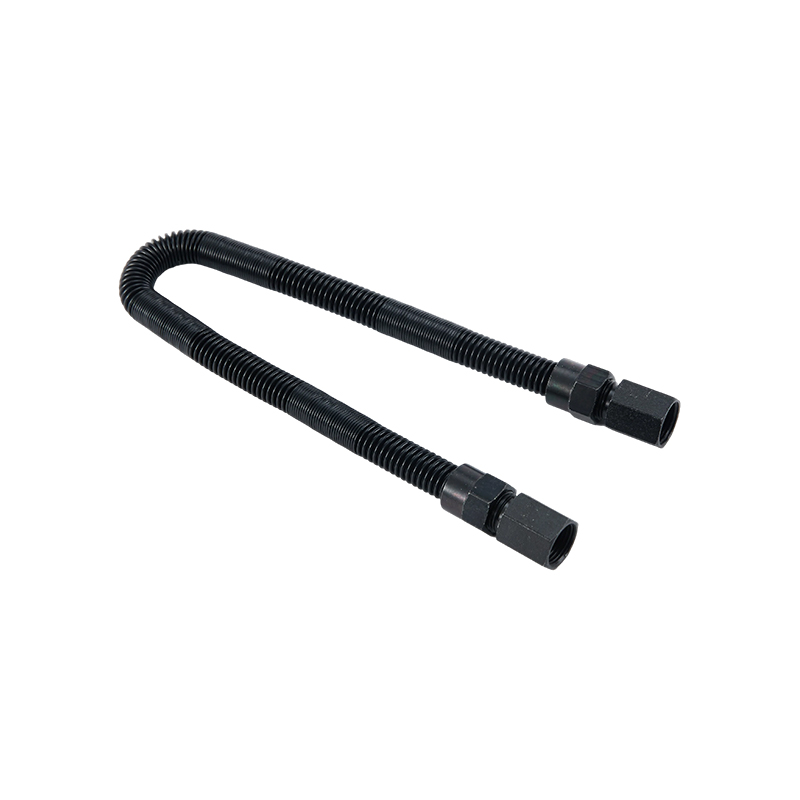
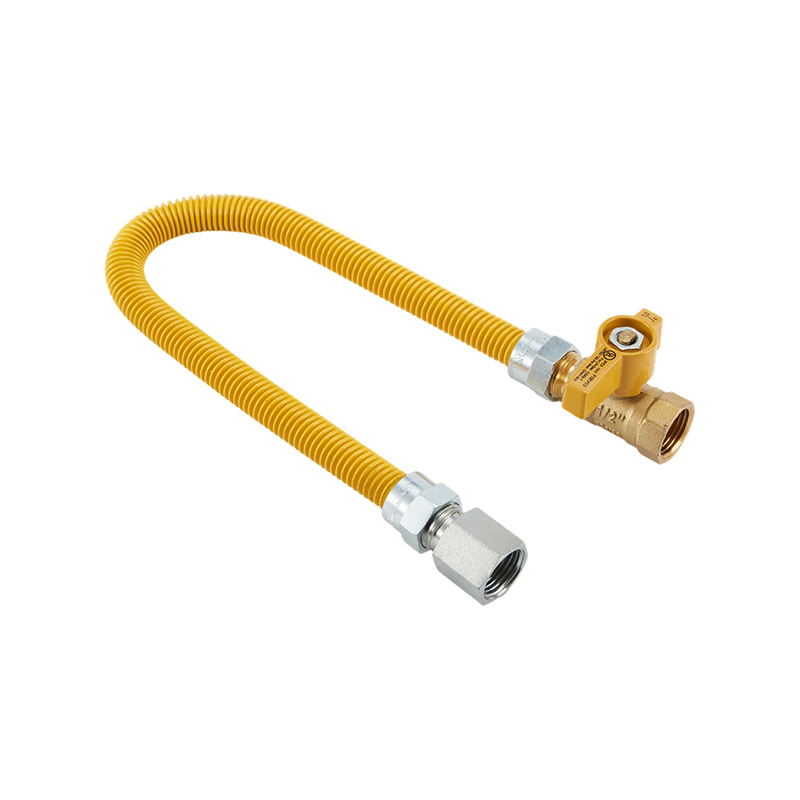
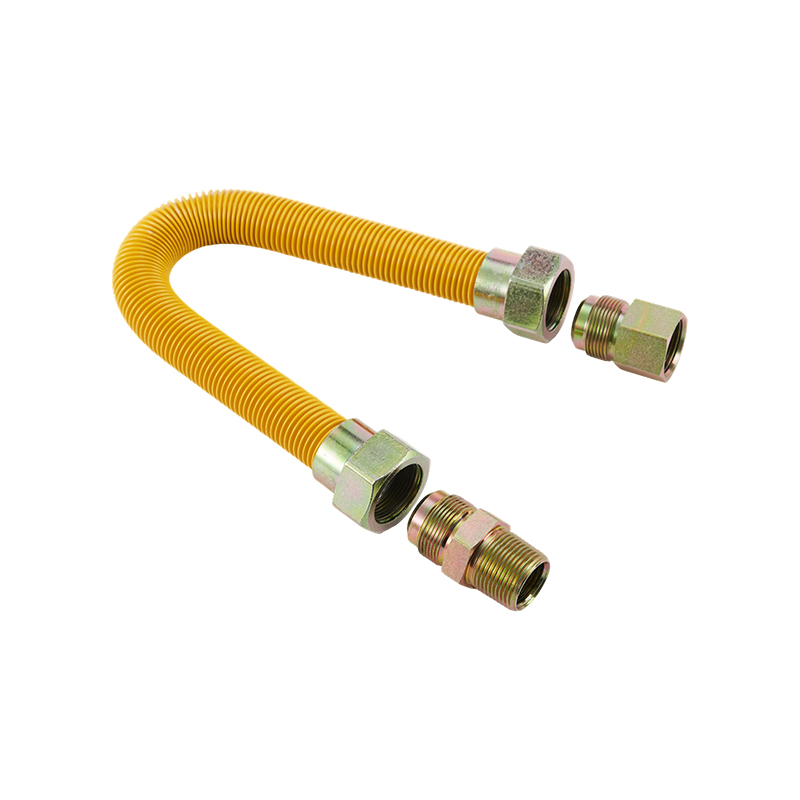
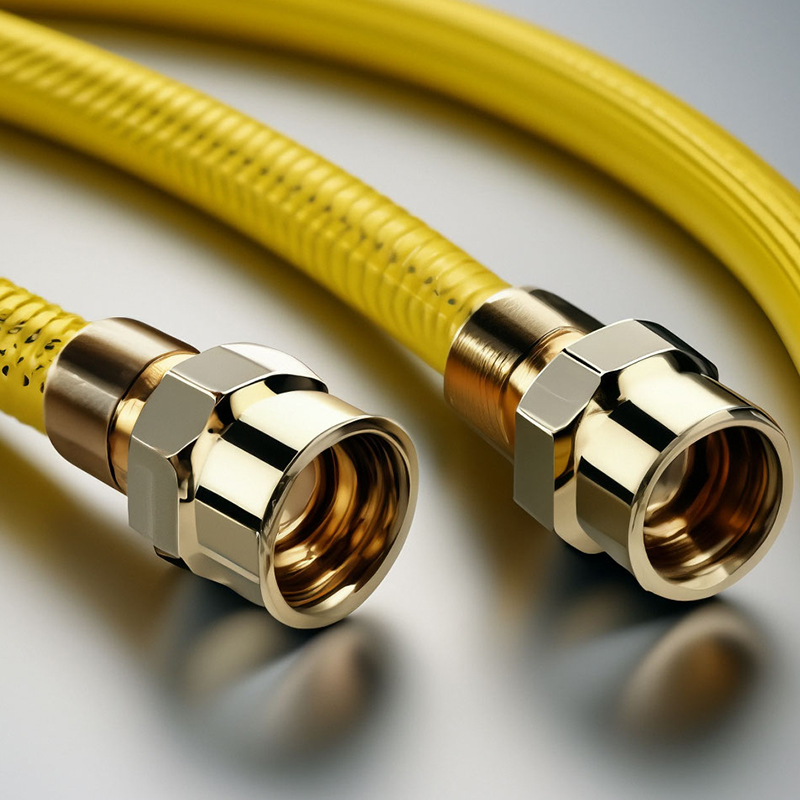
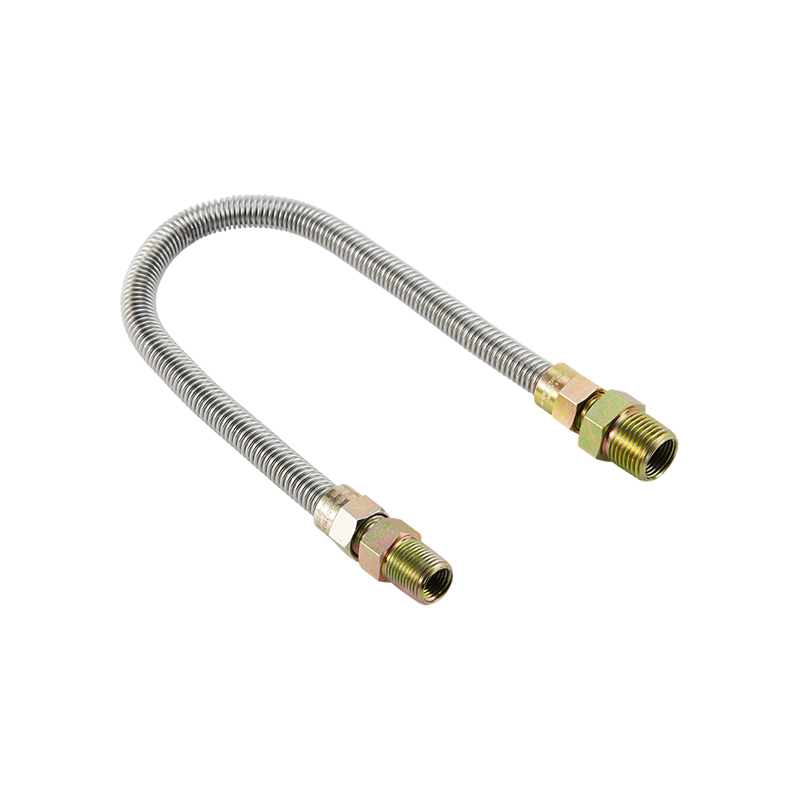
DN15 Stainless Steel Gas Connector with Flare NutDN15 Stainless Steel Gas Connector with Flare NutCompare the DN15 connector's 15/16-16UNF flare nut, adapter options and hard-seal design so the certificate matches the exact fitting configuration.View Product →

2. Read the Construction Spec Like an Auditor

Four elements decide whether a connector survives ten years of vibration and thermal cycling: the corrugated core, the braid, the jacket and the end fittings. Vague wording on any of them is a substitution risk.

  • Core tube: grade (304 or 316), wall thickness and corrugation pitch. Thinner walls and coarser corrugations cut cost and flexibility at the same time.
  • Braid: wire diameter, carrier count and braid angle. The braid is the pressure-bearing layer; "stainless steel braid" without a wire diameter is a marketing phrase, not a specification.
  • Jacket: PVC or flame-resistant compound, wall thickness, and whether it is bonded or loose.
  • Fittings: brass, plated steel or nylon nuts, plus the ferrule crimp dimensions that set pull-off strength.

If you want a plain-language refresher on how these parts interact, this explainer on what a gas connector is walks through the assembly from nut to tube.

Corrugated tube (core) Stainless steel braid PVC outer jacket
Exploded view: the three functional layers that decide pressure rating and service life

3. Ask for Test Data at the Assembly Level

Component certificates prove the tube and braid were made from the right material. They say nothing about the crimp, the braze or the seam — and that is exactly where field failures happen.

A reliable manufacturer should be able to show:

  • 100% leak or pressure testing on every finished assembly, with a record tied to the lot number;
  • batch-level proof pressure and burst testing;
  • tensile or pull-off data for the ferrule joint;
  • torsion and bend-fatigue results, because installers twist connectors during fitting;
  • flame or heat-resistance reports where the product carries a coating.

Request a sample report before you place the order, and check that the lot code on the report matches the code on the bag. Plants that test per assembly usually keep that link; plants that test once a quarter rarely do.

If your market reports whistling complaints from end users, ask specifically for a whistle-free version — and confirm its bore is matched to the appliance input, not simply smoothed inside.
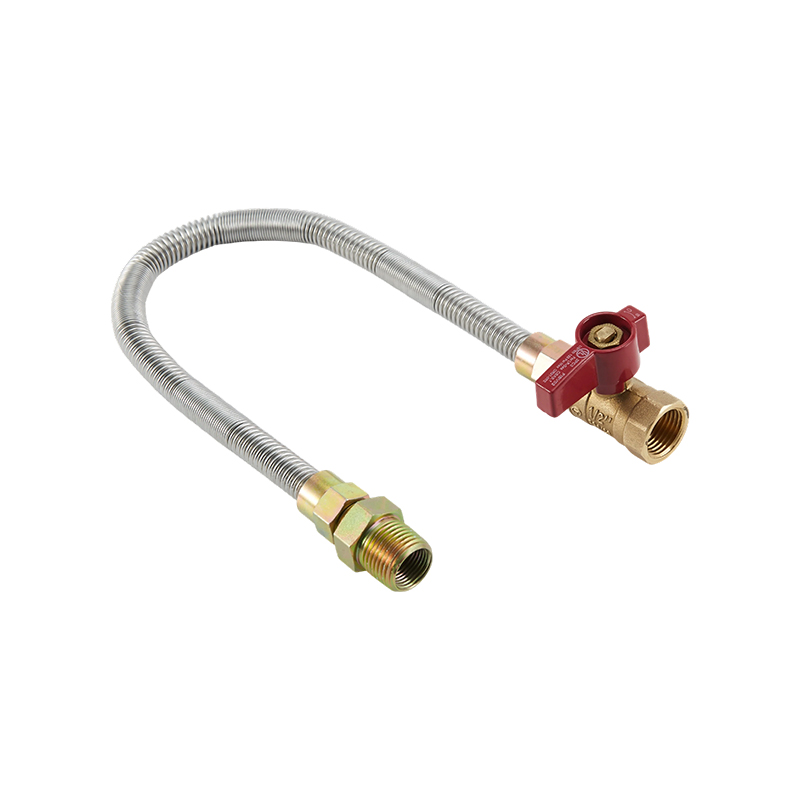
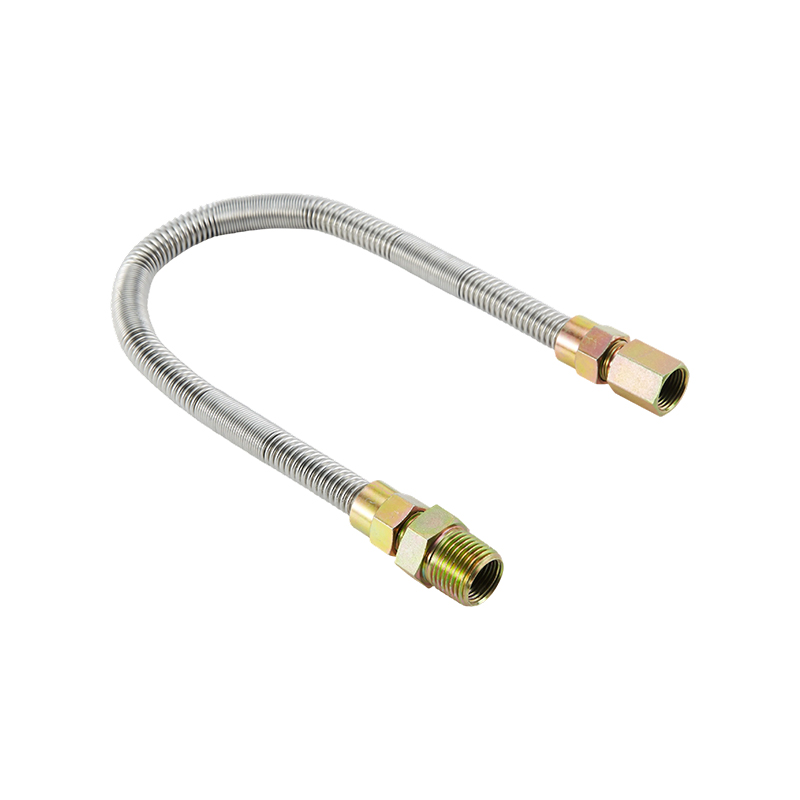
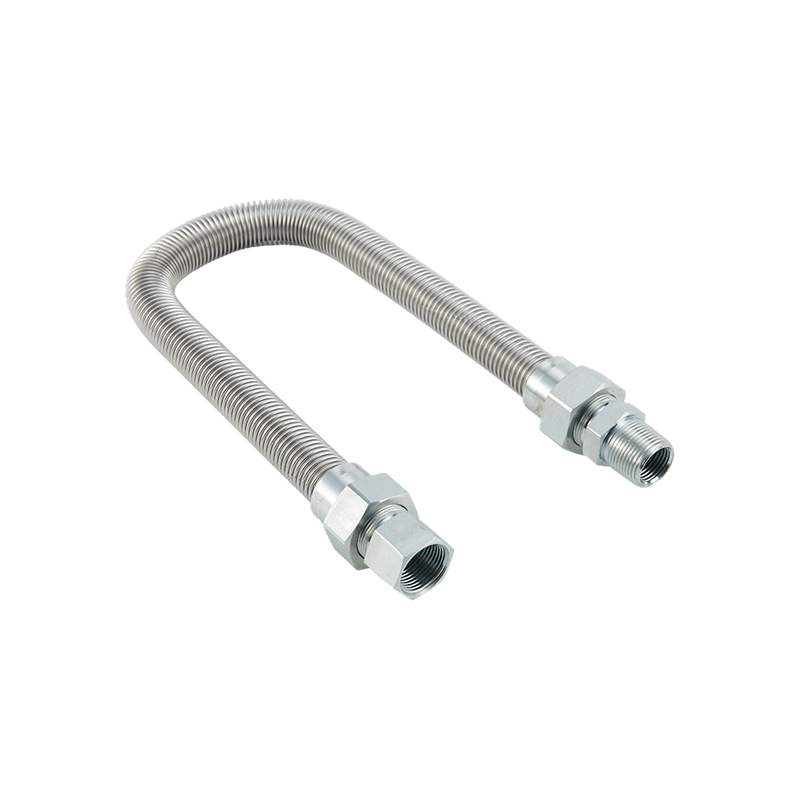
DN15 Whistle-Free Stainless Steel Gas ConnectorDN15 Whistle-Free Stainless Steel Gas ConnectorFor noise-sensitive installations, review the whistle-free DN15 connector's flare nut, adapter options, available lengths and hard-seal design before comparing quotations.View Product →

4. Compare Price Against What Is Actually in the Box

That 30% spread is rarely profit margin. More often it is thinner tube walls, lower braid coverage, plated steel nuts instead of brass, no 100% leak test, and lighter packaging. None of those differences show up in a product photo.

A more useful comparison is landed cost per accepted installation: unit price plus failure rate, rework and claim handling. A connector that costs 20% more but removes a 2% field-return rate is cheaper by a wide margin.

Certification scope and test reports 25
Material traceability 20
Assembly-level leak and pressure testing 20
Capacity and lead-time reliability 15
Sample-to-production consistency 12
Documentation and response time 8
An example supplier scoring model, weighted to 100 points

Weighting shown is an illustrative framework, not published industry data.

Build the scorecard before opening the quotes, not after. Once the criteria are written down, the cheapest bid usually stops looking like the cheapest option.

5. Match Capacity and Product Range to Your Order Profile

Certification and testing tell you whether a factory can make the part. Capacity tells you whether it can make your volume on schedule. Ask for monthly output, the number of production lines, current utilisation, and how a rush order would be slotted in alongside existing contracts.

Haoyin (Ningbo) Bellows Technology, for instance, states 18,000 m² of workshop space, more than 50 machines, over 120 staff and monthly output above 300,000 metres, with CSA-certified gas connectors from DN10 to DN25 and a whistle-free range in the same sizes. Those figures are worth verifying in a factory audit, but they set a realistic baseline for what "capacity" should mean in a supplier questionnaire.

Range matters for a second reason: consolidation. If you also purchase plumbing assemblies — EPDM, PE or PVC inner liners, PET or stainless wire outer braid, copper, nylon or stainless nuts, and elbow fittings — qualifying one supplier across both categories halves your audit and inspection workload. The same logic applies to plumbing water liner assemblies and to flexible metal compensators used in heating and industrial pipework.
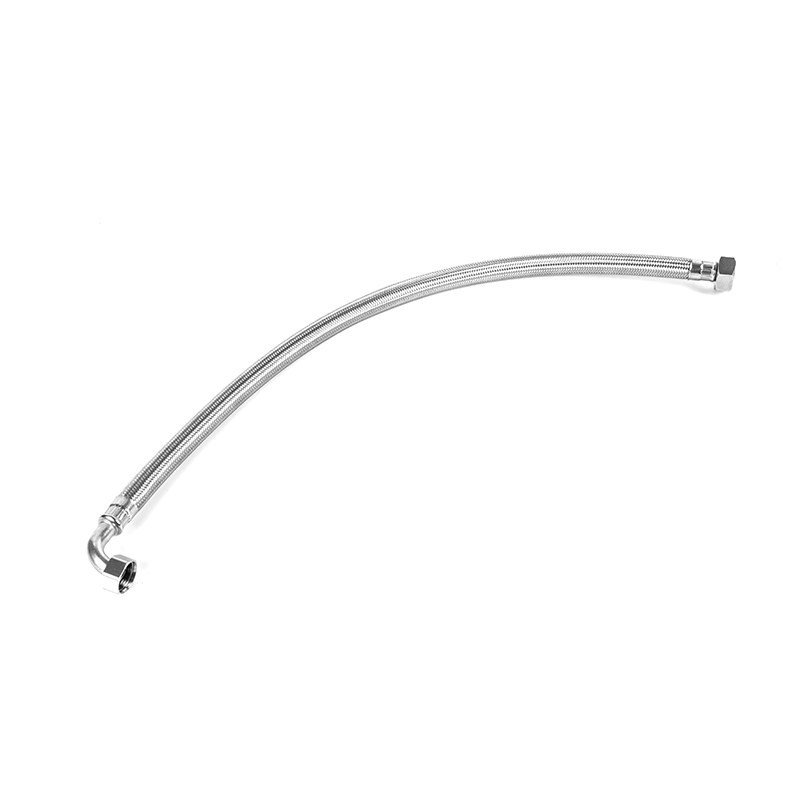
Flexible Metal Compensator Corrugated Expansion JointFlexible Metal Compensator Corrugated Expansion JointReview the corrugated expansion joint's 304 or carbon steel options, 0.6–1.6 MPa range and flange, welding or quick-connect ends for consolidated sourcing.View Product →

6. What a Qualified Quote and a Factory Audit Should Contain

By the quotation stage, the document set should be boringly consistent: the same certificate number, material grade and test standard on every page. Use the checklist below to compare suppliers on equal terms.

A document checklist for comparing gas connector manufacturers before price negotiation.
Document requested What it proves Common gap
Certificate with scope listing your DN and fitting type The exact configuration you buy is certified Certificate covers a different size, or the trading company rather than the plant
Mill certificate or PMI report for tube and braid Grade control: 304 versus 316, brass versus plated steel "Stainless steel" stated with no grade anywhere
100% leak-test log and batch pressure report Every unit was checked, not sampled Report is months old and covers a single lot
Ferrule pull-off and torsion data The weakest joint has been measured Visual inspection only
Lot coding and packaging specification Claims can be traced back to production No lot code on the bag or carton

Then walk the plant, or request an unedited video walkthrough if travel is impractical. Watch two things in particular: whether the leak-test station is actually running during your visit, and whether rejected assemblies are segregated and logged rather than quietly reworked.

Red flags worth stopping for

  • Certificate issued to a company name different from the plant you are auditing;
  • "Stainless steel" quoted without a grade, or "brass" without an alloy;
  • Test reports that cannot be matched to a lot number;
  • Samples and mass-production units with visibly different braid density;
  • No clear answer on capacity utilisation or on how custom lengths are scheduled.

Frequently Asked Questions

Q1. What is the difference between a CSA-certified gas connector and an uncertified one?

A certified connector has been type-tested to ANSI Z21.24/CSA 6.10 by an accredited laboratory, and the certificate lists the sizes and fittings covered. An uncertified unit can look identical but carries no verified pressure, torsion or leak performance.

Q2. Which gas connector sizes should a reliable manufacturer offer?

Most domestic appliances in North America and Europe use DN10 to DN15, while DN20 and DN25 serve higher-flow ranges and light commercial equipment. A range covering DN10 to DN25 in both standard and whistle-free versions handles most catalogues.

Q3. Why does my gas connector whistle, and can it be avoided?

Whistling usually comes from turbulence where gas passes a sharp edge, an undersized bore or a rough internal corrugation. A whistle-free connector uses a smoother internal profile, and matching bore size to appliance input removes most of the remaining noise.

Q4. What lead time is normal for a custom gas connector order?

Standard sizes typically quote in the three-to-six-week range before transit. First orders with custom lengths, fittings or printing take longer because of tooling and first-article approval. Always get the schedule written into the quote.

Q5. How do I verify the stainless steel grade before mass production?

Ask for mill certificates or a positive material identification report on the tube and braid, then confirm on the first article with a cut-open inspection. A 304 tube substituted for 316 is invisible from outside but obvious under a PMI test.

Q6. Should I buy gas connectors from a trading company or directly from the manufacturer?

Trading companies can be faster on small mixed orders, but they rarely control crimping, testing or material substitution. For anything carrying a warranty or a certification claim, buy from the plant that holds the certificate.
Latest Articles

  • Jul 09,2025

    Haoyin (Ningbo) Bellows Technology Co., Ltd.

    Haoyin (Ningbo) Bellows Technology Co., Ltd. is a professional enterprise specializing in the R&D, design, manufacturing, and sales of stainless steel bellows. It is committed to providing safe, efficient, and durable flexible connection solutions for gas, plumbing, heating, and other fields. Covering an area of 35 mu, the company has 18,000 square meters of standardized workshops and has obtained multiple management system certifications, such as ISO9001, ISO14001, and ISO45001.
    As a "National High-tech Enterprise" and "Green Factory", Haoyin has always adhered to the production philosophy of "Striving for Excellence, Forging Quality". It has built a full-process quality management system from raw material screening, structural design, manufacturing, performance testing to after-sales support, continuously creating higher value for customers.
  • Jul 09,2025

    Say goodbye to rubber hoses! How can stainless steel bellows eliminate the risk of gas leakage?

    1. Hidden dangers of rubber hoses: Why must they be eliminated?

    Traditional rubber hoses have the following fatal defects:

    Easy to age: They will harden, crack, and lose their sealing properties in about 2 years.
    Not resistant to high temperatures: They are easily deformed by long-term heat, increasing the risk of leakage.
    Afraid of rat bites: Rubber materials are easily bitten by rats, causing gas leakage.
    Unstable connection: The clamp is not firmly fixed and is easy to loosen and fall off.


    2. Four major safety advantages of stainless steel below

    ① Super corrosion resistance, lifespan of up to 8-10 years

    Using 304/316 stainless steel, it is corrosion-resistant and oxidation-resistant, and is not affected by kitchen fumes and humid environments. Its service life far exceeds that of rubber hoses (national regulations require that gas connection pipes be used for no less than 8 years).


    ② Explosion-proof and pressure-resistant, high and low temperature resistant

    Temperature range: -20℃ to 150℃, suitable for various environments.

    Strong pressure resistance: can withstand pressure above 0.4MPa, which is much higher than the household gas standard (0.01-0.1MPa).


    ③ Anti-rat bite and anti-fall design

    Metal braided layer: cannot be bitten by rats, eliminating the risk of animal damage.

    Threaded interface: a metal nut + sealing gasket is used, which is more firmly fixed than the clamp of the rubber tube.


    ④ Flexible and bendable, easy to install

    Stainless steel bellows have a certain flexibility and can adapt to different installation angles to avoid stress problems caused by hard pipe connection.


    3. How to correctly purchase and install stainless steel bellows?
    Purchase points

    Recognize the national standard: choose products that meet the GB/T 26002-2020 standard.

    Material selection: 304 stainless steel (sufficient for home use) or 316 stainless steel (more corrosion resistant).

    Suitable length: not too long (generally not more than 2 meters) to avoid bending and affecting airflow.


    Installation precautions

    Must be installed by professional gas company personnel and cannot be operated by yourself.

    Check the sealing: After installation, use soapy water to check whether the interface is leaking.

    Regular inspection: Check the pipeline status every 1-2 years to ensure that there is no deformation or rust.


    4. Stainless Steel Bellows FAQ (Frequently Asked Questions)
    Will the stainless steel bellows leak?

    Rarely leaks if properly installed:

    The threaded thread + sealing gasket is used, which is more secure than the clamp of the rubber tube;

    It must be installed by professionals of the gas company and the sealing must be tested with soapy water.


    Can you install the stainless steel below?

    Self-installation is prohibited!

    Gas pipelines involve safety and must be operated by licensed gas company personnel.

    Self-installation may cause leakage or even an explosion.


    Can the stainless steel bellows be bent?

    It can be bent moderately, but repeated bending is prohibited:

    The natural curvature must be maintained during installation to avoid right-angle bending that affects the airflow.

    Excessive bending may cause metal fatigue and reduce the service life.

  • Jul 09,2025

    Safety first choice: Why is metal spiral hose recommended for gas appliances?

    Gas safety is an important part of family life that cannot be ignored, and the hoses connecting gas stoves, water heaters, and other appliances are directly related to gas safety. In recent years, metal spiral hoses have gradually replaced traditional rubber hoses and become the choice for gas connections. Why do professional organizations and gas companies recommend the use of metal spiral hoses? What are its advantages?

    1. Hidden dangers of traditional rubber hoses
    Before the popularity of metal spiral hoses, families used rubber hoses to connect gas equipment. However, rubber hoses have many safety hazards:

    Easy to age and crack: Rubber is exposed to the kitchen environment for a long time, affected by high temperature, oil smoke, humidity, etc., and is prone to harden and crack, causing gas leakage.
    Easy to be damaged by rat bites: The rubber material may be bitten by rats, causing damage and leakage, which can lead to safety accidents.
    Short service life: National standards stipulate that the service life of rubber hoses shall not exceed 18 months, but many families use them beyond the expiration date, increasing the risk.
    Poor pressure resistance: The rubber hose has a low pressure bearing capacity. If the gas pressure fluctuates greatly, it may rupture.

    These shortcomings have led to the gradual replacement of rubber hoses with safer metal spiral hoses.

    2. Advantages of metal spiral hoses
    Metal spiral hoses are made of 304 stainless steel wire braided layer + corrosion-resistant synthetic materials, which have significant advantages over rubber hoses:

    l Super corrosion resistance and high temperature resistance
    The stainless steel outer layer can resist the erosion of kitchen fumes and humid environments, and does not easily age.
    It has high temperature resistance and can withstand temperature changes from -30℃ to 150℃, suitable for various gas equipment.
    l Anti-rat bite and anti-wear
    The metal braided layer can effectively prevent rats from biting and avoid accidental damage.
    The outer metal protection makes the hose more wear-resistant and less likely to leak due to friction.
    l Pressure-resistant and explosion-proof, good sealing
    The metal spiral structure enhances the pressure-bearing capacity, can withstand higher gas pressure, and reduces the risk of leakage caused by pressure fluctuations.
    The threaded interface + sealing gasket is more secure than the snap-on connection of the rubber hose to prevent falling off.
    l Long service life
    The service life of metal spiral hose can reach 8-10 years, far exceeding the 18 months of rubber hose, reducing the trouble of frequent replacement.


    3. How to purchase and install correctly?
    Although metal spiral hose is safer, you still need to pay attention to the following when purchasing and installing:

    Recognize national standards: Choose products that meet GB/T 26002 or CJ/T 197 standards to ensure quality.
    Matching interface type: The interface of gas stoves and water heaters may be threaded or quick-insert, which needs to be confirmed before purchase.
    Moderate length: The hose should not be too long (generally not more than 2 meters) to avoid bending that affects airflow.
    Professional installation: It is recommended to be installed by a gas company or a certified technician to ensure that the interface is sealed and leak-free.

    4. What should be noted when using metal winding hoses?
    Regular inspection and replacement
    Leak detection method: Apply soapy water to the interface after installation and regularly to observe whether bubbles appear.
    Aging signs: If cracks, rust, hardening, or loose joints are found, stop using and replace immediately.
    Replacement cycle: Even if there is no damage, it is recommended to replace it every 2-3 years.

    Use taboos
    No wall penetration/hidden burial: The hose must be installed openly and cannot be hidden in the wall or cabinet to prevent leakage from being difficult to detect.
    Refitting is prohibited: The interface must not be cut off, lengthened, or modified by yourself.
    Adapter: Only for designated equipment, such as gas stoves and water heaters, not for high-pressure or non-gas scenes.

    Emergency treatment of leakage
    When a gas leak is found, immediately close the main valve, open the window for ventilation, do not touch the electrical switch, and go outside to call the emergency repair phone.