




 English
  Español
  русский


What a Stainless Steel Flexible Gas Connector Actually Is
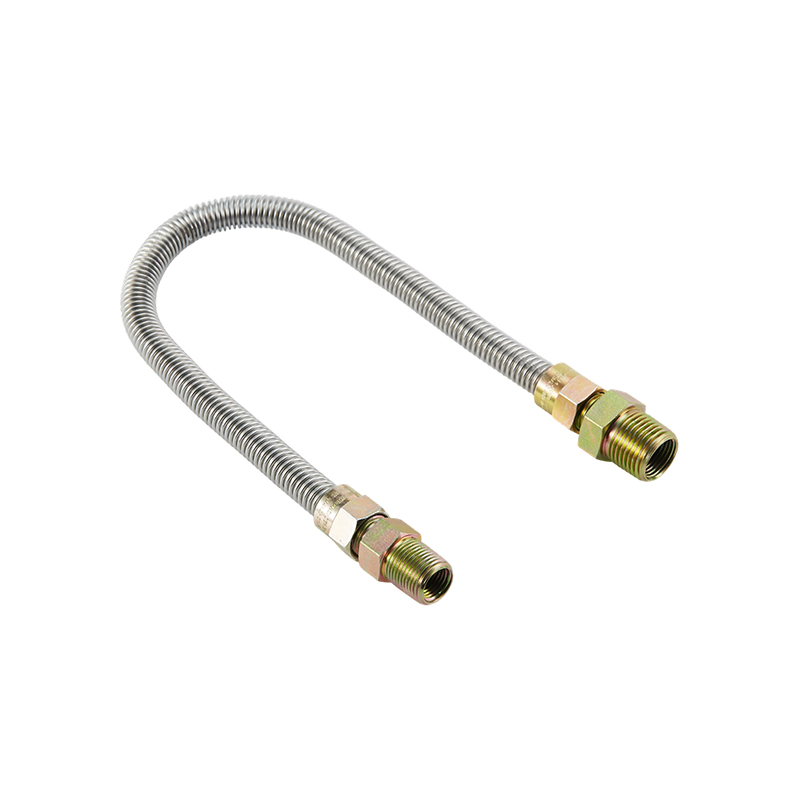
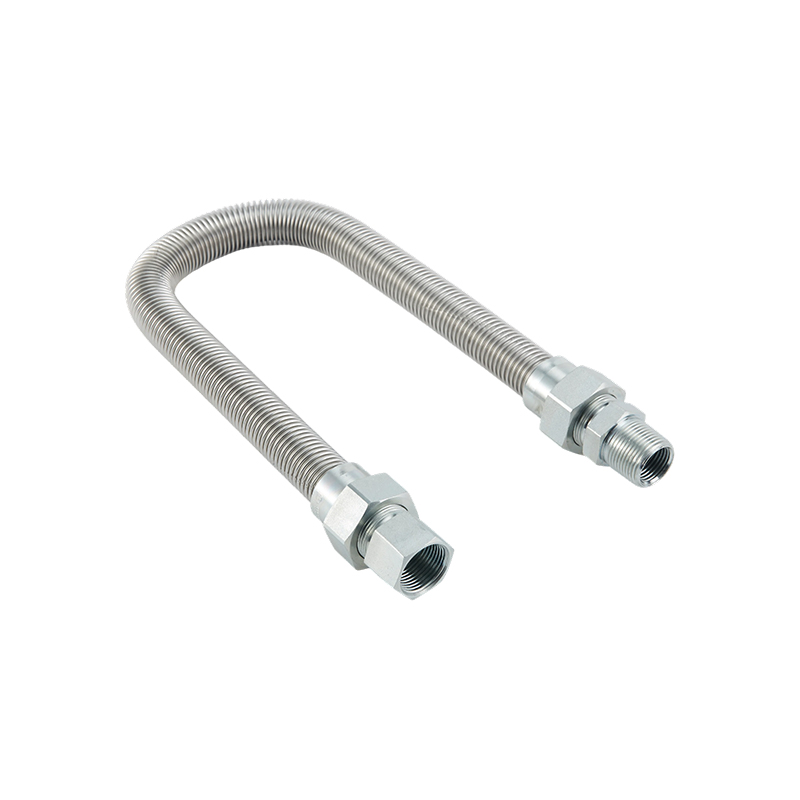
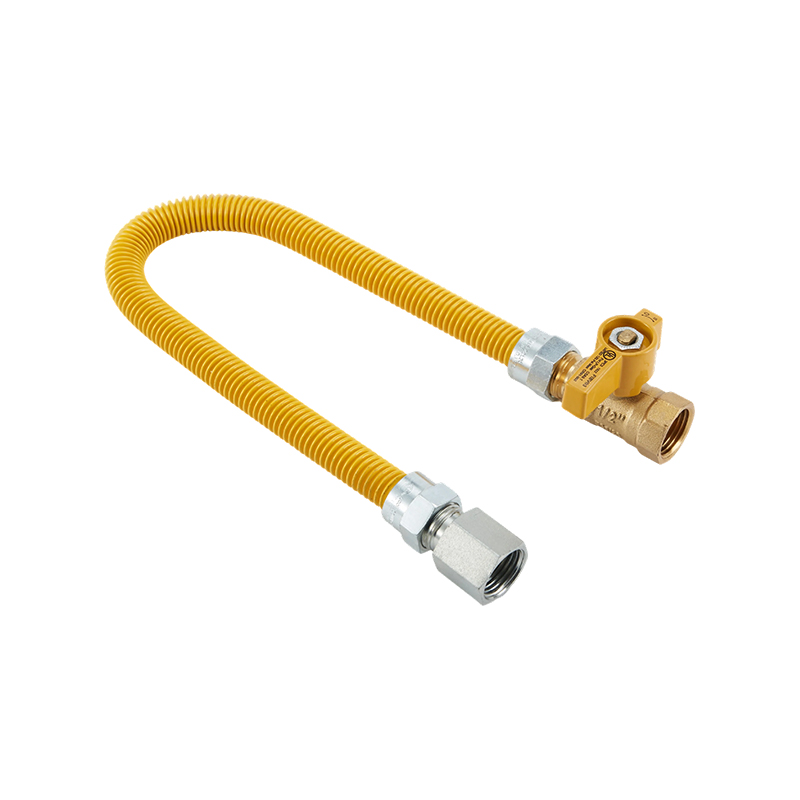
A Stainless Steel Flexible Gas Connector is a short, flexible line built around a corrugated stainless steel tube, used to join a gas appliance to a fixed gas supply outlet. The corrugated wall lets the connector flex and absorb small amounts of movement, which makes installation easier than routing rigid pipe directly to an appliance such as a range, water heater, furnace, or dryer.
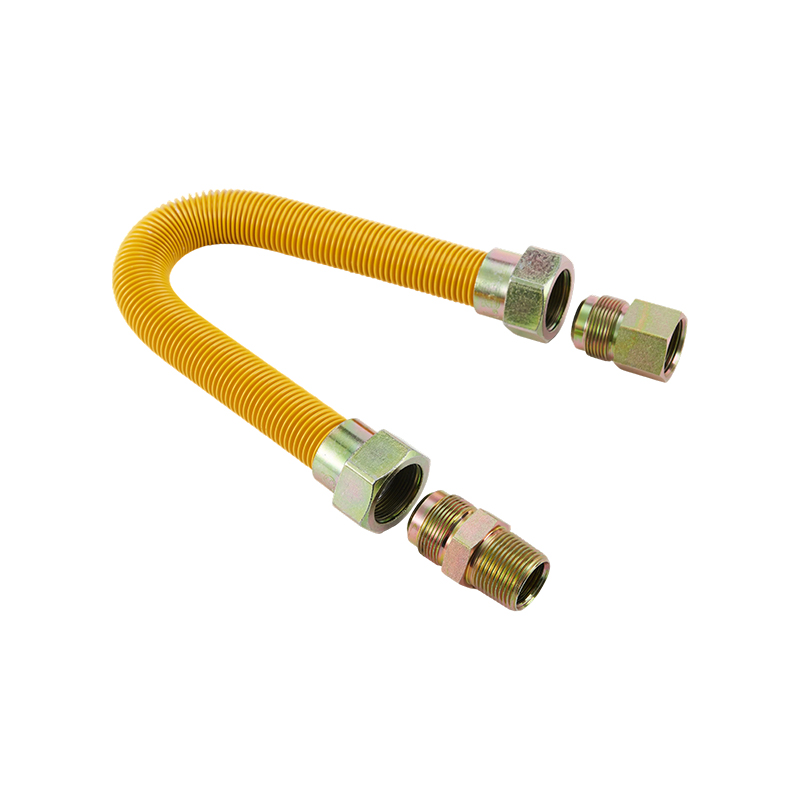
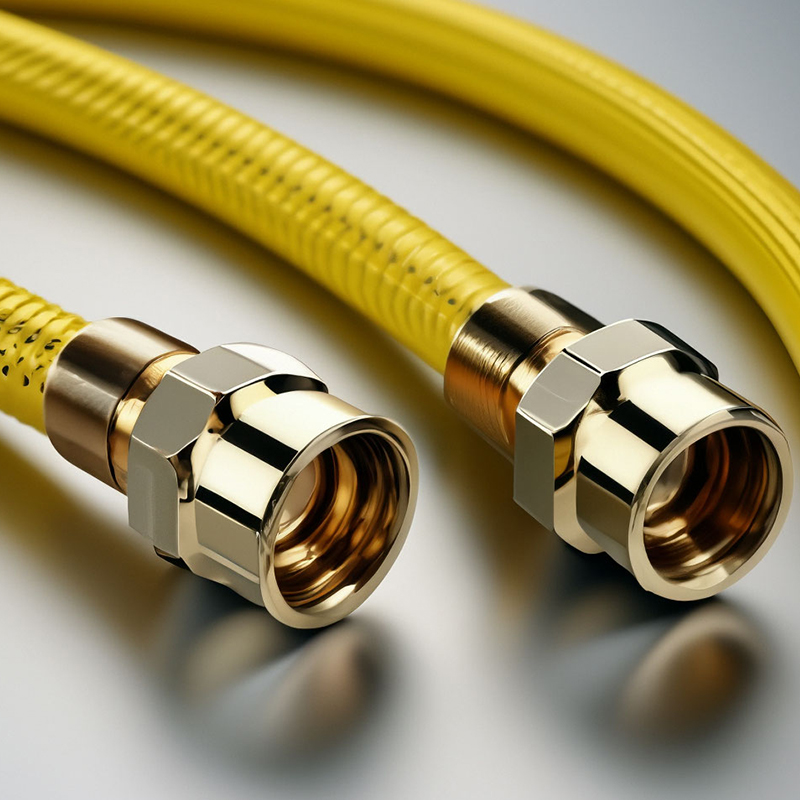
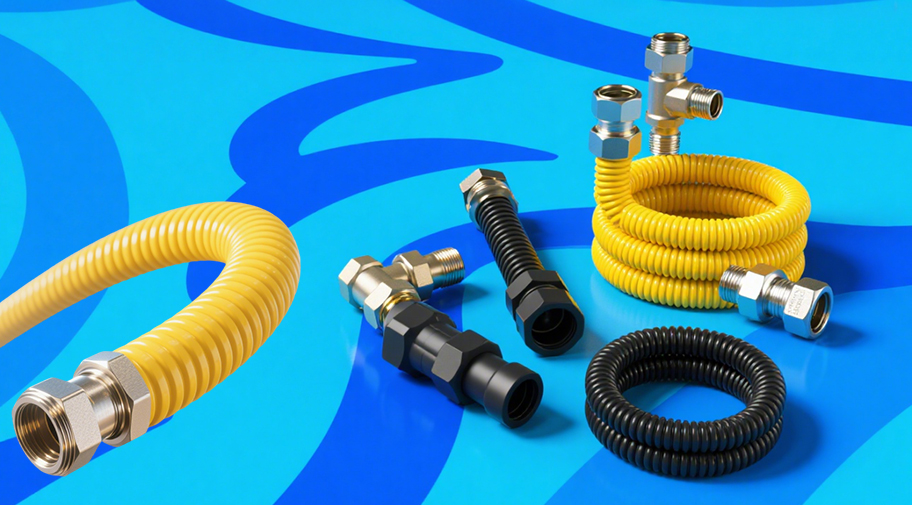
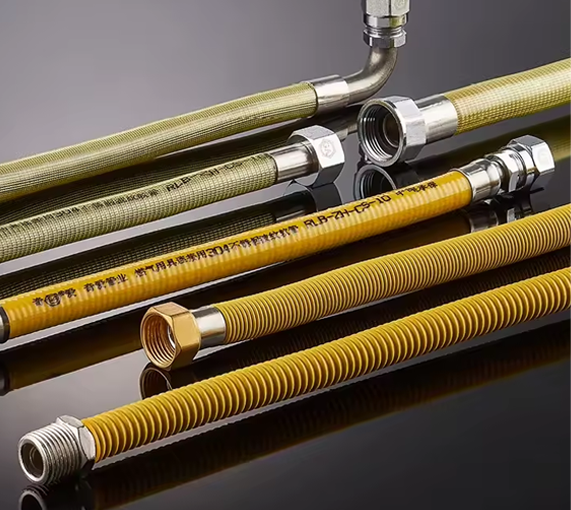
Most connectors sold for household and light commercial use fall into a few common types. A bare stainless steel flexible gas hose shows the corrugated metal surface directly, while a PVC Coated Gas connector adds a protective plastic jacket over the corrugated tube. A Yellow Coated Stainless Steel Gas hose uses the same coated construction but in a yellow finish, which is commonly used to visually identify the line as a gas connection rather than a water or heating line.
These short appliance connectors are a different product from a csst gas connector run, which refers to corrugated stainless steel tubing used for longer gas distribution runs inside walls and floors. Both rely on the same corrugated stainless steel principle, but they serve different roles in a gas piping system.
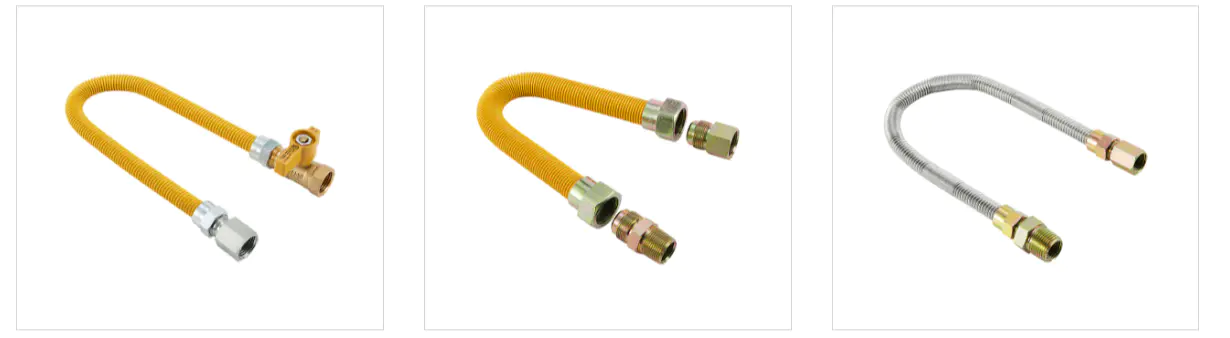
How Stainless Steel Flexible Gas Connectors Are Made
Manufacturing a Stainless Steel Flexible Gas Connector starts with a straight stainless steel tube, which is then formed into a corrugated wall shape that gives the finished hose its flexibility.
- A straight length of stainless steel tube is selected in the diameter required for the finished connector.
- The tube is passed through a corrugation process that forms a series of ridges along its wall, which is what allows the finished hose to bend and flex.
- For coated products, a PVC layer or a yellow protective jacket is applied over the corrugated tube to add abrasion resistance and, in the case of yellow coating, visual identification.
- End fittings and nuts are attached to each end of the corrugated tube, sized to match standard appliance and gas outlet connections.
- Finished connectors are pressure tested to confirm the joint between the tube and end fittings holds under normal operating conditions.
- Completed hoses are inspected, coiled, and packed for shipment.
The corrugation step is what separates a flexible connector from a straight rigid pipe. Without the ridged wall, the tube would behave like solid pipe and could not absorb the small amount of movement needed when connecting an appliance.
Layer Structure of a Coated Flexible Gas Connector
A coated stainless steel flexible gas hose is built up from a small number of functional layers. The illustration below outlines how the corrugated tube, protective coating, and end fitting relate to one another.
Illustrative construction of a coated stainless steel flexible gas connector.
Why Stainless Steel Is Used for Flexible Gas Connectors
Stainless steel remains the standard material for flexible gas connectors for a mix of structural and practical reasons.
Material Benefits
- Stainless steel resists corrosion better than plain carbon steel, which matters for a component that may sit in a kitchen, utility room, or outdoor enclosure.
- The corrugated wall gives the hose flexibility while the base metal still provides the strength needed for a gas carrying line.
- Stainless steel tolerates a wide temperature range, which suits appliances that generate heat close to the connection point.
Installation Benefits
- Flexibility allows the connector to route around small obstructions without needing multiple rigid fittings.
- A flexible connection makes it easier to move an appliance slightly for cleaning or service without disturbing the gas line.
- Coated versions, including PVC Coated Gas connector and Yellow Coated Stainless Steel Gas hose options, add a layer of abrasion protection during routing and handling.
Stainless Steel Flexible Gas Connector vs CSST Gas Tubing
It helps to see how a short appliance connector compares with longer csst gas connector tubing runs, since both are corrugated stainless steel products but serve different parts of a gas system.
| Factor | Flexible Gas Connector | CSST Gas Tubing |
|---|---|---|
| Typical Length | Short, appliance to outlet | Longer, distribution run |
| Common Location | Visible, near appliance | Concealed, inside walls or floors |
| Typical Role | Final connection to one appliance | Distributing gas across a building |
| Common Coating | PVC coated or yellow coated | Yellow coated, jacketed |
In many installations, CSST tubing carries gas from the meter or main line to a general area, while a short flexible connector completes the final link to the specific appliance.
Coated vs Bare Stainless Steel Comparison
Coated products such as a PVC Coated Gas connector add a layer over the bare corrugated tube. The chart below compares coated and bare stainless steel connectors across four practical factors, rated on a simple ten point scale.
Property Comparison Chart
Illustrative comparison based on general product characteristics, not a specific test report.
Where Flexible Gas Connectors Are Commonly Used
A stainless steel flexible gas hose shows up across a range of household and light commercial appliances. The table below lists the most common connection points.
| Appliance | Connection Role | Common Connector Type |
|---|---|---|
| Gas Range or Cooktop | Final line to appliance inlet | Coated flexible connector |
| Water Heater | Supply to burner assembly | Coated flexible connector |
| Furnace or Boiler | Final connection near unit | Coated flexible connector |
| Clothes Dryer | Supply behind appliance | Coated flexible connector |
| Outdoor Grill Hookup | Fixed supply to grill connection | Coated flexible connector |
Relative Usage by Appliance Type
Illustrative relative usage scale (1 to 10) across common appliance connection types.
Sizing and Length Selection
Choosing the right Stainless Steel Flexible Gas Connector generally comes down to two dimensions, the diameter and the overall length.
Diameter Considerations
- Diameter should match the appliance gas inlet fitting and the flow rate the appliance requires.
- Checking the appliance data plate or installation specification is the most direct way to confirm the required diameter.
Length Considerations
- Length should reach comfortably from the gas outlet to the appliance connection point without excessive slack or tension.
- Extra length allows an appliance to be pulled out slightly for cleaning or service, while excess coiled hose is generally avoided.
Radar Comparison: Flexible Connector vs Rigid Pipe Connection
The radar chart below places a stainless steel flexible gas hose against a rigid pipe connection across five practical dimensions, rated on a simple ten point scale.
Illustrative comparison across five general factors, for reference only.
Industry Trend Toward Coated Flexible Connectors
Appliance installers have generally been favoring coated connectors, including Yellow Coated Stainless Steel Gas hose options, over bare corrugated hose for visible installations. The line chart below sketches that general direction using a relative index rather than exact figures.
Illustrative relative index of coated connector specification interest over recent project stages.
Everyday Inspection and Care
A Stainless Steel Flexible Gas Connector generally needs little routine attention beyond periodic visual inspection. Checking the hose for kinks, cracks in the coating, or signs of physical damage helps catch wear before it becomes a bigger issue. Connectors should be routed so they are not repeatedly bent sharply in the same spot, since repeated flexing at one point can weaken the corrugated wall over time.
Moving an appliance for cleaning should be done carefully so the connector is not stretched, twisted, or pinched against a wall or cabinet edge. Any installation, replacement, or repair involving a gas connection should be handled by a qualified professional familiar with local gas fitting practices.
How to Choose the Right Flexible Gas Connector
Working with a flexible gas connector manufacturer or supplier usually starts with a short checklist of practical factors.
Technical Factors
- Diameter matched to the appliance inlet and required gas flow.
- Length suited to the distance between the gas outlet and the appliance connection point.
- Fitting type matched to the existing gas outlet, since threads and connection styles can vary.
Practical Factors
- Coating type, choosing between bare stainless, PVC coated, or yellow coated depending on the visible installation environment.
- Routing path, checking for sharp bends, heat sources, or sharp edges the connector might contact.
- Confirming installation by a qualified professional where local practice requires it.
Manufacturing Background Behind Stainless Steel Flexible Gas Connectors
Haoyin (Ningbo) Bellows Technology Co., Ltd. is a professional enterprise focused on the research, design, manufacturing, and sale of stainless steel bellows, working toward flexible connection solutions for gas, plumbing, heating, and related fields. The company operates from a facility covering an area of about 35 mu, with roughly 18,000 square meters of standardized workshop space supporting its production lines.
Working across mold and structural design, raw material screening, manufacturing, and performance testing, the company supplies a range of stainless steel flexible connector products, including coated and bare variants, to appliance and gas fitting applications. This full process approach, from design through testing, supports consistent output across the range of Stainless Steel Flexible Gas Connector products the company produces.

Frequently Asked Questions
Q1: What is a flexible gas connector?
A flexible gas connector is a short, flexible line used to connect a gas appliance to a fixed gas supply line, allowing for some movement and easier installation than rigid pipe.
Q2: What is a stainless steel gas connector?
A stainless steel gas connector is a flexible connector built around a corrugated stainless steel tube, often finished with a protective coating, used to link an appliance to the gas supply.
Q3: What is a flexible gas hose used for?
A flexible gas hose is used to connect appliances such as ranges, water heaters, furnaces, and dryers to a gas supply line, especially where a small amount of movement or offset is needed.
Q4: What is a gas appliance connector?
A gas appliance connector is the fitting and hose assembly that joins a specific appliance, such as a stove or dryer, to the building gas line, usually sized to match the appliance inlet.
Q5: What is CSST gas tubing?
CSST, or corrugated stainless steel tubing, is a longer run flexible tubing used to distribute gas through a building, differing from short appliance connectors mainly in length and routing role.
Q6: CSST vs a gas connector, what is the difference?
CSST is typically used for longer distribution runs behind walls and floors, while a flexible gas connector is a short, visible line that links an individual appliance to a nearby gas outlet.
Q7: What size gas connector do I need?
Connector diameter should match the appliance gas inlet and the required flow rate, so checking the appliance manufacturer specification is the most reliable way to confirm the correct size.
Q8: How do I choose a flexible gas connector?
Choosing a connector involves matching the diameter and length to the appliance, selecting a coating type suited to the installation environment, and confirming the fitting type matches the existing gas outlet.
Q9: What length gas connector do I need?
Length should comfortably reach from the gas outlet to the appliance connection point without excessive slack or tension, allowing the appliance to be moved slightly for cleaning or service.
Q10: What size gas line is needed for a gas stove?
The required line size depends on the stove rated gas input and the distance from the supply, so referring to the appliance manufacturer installation specification is the standard way to confirm sizing.