




 English
  Español
  русский


The direct answer is this: stainless steel flexible gas connectors are safer, more durable, and more widely approved by modern building codes than rubber gas hoses in virtually every residential, commercial, and industrial application. Rubber hoses degrade over time from UV exposure, ozone, mechanical stress, and chemical attack by gas impurities — creating leak risk that increases with age. Corrugated stainless steel gas connectors, by contrast, resist corrosion, maintain structural integrity for decades, and are manufactured to meet CE, ISO, and national gas safety standards across global markets.
This article provides a thorough technical and practical comparison of both connector types, covering material properties, failure modes, regulatory compliance, application suitability, and installation considerations. Whether you are specifying a flexible gas connector for a water heater, selecting a commercial kitchen gas connector, or evaluating supplier options as a procurement professional, the analysis below equips you to make an informed, safety-first decision.
Gas connector failure is not a minor inconvenience — it is a leading cause of residential and commercial gas incidents globally. A compromised connector can result in undetected gas leaks, fire hazards, and in severe cases, explosive events. Understanding the material science and failure patterns behind each connector type is therefore not merely an academic exercise but a genuine safety necessity for anyone involved in gas appliance installation or facility management.
Understanding the Two Connector Types: Construction and Materials
Stainless Steel Flexible Gas Connectors
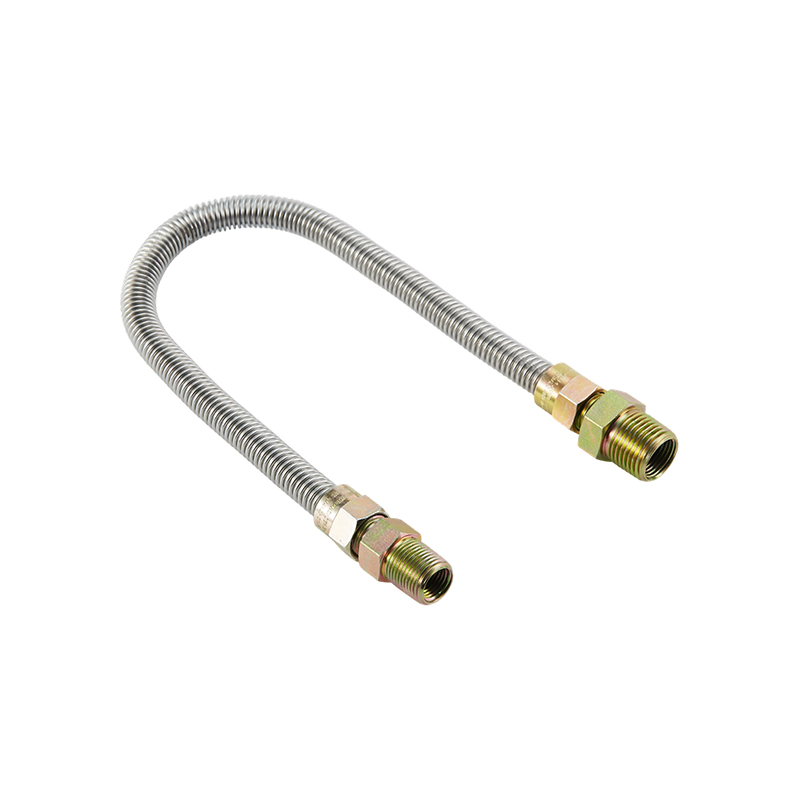
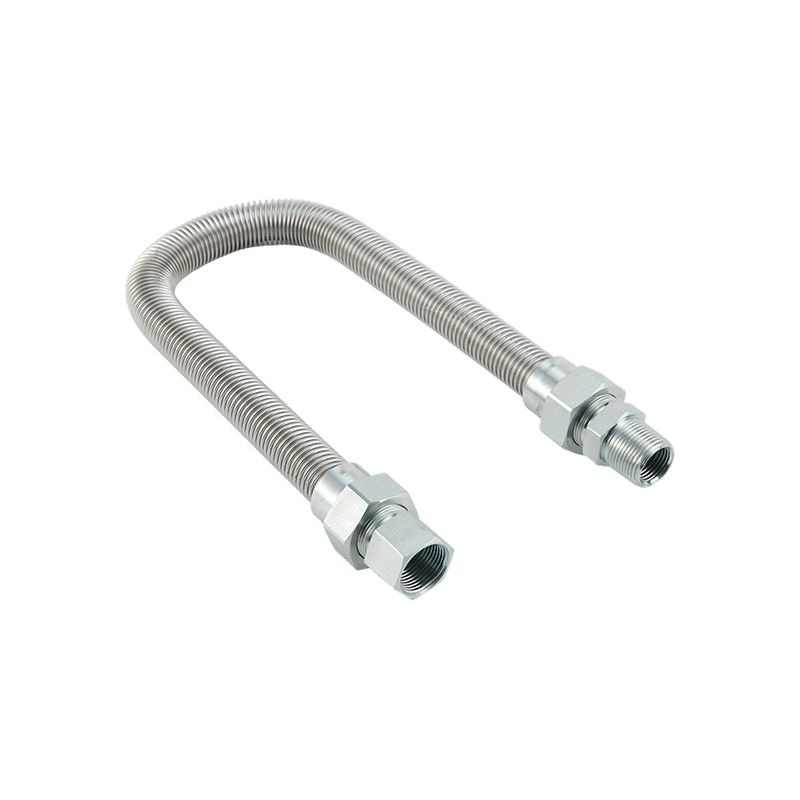
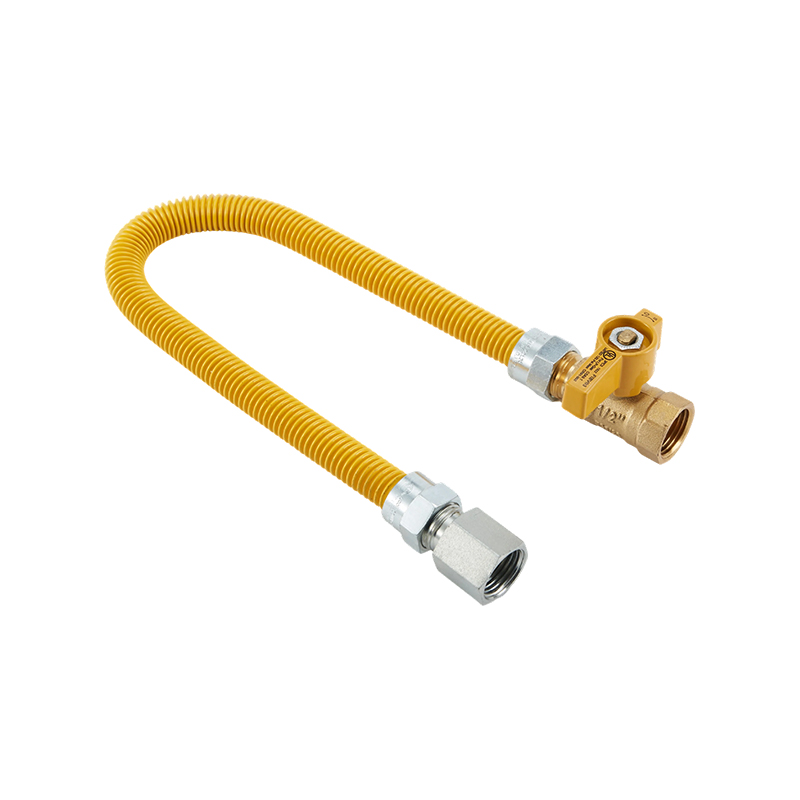
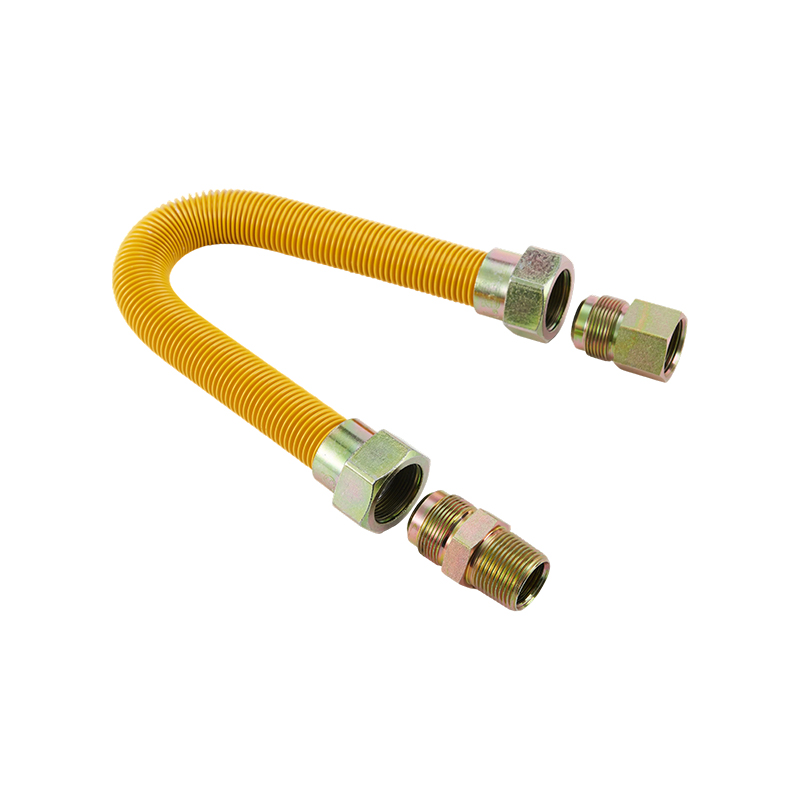
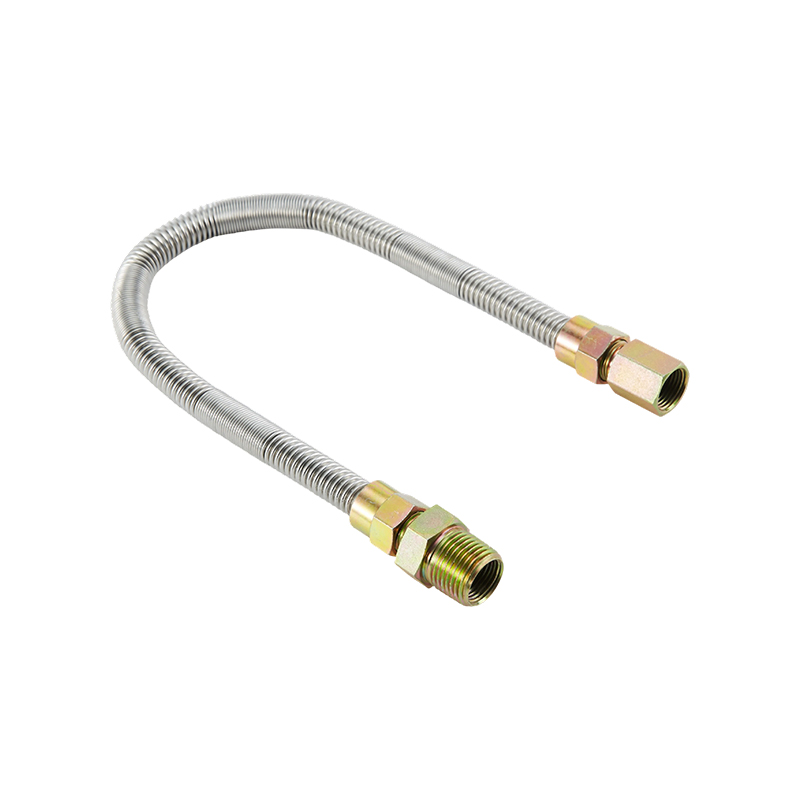
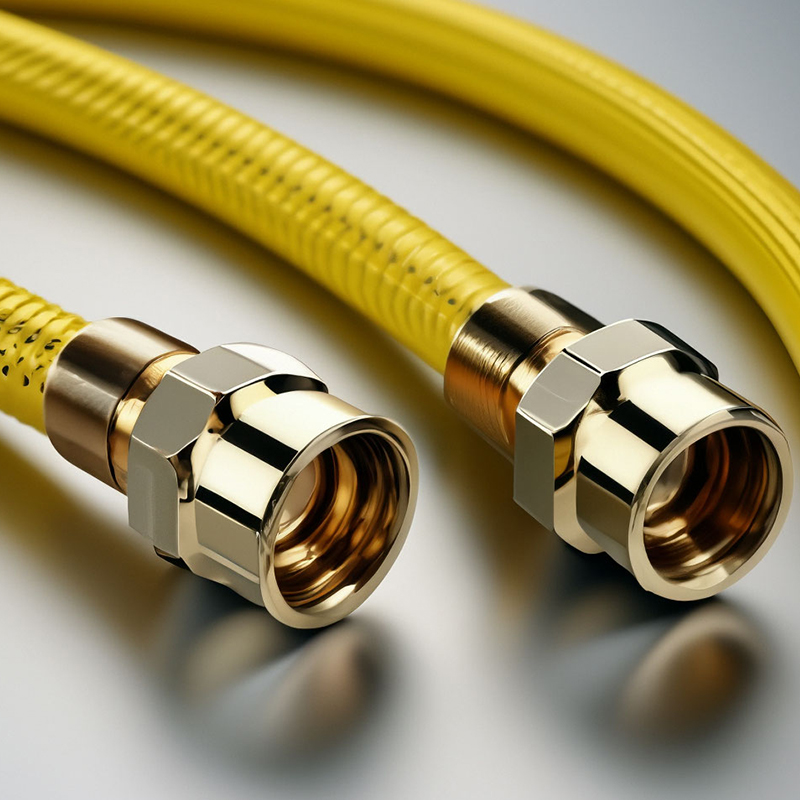
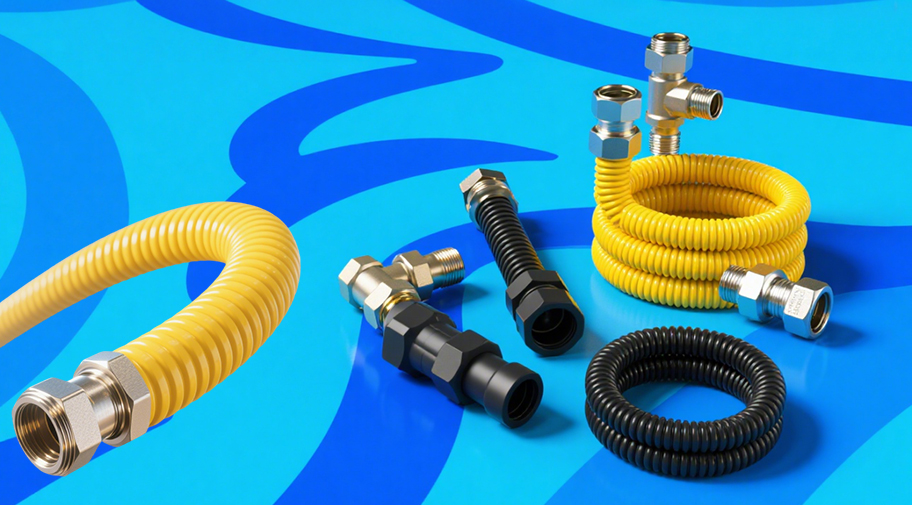
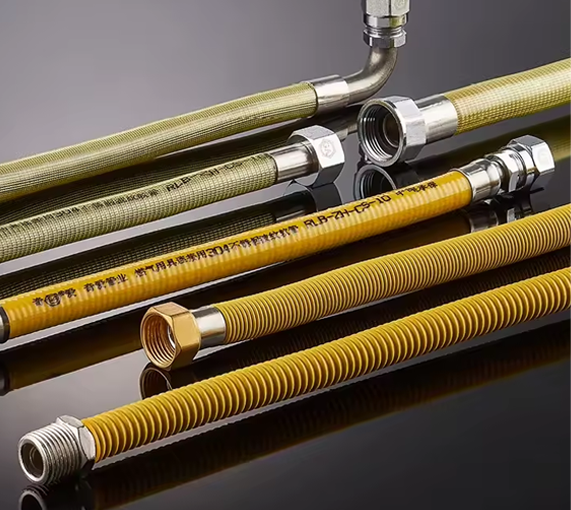
A stainless steel flexible gas hose — also referred to as a corrugated stainless steel tube (CSST) gas connector — is constructed from a thin-wall, annularly corrugated tube formed from grade 304 or 316 stainless steel. The corrugated profile provides flexibility while maintaining structural strength, allowing the connector to accommodate dimensional offsets, thermal expansion, and minor vibration without stress concentration. The outer surface is typically coated in PVC or polyethylene for additional mechanical and corrosion protection — the familiar yellow coated stainless steel gas hose seen in European and Asian installations is a direct example of this construction.
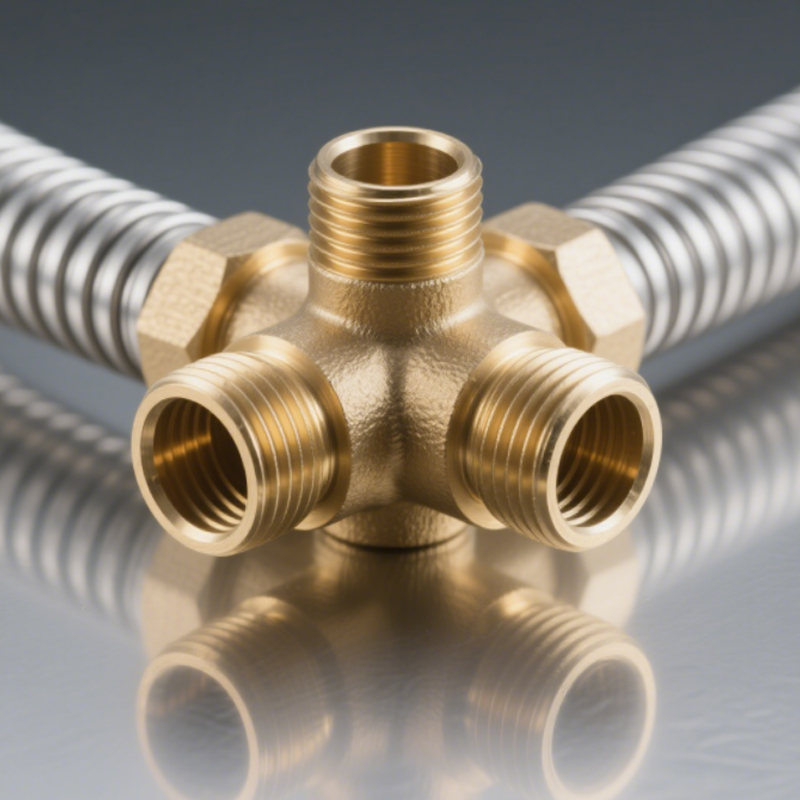
End fittings are precision-machined from brass or stainless steel and are either swaged or threaded onto the corrugated tube body. A quality stainless steel flexible gas connector manufacturer will subject every connector to pressure testing, leak detection, and dimensional verification before shipment. Products from certified factories — including those holding ISO9001, CE, and national gas approval marks — undergo standardized burst pressure tests that typically require the connector to withstand at least 5 times the rated working pressure without failure.
Rubber and PVC Gas Hoses
Rubber gas hoses are manufactured from synthetic rubber compounds — typically NBR (nitrile butadiene rubber) or EPDM — reinforced with a textile or wire braid and finished with an outer rubber or PVC jacket. They are flexible, inexpensive, and easy to cut to length in the field. However, rubber compounds are inherently susceptible to degradation from ozone, UV radiation, heat cycling, and chemical exposure to gas impurities such as mercaptans and sulfur compounds. Over time, the inner bore of a rubber hose can harden, crack, or delaminate — producing fragments that can contaminate appliance burner components or create leak paths.
Many national gas safety codes now restrict or prohibit the use of rubber hoses in concealed, semi-concealed, or long-term permanent gas installations. In most European Union member states, CE certified gas connectors for permanent appliance connections must now meet standards that effectively exclude plain rubber hose construction — a regulatory trend that has accelerated adoption of corrugated stainless steel connectors across the residential and commercial sectors.
| Property | Stainless Steel (CSST) | Rubber / NBR Hose |
|---|---|---|
| Core Material | 304 / 316 Stainless Steel | NBR / EPDM Rubber |
| Corrosion Resistance | Excellent | Moderate (degrades over time) |
| UV Resistance | Excellent (with coating) | Poor to Moderate |
| Temperature Range | -196°C to +600°C | -30°C to +100°C |
| Typical Service Life | 15–30+ years | 3–8 years |
| Rodent / Pest Resistance | High | Low |
| CE / ISO Certification | Widely available | Limited / application-restricted |
| Permitted in Concealed Runs | Yes (in most codes) | No (most jurisdictions) |
Safety Performance: Where the Real Differences Emerge
Safety is the central question in any gas connector selection decision, and the performance gap between stainless steel and rubber connectors becomes most apparent when examining real-world failure mechanisms and aging characteristics. Three primary failure modes account for the overwhelming majority of gas connector incidents: material degradation, mechanical damage, and connection joint failure.
Material Degradation Over Time
Rubber compounds used in gas hoses undergo progressive chemical and physical degradation. Ozone attack causes surface cracking, while heat cycling from seasonal temperature changes causes repeated expansion and contraction that gradually weakens the reinforcement layer. Gas impurities — particularly sulfur compounds added as odorants — accelerate inner surface deterioration. A rubber hose installed in a residential kitchen under normal conditions typically shows measurable degradation within 3 to 5 years, with significant cracking and stiffening evident by year 8. Many national standards, including those referenced by European gas safety bodies, recommend rubber hose replacement at intervals of 5 years or less.
Stainless steel corrugated connectors do not suffer from the same degradation pathways. The 304 or 316 grade steel maintains its mechanical properties across the full operating temperature range, and the PVC or PE coating provides secondary protection against surface contamination and moisture. A properly installed corrugated stainless steel gas hose in a typical residential application can remain serviceable for 20 to 30 years without replacement — provided it is not mechanically damaged and is not subjected to chemical environments outside its design specification.
Mechanical Damage Resistance
Rubber hoses are vulnerable to mechanical damage from abrasion, pinching, kinking, and — critically — rodent attack. In agricultural, rural, and older urban installations, rodent damage to rubber gas hoses is a well-documented cause of gas leaks. Stainless steel corrugated tubes are physically resistant to rodent penetration and are not susceptible to pinch or kink failure under normal installation bend radii. The heavy duty gas appliance connector category — specifically designed for commercial and industrial environments where mechanical exposure is elevated — is almost exclusively served by stainless steel construction for this reason.
Safety and Performance Radar: Stainless Steel vs. Rubber Gas Connectors
Radar comparison of stainless steel and rubber gas connectors across six critical safety and performance dimensions.
The radar chart above makes the performance differential immediately visible. Stainless steel connectors dominate across durability, corrosion resistance, fire and heat resistance, code compliance, and service longevity — five of the six dimensions that directly relate to long-term safety performance. Rubber hoses score marginally higher only on installation ease, reflecting their greater flexibility and lighter weight during initial fitting. However, ease of initial installation is a one-time advantage, while safety performance is an ongoing requirement throughout the connector's service life. For any installation where the connector will remain in service for more than two or three years, the stainless steel option presents a compellingly superior safety profile across virtually every measurable dimension.
Fire and High-Temperature Behavior
In a fire event, rubber gas hoses may melt or burn through, potentially creating a secondary gas feed to the fire. Stainless steel connectors are resistant to temperatures well above 500°C and will not contribute combustible material to a fire. This characteristic is particularly important for commercial kitchen gas connectors and flexible gas connectors for boilers, where proximity to combustion sources creates elevated thermal risk compared to typical residential installations. For this reason, many commercial building codes and fire safety standards explicitly require metal gas connectors in locations where accidental heat exposure is considered a credible scenario.
Service Life Comparison: The Long-Term Cost of Connector Choice
Service life is one of the most practically significant differences between the two connector types, and it directly affects both safety management and total operational cost over the lifetime of a gas appliance installation. Understanding the lifespan trajectory of each connector type helps facilities managers, contractors, and homeowners make decisions that account for the full-cycle cost of ownership rather than just the initial fitting cost.
Estimated Connector Integrity Over Service Life (Years)
Estimated structural integrity decline curves for stainless steel CSST connectors versus rubber gas hoses over a 30-year service period under typical residential conditions.
The service life chart above tells a clear story. A rubber gas hose loses approximately 35% of its structural integrity within the first 10 years of service, accelerating to near total functional failure by year 20. Stainless steel CSST connectors, by contrast, retain over 85% of their rated integrity after 30 years under normal operating conditions, following a gradual, predictable degradation curve. This means that a facility or homeowner who installs a quality residential stainless steel gas connector may not need to replace it for the entire service life of the connected appliance — whereas a rubber hose requires replacement multiple times over the same period. Beyond the cost implications, each rubber hose replacement represents an additional installation event with its own potential for incorrect fitting, leak, or connector damage.
Application Guide: Which Connector for Which Use Case
While stainless steel connectors are the superior choice across most criteria, different application environments place different emphasis on specific performance attributes. The following section maps connector specifications to common installation scenarios, drawing on standard product categories available from a professional gas connector factory or corrugated gas connector supplier.
Gas Stove and Cooktop Connections
The best stainless steel flexible gas connector for gas stove applications requires a balance of flexibility — to accommodate the appliance being moved for cleaning — and heat resistance, since proximity to cooking surfaces can produce elevated ambient temperatures. A yellow PVC-coated corrugated stainless steel connector in 1/2 inch or 3/4 inch bore, rated for natural gas and LPG operation, is the standard specification for residential and light commercial cooktop installations. Lengths of 60 to 150 cm are typical, providing enough slack to pull the appliance forward without stressing the connection.
Water Heater and Boiler Applications
A flexible gas connector for water heater or flexible gas connector for boiler must handle higher continuous flow rates than a cooktop connection, and is typically installed in a utility room or plant room where the connector may not be visually inspected frequently. For these applications, a high pressure flexible gas connector with a higher flow bore (3/4 inch or 1 inch), stainless steel construction, and an extended length of 100 to 200 cm is appropriate. The connector should carry CE certification and be rated for the specific gas type — natural gas, LPG, or both — used in the installation.
Commercial Kitchen and Industrial Gas Connections
Commercial kitchen gas connectors and industrial gas hose applications represent the most demanding end of the gas connector performance spectrum. Commercial cooking equipment — ranges, fryers, steamers, combi ovens — produces intense heat, grease-laden vapor, and mechanical vibration. A commercial gas connector manufacturer produces connectors rated for significantly higher operating pressures and flow rates than residential models, often with stainless steel wire braid over the corrugated core for additional mechanical protection. The heavy duty gas appliance connector category within this segment is typically specified for catering equipment that is moved or repositioned regularly, where mechanical connector stress is a daily occurrence rather than an occasional event.
Stainless Steel Gas Connector Usage by Application Segment (%)
Distribution of stainless steel flexible gas connector usage across major application segments, based on global market data.
Residential gas stove connections represent the largest single application segment for stainless steel flexible gas connectors — accounting for over half of total unit volume — reflecting the widespread adoption of CSST connectors for everyday cooking appliance installations in homes and apartments worldwide. Water heater and boiler connections form the second-largest segment, driven by regulatory requirements in many markets mandating metal connectors for heating appliances. The relatively lower penetration in industrial and HVAC segments reflects continued competition from specialized high-pressure metal hose assemblies and hard pipe runs in those environments. As building codes globally continue tightening standards for gas connector materials, market share in all these segments is expected to shift further toward stainless steel construction.
Certification and Regulatory Compliance: What Buyers Must Know
Gas connectors sold into regulated markets must comply with applicable national and international standards. For buyers sourcing a CE certified gas connector for European market installation, the relevant framework includes EN 14800 for flexible hoses used in gas installations and associated directives under the Gas Appliances Regulation (EU) 2016/426. CE marking on a gas connector confirms that the product has been evaluated against these harmonized standards — including pressure resistance, leak tightness, flow capacity, and material suitability testing.
Beyond CE marking, responsible sourcing from a stainless steel gas hose manufacturer or gas appliance connector manufacturer with ISO9001 quality management certification provides an additional layer of assurance. ISO9001 certification confirms that the manufacturer operates a documented, audited quality management system covering raw material procurement, production processes, inspection, and non-conformance management. Companies such as Haoyin (Ningbo) Bellows Technology Co., Ltd. additionally hold ISO14001 environmental management and ISO45001 occupational health and safety certifications — a complete management system trifecta that reflects operational maturity beyond simple product compliance.
For buyers in markets outside Europe, equivalent national certifications apply: GB/T standards in China, AS/NZS in Australia and New Zealand, and UL or CSA in North America. When evaluating an OEM flexible gas connector manufacturer for private label supply, always request copies of the applicable test reports and certification documents — not just certificate numbers — and verify the scope of certification matches the specific product configuration you intend to source.
Certification Importance Rating Among Gas Connector Buyers (%)
Survey of gas installation contractors and procurement managers on the most important certification types when selecting gas connector suppliers.
CE marking and pressure test certification are rated as the most important compliance factors by gas installation professionals — both scoring above 88%. This confirms that buyers prioritize evidence of standardized safety performance testing over other quality signals. ISO9001 certification scores nearly as high at 85%, reflecting growing awareness among procurement teams that product-level certification alone does not guarantee consistency across production batches without an underlying quality management framework. Material certification — confirming the specific grade and composition of the stainless steel used — is rated important by 72% of respondents, a figure that reflects the specific concerns around counterfeit or sub-specification materials entering the supply chain from lower-quality manufacturers.
OEM and Custom Specification: Working with a Professional Manufacturer
For distributors, gas appliance manufacturers, and procurement teams sourcing at volume, working with a professional OEM flexible gas connector manufacturer unlocks significant product differentiation and supply chain reliability advantages. An experienced corrugated gas connector supplier operating with OEM and ODM capabilities can customize connector length, bore size, end fitting configuration, coating color and material, pressure rating, and certification scope — enabling buyers to source a product that precisely matches their application requirements and brand specifications.
Haoyin (Ningbo) Bellows Technology Co., Ltd. operates as a professional OEM stainless steel flexible gas connector manufacturer and ODM custom CSST gas connector factory. The company's production facility covers 18,000 square meters of standardized workshop space across a 35-mu site, with full process capability from raw material stainless steel strip through to finished, certified, packaged connectors ready for distribution. The company holds recognition as a National High-tech Enterprise and Green Factory designation — certifications that reflect investment in innovation and environmentally responsible manufacturing beyond what is required for standard product compliance.
The company's full-process quality management system — from raw stainless steel material screening through structural design, manufacturing, performance testing, and after-sales support — is operated under ISO9001, ISO14001, and ISO45001 certifications simultaneously. For buyers seeking a reliable gas connector factory partner, this triple management system certification provides a documented assurance framework that extends across environmental impact and worker safety as well as product quality.
Installation Best Practices for Stainless Steel Gas Connectors
Even the highest-quality stainless steel flexible gas hose will not perform to specification if it is incorrectly installed. The following best practices apply to the installation of corrugated stainless steel gas connectors in residential, commercial, and light industrial environments.
- Select the correct length: The connector should reach comfortably between the gas supply point and the appliance connection without being stretched taut or coiled excessively. Leave approximately 10 cm of slack to allow for appliance movement without stressing the connector.
- Observe minimum bend radius: Do not bend the corrugated tube tighter than the manufacturer's specified minimum bend radius — typically 5 to 8 times the nominal outer diameter. Over-bending concentrates stress in the corrugation valleys and can cause fatigue cracking over time.
- Use thread sealant correctly: Apply approved gas-rated thread sealant (PTFE tape or paste) to male threads before assembly. Do not over-wrap PTFE tape — two or three wraps are sufficient; excessive material can break off and enter the gas stream.
- Conduct a leak test after installation: After connecting the appliance and opening the gas supply, apply leak detection solution to all joints and fittings. Do not rely on smell alone to confirm leak-free installation.
- Do not use a connector that has been kinked or mechanically deformed: Visible kinks or collapse marks in the corrugated tube indicate potential structural damage. Replace rather than straighten a deformed connector.
- Inspect periodically: While stainless steel connectors have a long service life, periodic visual inspection — at minimum once every three to five years — allows early identification of coating damage, physical abrasion, or fitting corrosion that may require attention.
Frequently Asked Questions
Q1: What is a stainless steel flexible gas connector?
A stainless steel flexible gas connector is a corrugated metal tube made from 304 or 316 stainless steel, fitted with machined brass or stainless steel end fittings, designed to connect a gas supply line to an appliance. Its corrugated profile provides flexibility while maintaining structural gas-tightness. It is typically coated in yellow PVC or PE for additional protection and identification, and is manufactured to comply with international gas safety standards such as CE or ISO.
Q2: How does a flexible gas connector work?
A flexible gas connector works by providing a gas-tight, mechanically flexible bridge between a fixed gas supply point and a movable or vibrating appliance. Gas flows through the hollow corrugated tube interior at low to medium pressure. The corrugated profile absorbs movement, vibration, and thermal expansion without transmitting stress to the pipe fittings at either end. The end fittings create a sealed threaded or compression connection with both the gas supply valve and the appliance inlet.
Q3: Why use stainless steel gas connectors instead of rubber hoses?
Stainless steel connectors offer superior durability, fire resistance, corrosion resistance, and service longevity compared to rubber hoses. Rubber degrades over time from heat, UV, ozone, and gas impurities — typically requiring replacement every 3 to 5 years. Stainless steel connectors can remain serviceable for 20 to 30 years under normal conditions. Additionally, most modern building codes prohibit rubber hoses in concealed or permanent gas installations, while stainless steel CSST connectors meet current regulatory requirements in virtually all regulated markets.
Q4: Are stainless steel gas connectors safe?
Yes. CE certified stainless steel flexible gas connectors are among the safest flexible connection options available for gas appliances. They are manufactured to withstand burst pressures at least five times the rated working pressure, resist mechanical damage and rodent attack that can compromise rubber hoses, and do not degrade from chemical or UV exposure. When correctly installed and periodically inspected, a quality stainless steel gas connector provides reliable, long-term gas containment with a well-established safety track record across global residential and commercial applications.
Q5: What appliances can use flexible gas connectors?
Flexible gas connectors are suitable for gas stoves and cooktops, ovens, water heaters, boilers, gas dryers, gas fireplaces and log burners, barbecue grills, commercial kitchen equipment (ranges, fryers, steamers), and HVAC heating appliances. The connector bore size, length, and pressure rating must match the specific appliance's gas flow requirements and the supply pressure in your installation — always verify the connector specification against the appliance technical data sheet before installation.
Q6: How long do flexible gas connectors last?
A quality corrugated stainless steel gas connector installed correctly under normal residential conditions can last 20 to 30 years without replacement. Rubber gas hoses have a considerably shorter service life of 3 to 8 years depending on operating conditions, and most safety guidelines recommend replacing them on a 5-year schedule. Factors that shorten connector life include mechanical damage, chemical exposure beyond the design specification, excessive heat, and incorrect installation that imposes ongoing stress on the connector body or fittings.
Q7: What is a PVC coated or yellow coated gas connector?
A PVC coated or yellow coated gas connector is a corrugated stainless steel hose with an outer layer of polyvinyl chloride (PVC) or polyethylene (PE) applied for additional protection against mechanical abrasion, moisture, and surface corrosion. The yellow color is a widely adopted industry convention for natural gas connectors, making identification easy during installation and inspection. The PVC coating does not affect the gas-carrying performance of the stainless steel core but significantly extends the connector's resistance to surface damage in utility room and kitchen environments.
Q8: Can I source custom OEM gas connectors from a factory?
Yes. Professional OEM flexible gas connector manufacturers and ODM CSST gas connector factories can produce custom connectors to buyer specifications, including specific bore sizes, lengths, end fitting configurations, coating colors, pressure ratings, and certification scopes. Custom OEM sourcing is well-suited for distributors, appliance manufacturers, and large facility operators who require consistent, branded, application-matched connectors at volume. Request factory audit access, sample testing, and full certification documentation as part of any OEM qualification process.