




 English
  Español
  русский


Yes — stainless steel flexible gas connectors are among the safest, most reliable options available for residential and commercial gas connections when correctly selected, installed, and maintained. They are engineered to withstand pressure fluctuations, resist corrosion, tolerate vibration, and accommodate appliance movement that rigid piping simply cannot handle. For decades, stainless steel flexible gas hose technology has been refined to meet the exacting safety standards required by gas utilities, building codes, and certification bodies worldwide.
That said, safety is not automatic. It depends on choosing a product that meets applicable certifications, pairing it with the correct fittings, installing it according to code, and inspecting it periodically throughout its service life. This guide covers everything homeowners, contractors, and procurement professionals need to know — from how these connectors are constructed, to comparing coating types, to recognizing warning signs that require immediate action.
What Is a Stainless Steel Flexible Gas Connector?
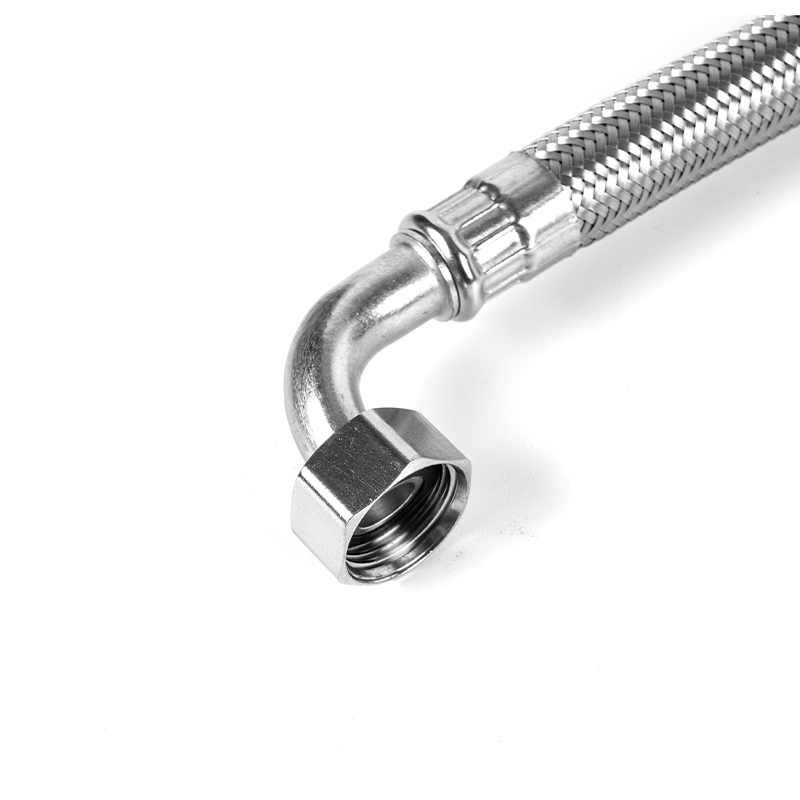
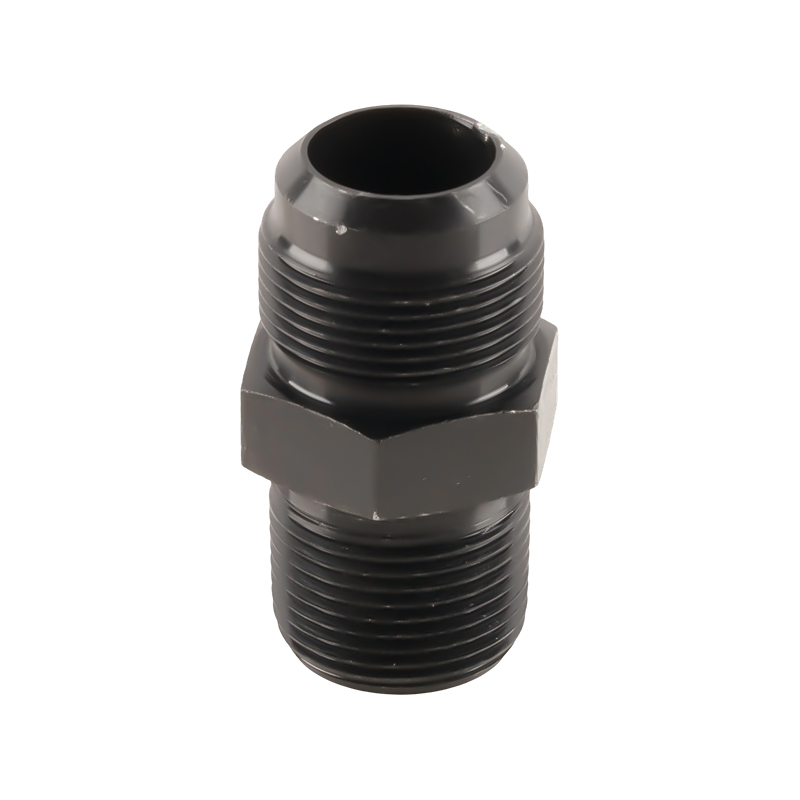
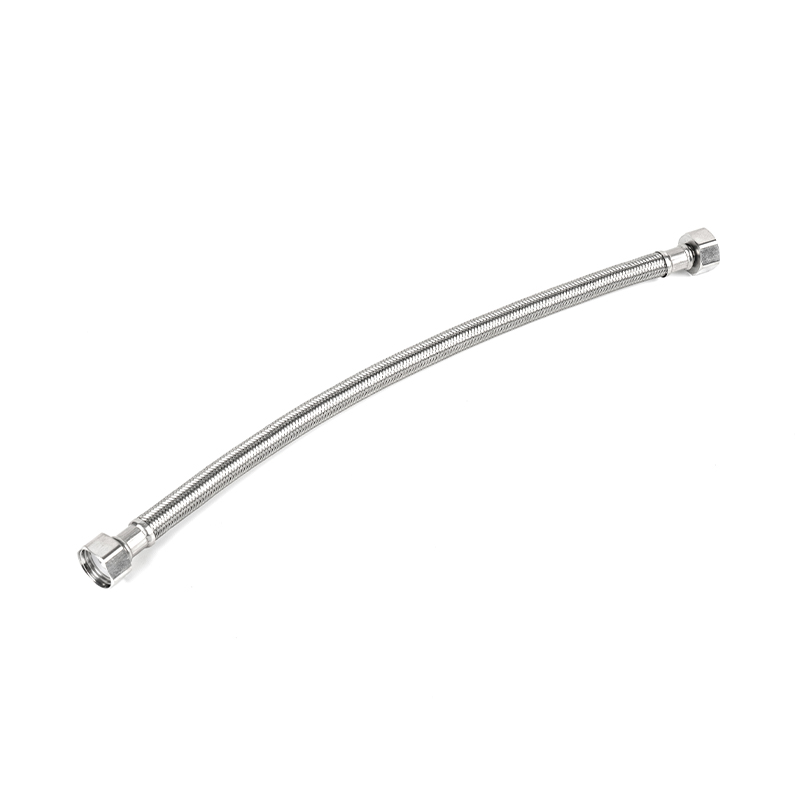
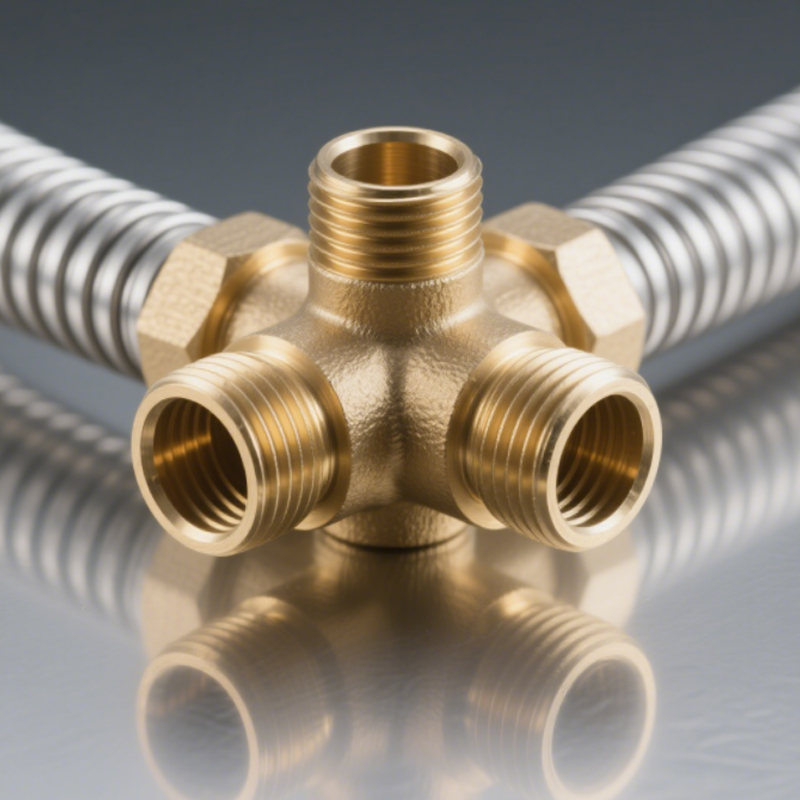
A stainless steel flexible gas connector is a corrugated metal tube — typically manufactured from 304 or 316 grade stainless steel — designed to connect a gas appliance to a fixed supply line. The corrugated wall structure gives the hose its characteristic flexibility, allowing it to bend, flex, and absorb micro-vibrations without fatigue cracking. End fittings, usually brass or stainless steel, are either flared, swaged, or threaded to create a leak-tight seal at both connection points.
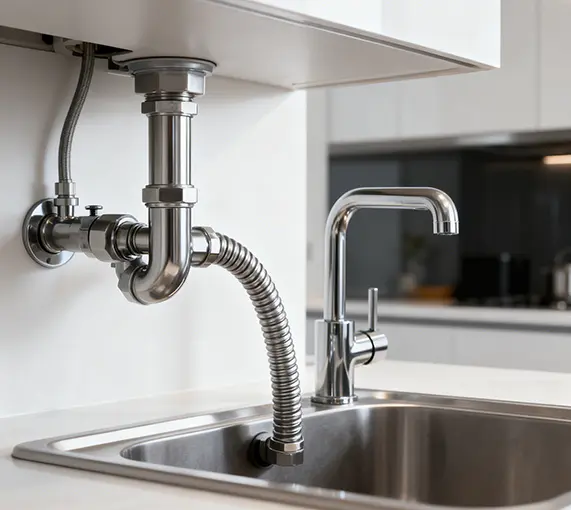
These connectors serve a range of applications including kitchen ranges, ovens, gas dryers, water heaters, fireplaces, barbecue grills, and commercial cooking equipment. The flexible gas hose for kitchen appliances category represents the highest-volume use case, where daily appliance movement — pulling out a range for cleaning, for example — creates stress on the connection that rigid piping would not survive.
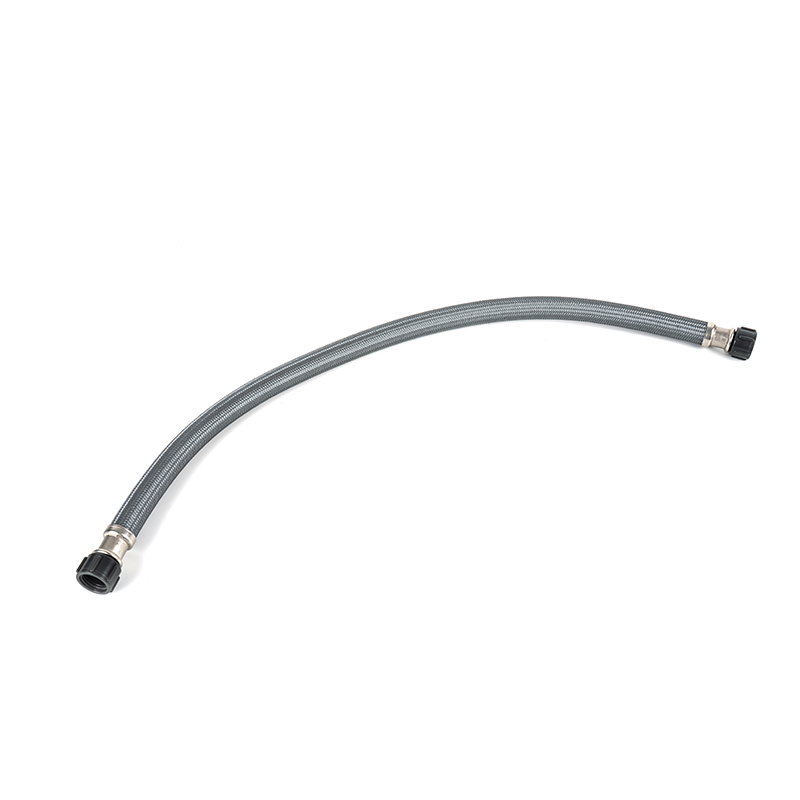
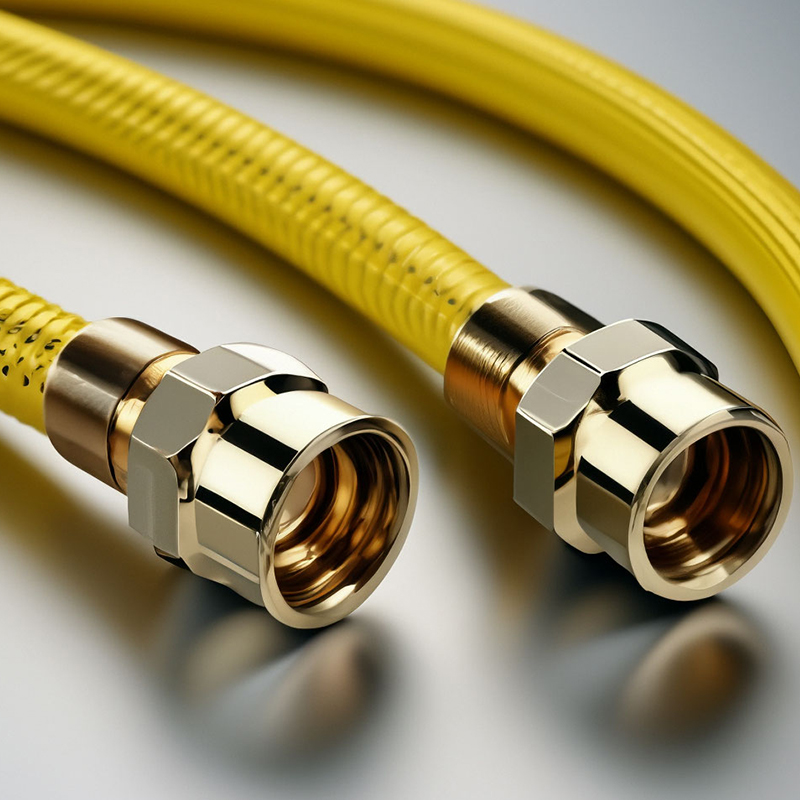
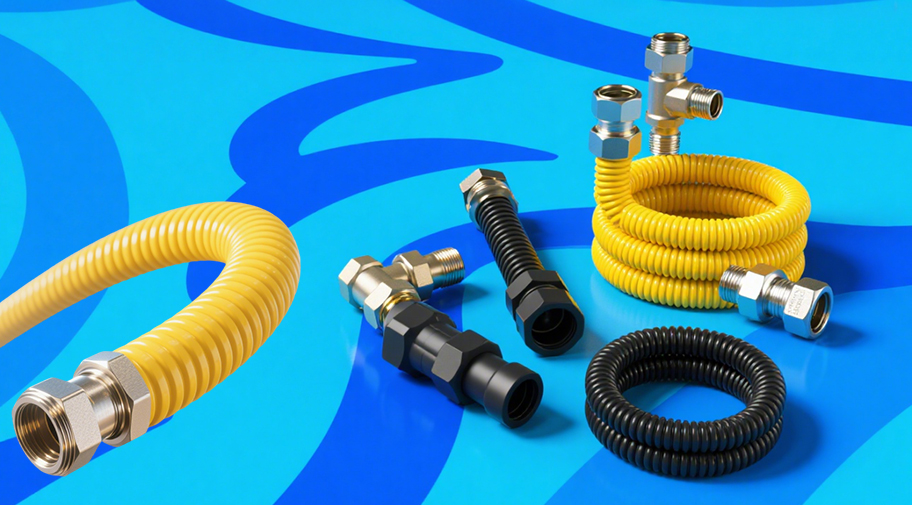
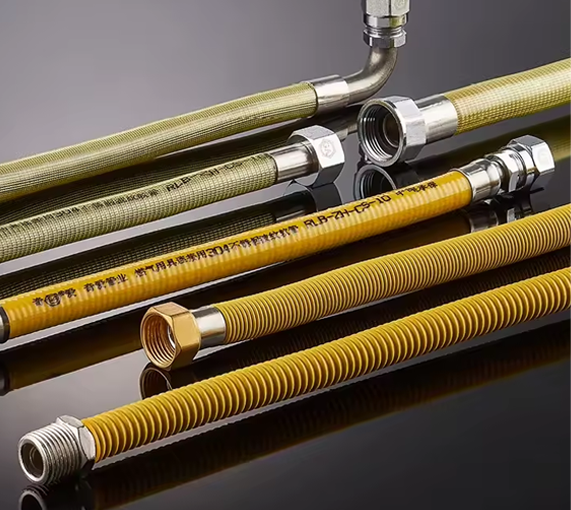
The outer appearance of the connector varies by design. Some are left as bare corrugated stainless steel. Others are wrapped in a PVC coated gas connector sleeve for additional corrosion and mechanical protection, or covered in a vinyl coating that gives the characteristic yellow coated stainless steel gas hose appearance widely recognized in residential plumbing supply markets.
The anatomy diagram above shows the three main functional zones of a standard flexible gas connector. The end fittings create the pressure-tight mechanical seal with the supply line and appliance inlet, and their material and thread specification must match the application exactly. The corrugated stainless steel body is the flexible core — its wall thickness, pitch, and material grade determine both pressure rating and fatigue life. The outer coating, where present, adds corrosion resistance and mechanical protection against abrasion, particularly in tight installation spaces where the hose may contact cabinet edges or wall surfaces.
Gas Hose Safety Standards: What Certifications Actually Mean
A gas hose safety standard certification is not a marketing label — it represents a product that has passed rigorous independent testing for pressure integrity, leak resistance, fire behavior, and mechanical durability. In different markets, different standards apply, and buyers should verify that the product they purchase carries the appropriate certification for their region and application.
| Standard | Region | Scope | Key Requirements |
|---|---|---|---|
| ANSI Z21.24 / CSA 6.10 | USA / Canada | Residential connectors | Pressure test, bending cycle, fire exposure |
| EN 14800 | Europe | Corrugated hoses for gas appliances | Tightness, endurance, mechanical resistance |
| GB/T 26002 | China | Stainless steel corrugated hoses | Pressure, fatigue, corrosion resistance |
| AS/NZS 1869 | Australia / NZ | Flexible hoses for gas appliances | Burst pressure, UV resistance, aging |
| ISO 10380 | International | Corrugated metal hose assemblies | Dimensional, pressure, fatigue testing |
Beyond certification, buyers should also look for ISO 9001 quality management certification at the manufacturer level — an indicator that the production process itself is systematically controlled, not just the final product tested in isolation. Haoyin (Ningbo) Bellows Technology Co., Ltd. holds ISO 9001, ISO 14001, and ISO 45001 certifications, reflecting a comprehensive commitment to quality, environmental responsibility, and occupational safety across every stage of production.
The chart above shows that North America and Europe maintain the most demanding regulatory frameworks for flexible gas hose products, with combined testing requirements covering pressure integrity, fire resistance, bending fatigue, and aging behavior. Australia and New Zealand follow closely, while Asian markets are rapidly converging toward international standards as residential gas infrastructure expands. For export-oriented manufacturers and international procurement teams, this data underscores the importance of sourcing from suppliers who hold multi-region certifications rather than a single domestic standard.
PVC Coated vs Yellow Coated Stainless Steel Gas Hose: Key Differences
The outer coating on a stainless steel flexible gas hose is more than cosmetic. It affects corrosion resistance, mechanical protection, temperature tolerance, identification compliance, and installation suitability. Two coating types dominate the market: PVC coated gas connectors and yellow coated stainless steel gas hoses. Understanding the difference helps buyers match the right product to their specific environment.
PVC Coated Gas Connector
PVC (polyvinyl chloride) coatings are applied over the corrugated stainless steel body to provide chemical resistance, moisture barrier protection, and abrasion resistance against cabinet edges and installation surfaces. PVC-coated connectors are particularly popular in humid environments — laundry rooms, outdoor kitchens, and coastal installations — where bare stainless steel may develop surface oxidation over time despite its inherent corrosion resistance. The PVC layer also cushions the hose against vibration-induced abrasion against hard surfaces. Typical PVC coating thickness ranges from 0.3 mm to 0.8 mm depending on the application class.
Yellow Coated Stainless Steel Gas Hose
The yellow coated stainless steel gas hose uses a yellow vinyl or polymer coating that serves both a protective and an identification function. In many markets and building codes, yellow is the internationally recognized color for natural gas piping and connections — making it immediately identifiable to installers, inspectors, and emergency responders. This color coding is not merely convention; some jurisdictions require yellow identification for all gas-carrying flexible connections visible in the installation space. Yellow-coated hoses are widely used for stainless steel gas hose for natural gas applications in residential kitchens, utility rooms, and commercial food service environments.
The radar chart makes the trade-offs between coating types immediately visible. PVC coated connectors score higher on corrosion resistance and UV resistance, making them the preferred choice for outdoor installations, coastal environments, and applications where the hose is exposed to sunlight or chemicals. Yellow vinyl coated hoses score highest on visual identification compliance — a critical advantage in commercial and regulated installations where code enforcement requires immediate gas line recognition. Both coatings deliver strong flexibility scores, reflecting their suitability for under-appliance routing in kitchens and utility rooms. Temperature tolerance is slightly higher for yellow-coated products depending on the specific polymer formulation, though both types handle standard residential gas appliance operating temperatures comfortably.
CSST Gas Connector Technology and Where It Fits
CSST (Corrugated Stainless Steel Tubing) represents a specific category of gas piping that extends the flexible connector concept to whole-house gas distribution. Unlike the short appliance connectors described above, CSST gas connector systems are used to route gas from the meter to individual appliances throughout a building, replacing or supplementing rigid black iron pipe runs. CSST gas piping installation offers dramatically faster installation times — industry data suggests CSST can reduce gas piping labor by 40–60% compared to threaded iron pipe — and eliminates hundreds of threaded joints that are each a potential leak point.
CSST differs from appliance connectors in several important ways. It is designed for permanent in-wall or under-floor routing, not for the final flexible connection at the appliance. It must be bonded to the electrical grounding system in most jurisdictions to protect against lightning-induced current — a requirement added to codes following incidents where indirect lightning strikes caused pinholes in early uncoated CSST products. Modern coated CSST, with its polymer jacket, provides significantly improved arc resistance and has addressed the primary lightning vulnerability that prompted earlier concern.
The comparison chart above quantifies the installation performance advantage of CSST over traditional rigid iron pipe across four key dimensions. CSST scores 90+ on installation speed, routing flexibility, and labor efficiency — advantages that translate to measurable project cost reductions in residential construction and renovation. Rigid iron pipe retains some advantages in absolute pressure rating for very high-flow commercial applications, but for the vast majority of residential gas distribution projects, CSST's performance profile makes it the clearly superior choice. The commercial flexible gas hose segment has also embraced CSST for trunk-line distribution in restaurants, hotels, and industrial food production facilities.
How to Install a Stainless Steel Flexible Gas Hose Safely
A flexible gas hose installation guide should always begin with a simple principle: gas connections require precision and compliance, not improvisation. The following best practices apply to standard appliance-level flexible connector installation in residential kitchens and utility rooms. For CSST system installation, always engage a licensed gas fitter or plumber.
- Select the correct connector length and diameter. The connector must reach from the supply shutoff to the appliance inlet without stretching, kinking, or requiring sharp bends. Standard lengths range from 12 inches to 72 inches; choose the shortest length that allows comfortable routing with a gentle curve.
- Verify thread compatibility before purchase. Gas connectors use either 1/2-inch or 3/4-inch NPT (National Pipe Thread) in North American markets, and metric or BSP threads in European and Asian markets. Mismatched threads cannot be forced to seal and must never be used with thread tape as a substitute for the correct fitting.
- Turn off the gas supply at the shutoff valve. Always confirm the valve is fully closed and gas odor has dissipated before disconnecting any fitting. If the existing connector shows corrosion, kinking, or mechanical damage, handle it carefully to avoid stress fractures during removal.
- Apply thread sealant correctly. Use only gas-rated thread sealant compound or PTFE tape rated for gas service on male NPT threads. Apply in the direction of thread rotation. Never apply sealant to the female fitting or to flare-type end connections, where the seal is made metal-to-metal.
- Hand-tighten first, then wrench-tighten. Over-tightening brass fittings can crack them. Typically, 1–2 turns past hand-tight is sufficient. Do not over-torque to compensate for a poor thread fit — that is a sign of incompatible parts.
- Test for leaks with soapy water or a gas leak detector solution. After restoring gas supply, coat all connection points generously with leak detector solution and observe for at least 60 seconds. Bubbles indicate a leak that must be addressed before the appliance is put back in service.
- Avoid routing the connector through walls, floors, or enclosed cabinets. Flexible appliance connectors are designed for exposed, accessible locations only. Routing through enclosed spaces is a code violation in most jurisdictions and prevents visual inspection.
This survey-based data reveals a concerning pattern: while nearly all DIY installers remember to turn off the gas (99% compliance), critical steps like performing a proper leak test (68% compliance) and replacing aging connectors proactively (58% compliance) are frequently skipped. Flexible gas hose leak detection is not optional — it is the final verification that the installation is safe. The gap between gas shut-off compliance and leak testing compliance represents a significant and preventable safety risk in residential settings. Professional installation by a licensed contractor dramatically reduces these compliance gaps.
Flexible Gas Hose Maintenance, Inspection, and Service Life
Even a correctly installed anti-corrosion gas connector made from premium stainless steel will degrade over time. Understanding the expected service life and recognizing the signs of deterioration is essential to maintaining a safe gas installation. Most manufacturers and gas utilities recommend replacing flexible gas connectors every 10–15 years as a precautionary measure, regardless of visible condition. Connectors that experience frequent appliance movement, vibration, or harsh environments should be inspected more frequently.
The integrity curve above illustrates how a flexible gas connector's condition gradually declines over its service life. Integrity remains high through the first 10 years under normal residential conditions, entering a caution zone between years 10–15 where inspection frequency should increase. Beyond 15 years, the cumulative effects of pressure cycling, thermal expansion, micro-vibration fatigue, and potential corrosion at fitting interfaces place the connector firmly in the replacement zone — even if no visible damage is apparent. This is a critical point: stainless steel gas hose failure is often internal, with corrosion pits or fatigue cracks forming inside corrugation valleys before any external sign is visible.
Signs That Require Immediate Replacement
- Any visible kinks, sharp bends, or crushing deformation in the corrugated body
- Surface corrosion, pitting, or discoloration — especially at fittings and corrugation valleys
- Coating cracking, peeling, or significant abrasion that exposes the stainless steel body
- Loose or corroded fittings that cannot be hand-tightened further without excessive force
- Any gas odor in proximity to the connector, even faint — this is an emergency requiring immediate action
- Connectors installed more than 15 years ago with no documented replacement history
Choosing the Right Gas Connector: A Practical Selection Guide
Selecting the correct stainless steel flexible gas connector for a specific application involves matching several variables simultaneously. Using the wrong product — even a high-quality one — creates risks that proper selection would eliminate. The table below provides a structured decision framework.
| Application | Recommended Type | Key Feature | Notes |
|---|---|---|---|
| Kitchen Range / Oven | Yellow coated SS, 1/2" NPT | Visual ID, movement tolerance | 24–36" length typical; replace when range is replaced |
| Gas Dryer | SS corrugated, 1/2" NPT | Vibration resistance | 36–60" length; check for vibration-induced fatigue annually |
| Commercial Kitchen | Commercial flexible gas hose, 3/4" or 1" | High flow, quick-disconnect | Must meet commercial code; quick-disconnect recommended |
| Outdoor BBQ / Patio | PVC coated, UV-resistant | UV and moisture resistance | Disconnect and store when not in use in cold climates |
| High-Temp Industrial | High temperature gas hose, 316SS | Temperature rating 600°C+ | Specify operating temp range to manufacturer; confirm braid type |
| Water Heater | SS corrugated, 1/2" or 3/4" | Corrosion resistance (boiler room) | Inspect annually; high humidity environments accelerate fitting corrosion |
When sourcing from a stainless steel gas hose supplier, request documentation of the following before placing an order: material certification (confirming SS 304 or 316 grade), pressure test reports (minimum 3× working pressure), applicable regional certification marks, and compliance with the relevant gas hose safety standard for your market. A professional OEM stainless steel flexible gas connector manufacturer like Haoyin (Ningbo) Bellows Technology Co., Ltd. should be able to provide all of these documents without hesitation.
Why Haoyin Bellows Technology Stands Apart as a Manufacturer
Haoyin (Ningbo) Bellows Technology Co., Ltd. is a professional enterprise specializing in the R&D, design, manufacturing, and sales of stainless steel bellows and flexible connection solutions. As a recognized OEM Stainless Steel Flexible Gas Connector manufacturer and ODM Custom CSST Gas Connector factory, the company serves clients in gas, plumbing, heating, and industrial fields worldwide.
Operating from an 18,000-square-meter standardized workshop facility covering 35 mu, Haoyin has built a full-process quality management system spanning raw material screening, structural design, precision manufacturing, performance testing, and after-sales support. The company holds ISO 9001, ISO 14001, and ISO 45001 certifications — a triple-standard achievement that reflects commitment to product quality, environmental responsibility, and workplace safety simultaneously.
As a National High-tech Enterprise and recognized Green Factory, Haoyin adheres to the production philosophy of "Striving for Excellence, Forging Quality" — a principle that manifests in every detail from the selection of isostatic stainless steel stock to the final hydraulic pressure test on every connector assembly before shipment. For buyers seeking a reliable, certified, and technically capable CSST gas connector and PVC coated gas connector supplier, Haoyin represents a partner with the depth and scale to support complex OEM requirements and standard product procurement alike.
Frequently Asked Questions
Answers to the questions real homeowners, contractors, and buyers ask most often about stainless steel flexible gas connectors.
Q1
How long does a stainless steel flexible gas connector last?
Under normal residential conditions, a quality stainless steel flexible gas connector can remain serviceable for 10–15 years. Most gas utilities and manufacturers recommend proactive replacement at this interval regardless of visible condition, as internal fatigue or micro-corrosion may not be externally visible.
Q2
Can I use a flexible gas connector for natural gas and LPG?
Most stainless steel flexible gas connectors are rated for both natural gas (methane) and LPG (propane/butane) at appropriate working pressures. Always verify the product's specifications and certification listing to confirm compatibility with your specific gas type — some fittings and pressure ratings differ between natural gas and LPG applications.
Q3
What is the difference between a flexible gas connector and CSST?
Flexible appliance connectors are short (typically 12–72 inches) and designed for the final connection between a fixed supply point and an appliance. CSST is a continuous corrugated tube system used for distributing gas throughout a building — from the meter to each appliance outlet — and is installed as a semi-permanent piping system, not a simple appliance connection.
Q4
Why is the yellow coating used on gas hoses?
Yellow is the internationally recognized color code for natural gas piping and connections. The yellow coating on a stainless steel gas hose serves both a protective function — guarding the corrugated steel against moisture and abrasion — and a compliance function, making the gas line immediately identifiable to installers, inspectors, and emergency personnel. Some building codes specifically require yellow identification for visible gas connections.
Q5
How do I check a flexible gas hose for leaks at home?
After any connection work, apply a commercial gas leak detector solution or a mixture of dish soap and water to all fittings and joints. Restore the gas supply and observe for at least 60 seconds. Bubbles indicate a gas leak at that point — shut off the gas immediately and do not use any ignition sources. Never use an open flame to check for gas leaks.
Q6
Does Haoyin support OEM and custom gas connector orders?
Yes. Haoyin (Ningbo) Bellows Technology Co., Ltd. is a professional OEM flexible gas connector manufacturer and ODM custom CSST factory, supporting custom lengths, diameters, end fittings, coating types, and certification requirements. The company's engineering team works directly with clients on specification development, prototype production, and compliance documentation for target market certifications.