




 English
 Español
 русский



A pattern keeps repeating in plant maintenance records: a flanged expansion joint on a steam or hot-water line is replaced, a spare is fitted, and roughly eighteen months later the new unit fails in almost the same place. The pipe is rarely the problem. In most cases the bellow is being asked to absorb more movement, at a higher pressure or temperature, than its convolution geometry was ever designed for.
So here is the conclusion first: industrial bellows are selected on three inputs — the movement the line will actually produce, the pressure and temperature combination the element must hold, and the number of cycles it will see in service. Pipe diameter alone tells you almost nothing. Everything below explains how those three inputs turn into a specification you can actually buy against.
What an Industrial Bellow Actually Does in a Piping System
An industrial bellow is a thin-walled, corrugated metal element that holds line pressure while it deforms. It is not a flexible pipe in the ordinary sense. It is a controlled elastic component: stainless steel tube formed into convolutions, fitted with flanged, threaded or welded ends, and designed into the piping system rather than bolted on at the end.
Absorbs thermal expansion
Long steam, hot-water and process runs grow when they heat up. A bellow takes up that growth between anchors instead of letting it push on pump nozzles, vessels and supports.
Isolates vibration and noise
Placed close to pumps, compressors or chillers, the corrugated element breaks the rigid path that carries vibration and structure-borne noise into the rest of the network.
Tolerates misalignment
A well-guided line still arrives with small lateral and angular offsets. The bellow absorbs them without introducing the high local stresses a rigid spool would suffer.
Because the element deforms elastically, it behaves like a spring. It has a spring rate in N/mm and an effective area in cm2, and those two numbers convert movement into force on anchors, guides and connected equipment. That is precisely why the Expansion Joint Manufacturers Association (EJMA) standards and piping codes such as ASME B31.3 treat expansion joints as a design element, not as a fitting you pick from a size chart.
Types of Industrial Bellows and Where Each One Fits
Four constructions cover most industrial work, and they are not interchangeable. Specifying a welded diaphragm unit where a formed bellow belongs, or the other way round, is one of the quieter reasons a project ends up with repeated failures and no obvious root cause.
| Construction | How it is made | Movement capability | Where it fits |
|---|---|---|---|
| Formed (convoluted) bellow | Seamless or welded tube rolled or hydraulically formed into convolutions, single-ply or multi-ply | Highest axial travel per unit length | Pipe expansion joints from DN25 upward: steam, hot water, exhaust, district heating |
| Welded diaphragm bellow | Stack of thin annular diaphragms welded alternately at the inner and outer edges | Small travel, very high pressure | Instrumentation, mechanical seals, small-diameter high-pressure lines |
| Machined bellow | Convolutions cut from solid bar or heavy-wall tube | Very limited travel, very repeatable | Sealing elements, precision actuation, low-cycle duties |
| Fabric or rubber joint | Coated fabric or elastomer body with retaining rings | Large movement, low pressure | Ductwork, air handling, low-pressure water lines — a different product family |
Two rules of thumb matter in practice. Movement and pressure trade against each other: deeper and more numerous convolutions give more travel and less pressure capability at a given wall thickness. And non-metallic joints, often lumped into the same enquiry as industrial bellows, operate at far lower pressures and should be quoted as a separate item.
Figure 1: Indicative index of axial travel capability by construction type. Real values depend on diameter, ply count, wall thickness and design pressure.
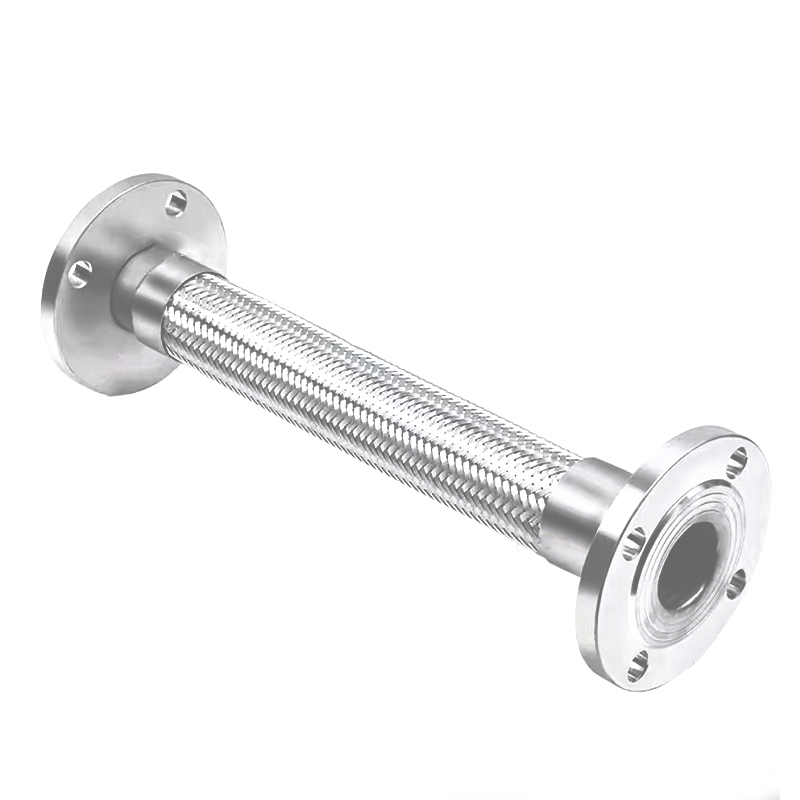
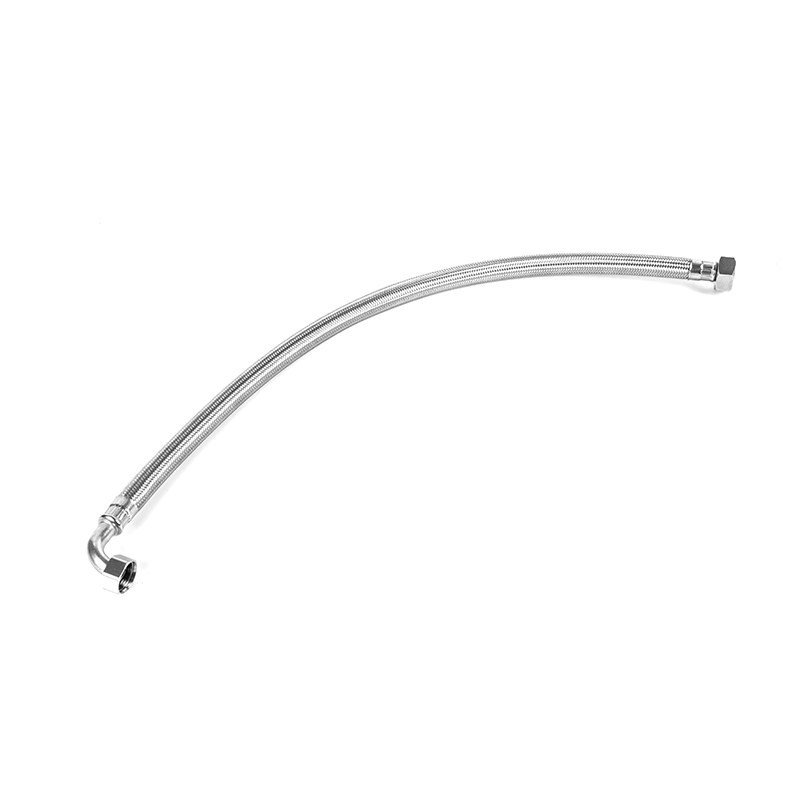 Flexible Metal Compensator Corrugated Expansion JointStainless or carbon steel compensator for piping flexibility and expansion compensation, available in DN255–DN600 and 0.6–1.6 MPa with flange, welding or quick-connect ends.View Product →
Materials and Construction: What to Verify on the Drawing
Material grade, ply count and wall thickness decide corrosion life and fatigue life, and these are the three items most often left vague on a purchase requisition.
- Grade: 304 for general service; 316L where chlorides or condensate are present; 321 or 347 for higher temperatures; higher alloys for aggressive media.
- Ply count: single-ply walls of roughly 0.2 to 0.5 mm are common; multi-ply construction raises pressure capability without making the element noticeably stiffer.
- Liner: an internal sleeve shields the convolutions from flow erosion and reduces turbulence-driven vibration. Check the flow direction arrow before installation.
- Cover: an external shroud protects the convolutions from mechanical damage, insulation loads and weld spatter.
- Ends and hardware: flange drilling to ANSI B16.5, EN 1092-1 or JIS, plus tie rods or limit rods wherever the system needs restraint rather than free movement.
Figure 2: Anatomy of a flanged metal bellow expansion joint — corrugated core, liner, cover, flanges and tie rods.
Sizing and Fatigue Life: The Numbers That Decide Performance
Specify movement before you specify anything else. Piping systems move in three ways, and a joint that is generous in one direction can be poor in another: axial along the pipe, lateral side to side, and angular rotation at the ends. Most supplied joints are sized for a dominant axial case with a defined allowance for the other two, and the allowable values should be written into the data sheet.
The arithmetic is straightforward. A DN100 joint with an axial spring rate of 180 N/mm moving 30 mm develops roughly 5.4 kN of thrust that the anchors and guides must handle. If the spring rate is not on the data sheet, nobody can size the supports correctly, and the failure usually appears at the anchor rather than at the bellow.
Figure 3: Fatigue life drops steeply once movement per convolution passes the rated value. The curve shape is illustrative; actual cycle counts come from the design analysis defined in EJMA.
For a step-by-step walk-through of the sizing inputs — neutral position, installation temperature and pre-compression — see this guide to axial expansion bellows and how to select them.
Installation and Field Failures: Where Most Problems Start
Most premature bellow failures are installation failures. The recurring ones are worth listing, because they are cheap to prevent and expensive to discover after commissioning.
- Using the bellow to pull two pipe ends together. The convolutions take a permanent set before the line is even pressurized.
- Missing guides or anchors, so the joint absorbs movement belonging to the whole run instead of its own span.
- Welding close to the bellows without a heat sink, causing heat tint, distortion and locally reduced corrosion resistance.
- Twisting during flange bolting. Bolts should be tightened in a star pattern, with the joint supported until the last bolt is seated.
- Shipping bars removed too early, or left in place after installation so the element cannot move at all.
- Storage and handling damage: dropped units, damaged covers, or insulation pressed directly against bare convolutions.
One rule prevents the majority of these cases: never use the bellow to correct pipe misalignment. The pipe ends must already be aligned and supported within their own tolerances before the joint is bolted in.
Buying Industrial Bellows: Inspection and Supplier Checks
A bellow is a pressure-containing part, so the paperwork matters as much as the price. Ask for hydrostatic testing at 1.5 times design pressure, a pneumatic or helium leak test on critical duties, dye penetrant or radiographic examination of end welds, a dimensional report and a measured spring rate.
- Material certificates to EN 10204 3.1, with heat numbers traceable to the convolutions
- Quality system certification such as ISO 9001, plus PED or CSA approval where the destination market requires it
- In-house convolution forming and an on-site test bench, rather than a trading operation that outsources both
- A written data sheet listing ply count, spring rate, effective area and allowable movement per direction
Haoyin (Ningbo) Bellows Technology, for example, publishes an 18,000 m2 workshop, more than 50 production machines, a stated monthly output above 300,000 metres and ISO 9001, 14001 and 45001 certification, which is the kind of capability statement a buyer can verify during a supplier audit. More detail on the manufacturing scope is available on the company homepage.
Corrugated Stainless Technology in Gas Connections
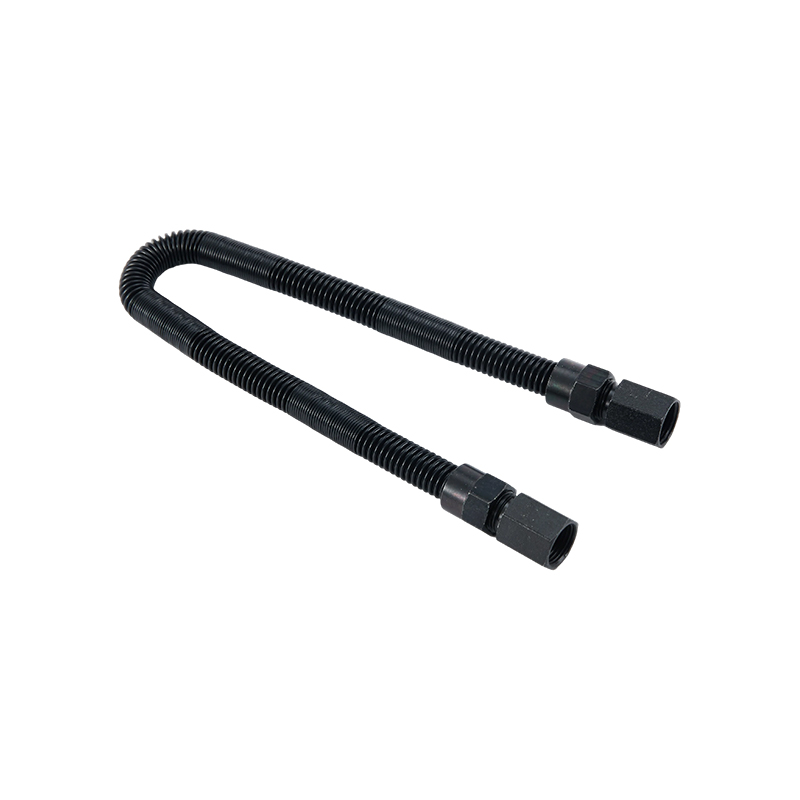
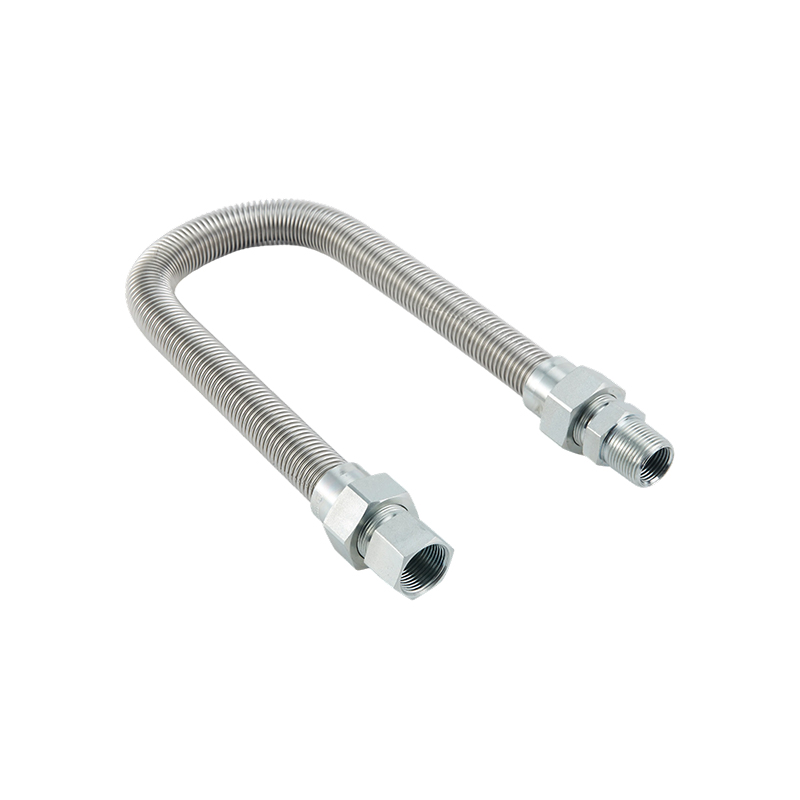
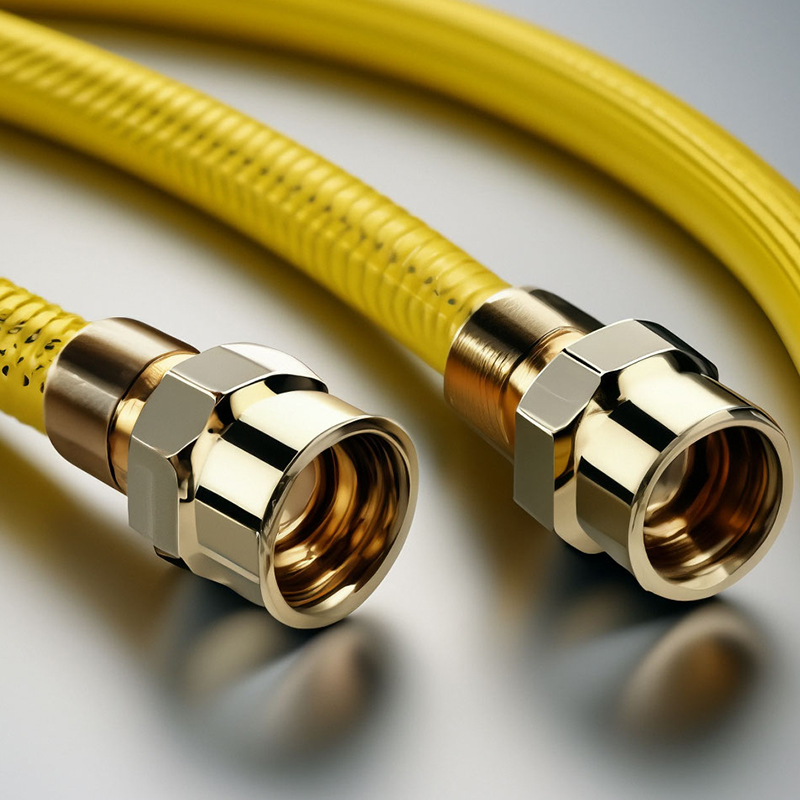
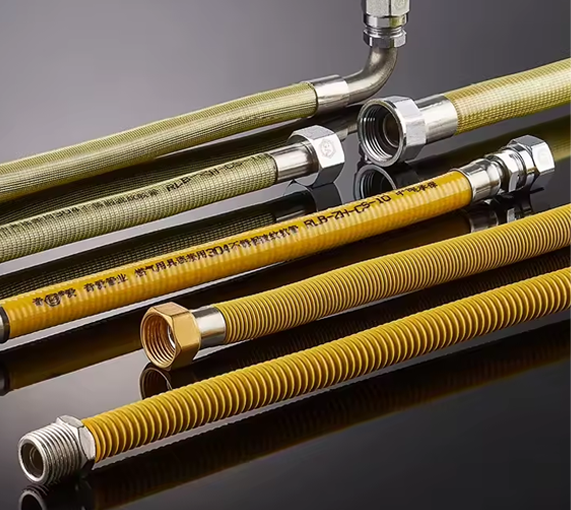
The same corrugation principle scales down to appliance connections. Stainless steel flexible gas connectors in the DN10 to DN25 range use a formed corrugated core with protective coating and mechanical end fittings, and CSA-certified versions are specified where North American codes apply. A whistle-free variant is available for installations where gas velocity through the corrugations produces an audible tone that residents notice at night.
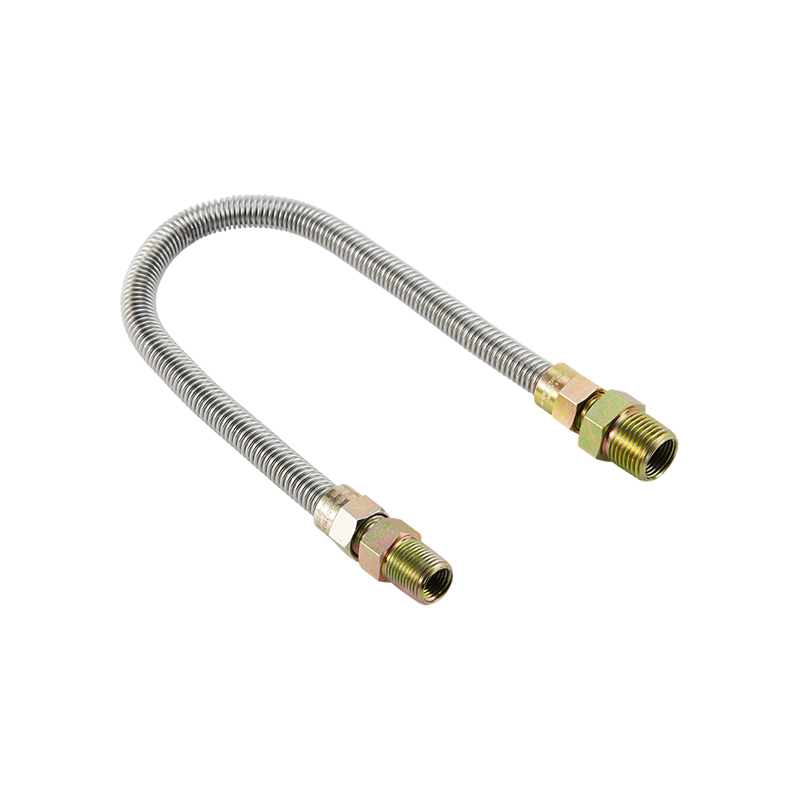 Stainless Steel Gas Connector Category and CSA-Certified OptionsCorrugated 304 stainless steel gas connectors for natural gas and LPG, DN10–DN25, with CSA-certified and whistle-free variants plus related water-liner categories.View Product →
Corrugated Liners in Water and Heating Systems
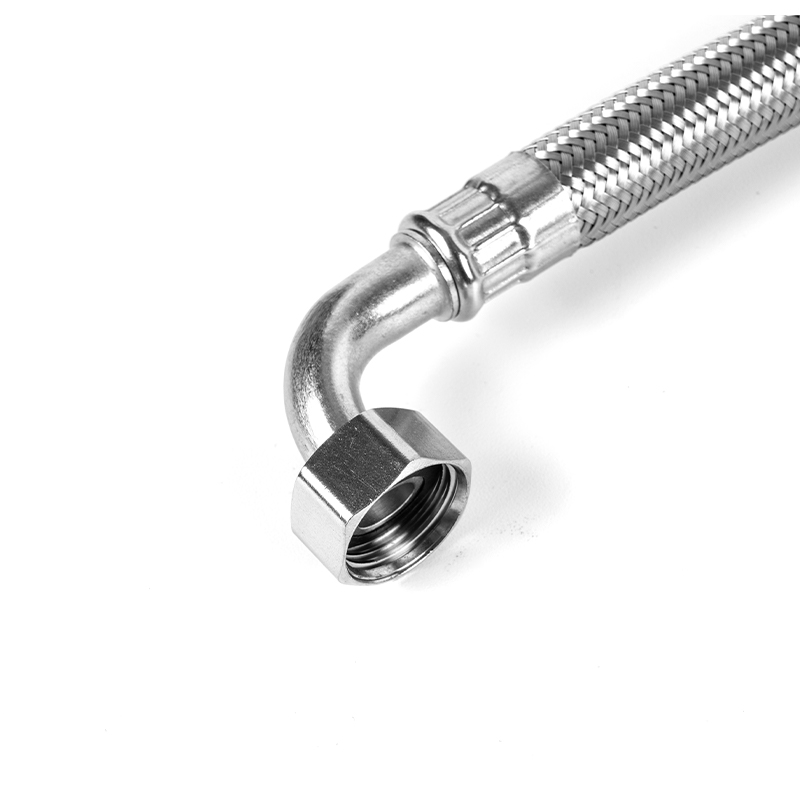
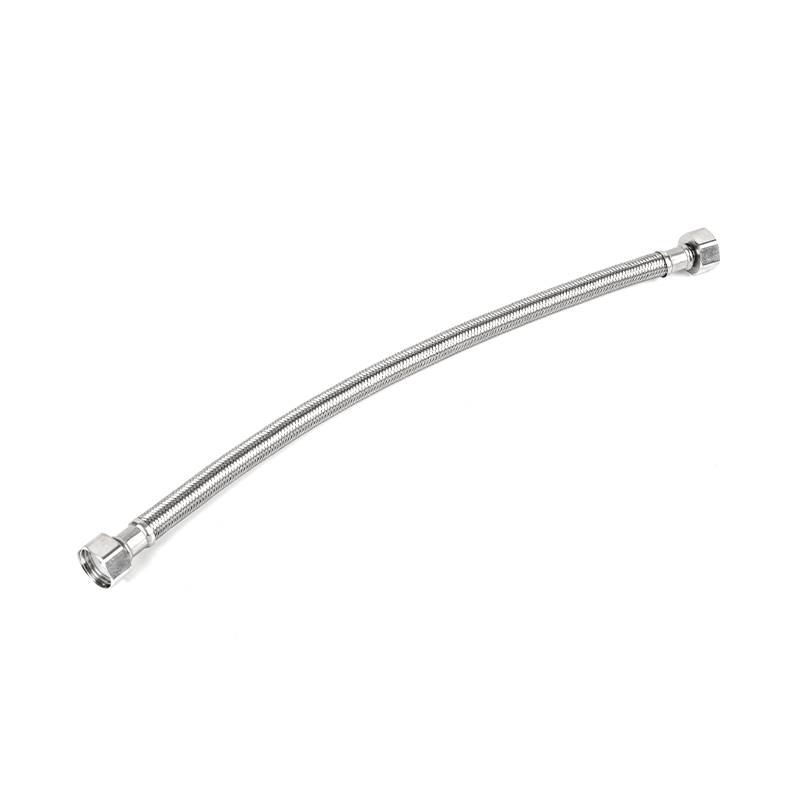
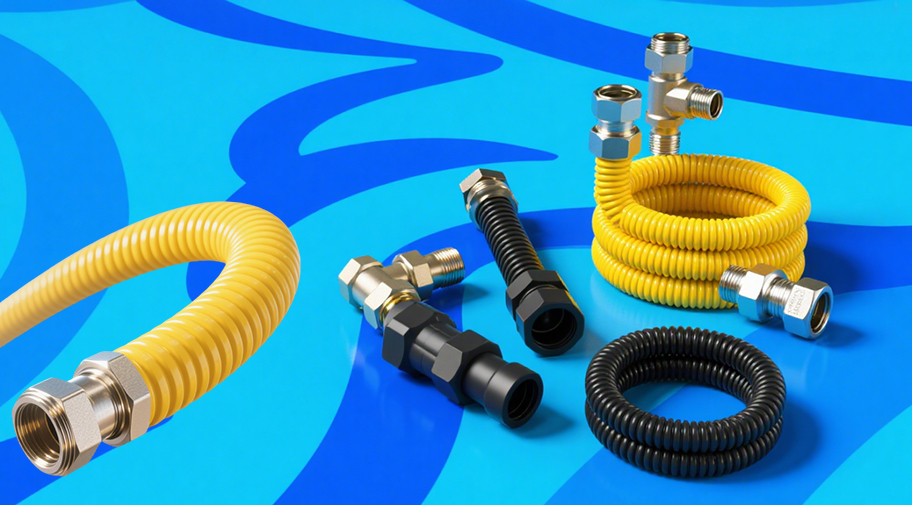
Flexible water lines apply the same thinking with different materials. An EPDM, PE or PVC inner liner carries the water, a PET or stainless steel wire outer layer takes the pressure and abrasion, and the assembly is closed with copper, nylon or stainless steel nuts. Elbow fittings cover the corners where a straight run will not fit. In all three product families — compensators, gas connectors and water liners — the selection logic is the same: define the media, the pressure, the temperature and the movement first, then choose the construction.
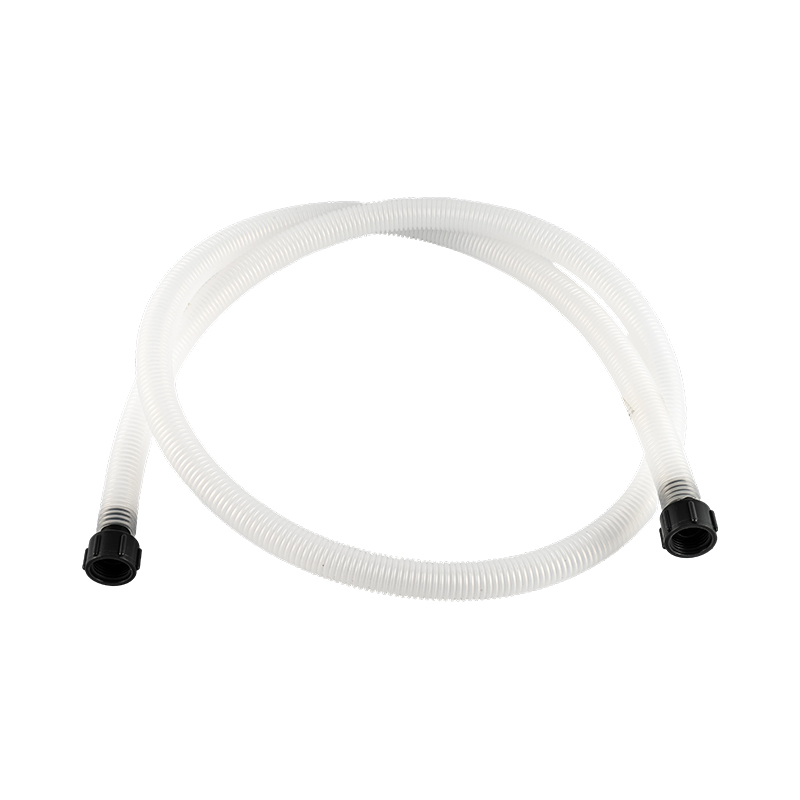 Flexible Plumbing Pipe and Water Liner CategoryPE, PVC, EPDM and braided water liners, inner tubes, outer braids, nuts and stainless steel elbow connectors for plumbing, gas, HVAC and water heater use.View Product →
Industrial Bellows: Frequently Asked Questions
Q1: What is an industrial bellow used for?
It absorbs thermal expansion, isolates vibration and tolerates minor misalignment in piping systems, while still containing the line pressure.
Q2: What is the difference between a bellow and an expansion joint?
The bellow is the corrugated element. The expansion joint is the complete assembly: bellow, flanges, liner, cover and tie rods.
Q3: Is 304 or 316L stainless steel better for metal bellows?
304 suits clean steam and water service; 316L is preferred where chlorides, condensate or mildly corrosive media are present.
Q4: How do I calculate the movement an expansion joint must absorb?
Multiply the pipe length by the thermal expansion coefficient and the temperature rise, then split the total between the anchors and the joint.
Q5: How long do industrial bellows last?
Life is cycle-based, not calendar-based. A correctly sized unit typically runs for many thousands of full cycles, while over-travel cuts that sharply.
Q6: How do you check a bellow for leaks?
Hydrostatic and pneumatic tests at the factory, plus helium leak testing on critical duties; in service, look for dye staining and pressure loss.