




 English
  Español
  русский


Picture a 6-inch steam header that runs 80 meters from a boiler to a heat exchanger. At startup, the pipe grows several centimeters. If that movement is restrained, the force can shear flange bolts or crack welds. A pipe expansion joint solves this, but only if you choose the right type for the movement, medium, and temperature. Here is the short answer: metal bellows joints handle the widest range of temperature and pressure; rubber joints suit low-pressure water and air; fabric joints dominate large ducts and flue gas; PTFE joints cover aggressive chemicals; and slip-type joints work for low-cost, low-maintenance steam lines. The rest of this article explains how each type behaves and where it fails.
The Five Core Pipe Expansion Joint Types at a Glance
Engineers typically group pipe expansion joints into five families. The table below gives a quick comparison. The temperature ranges are typical values from common manufacturer data; your specific medium, pressure, and cycle life may narrow them further.
| Type | Movement Absorbed | Typical Medium | Temperature Range | Best For |
|---|---|---|---|---|
| Metal bellows | Axial, lateral, angular | Steam, gas, chemicals | -200 to 800°C | High pressure and high temperature piping |
| Rubber | Axial, lateral, angular | Water, air, mild chemicals | -20 to 120°C | Low-pressure HVAC and water lines |
| Fabric | Axial, lateral | Flue gas, air ducts | -50 to 1000°C | Large ducts and low-pressure gas |
| PTFE | Axial, lateral | Acids, solvents, caustics | -50 to 260°C | Chemical and pharmaceutical plants |
| Slip-type | Axial only | Steam, hot water | Up to 400°C | Steam lines needing large travel |
Metal Bellows Expansion Joints: The Workhorse for Piping Systems
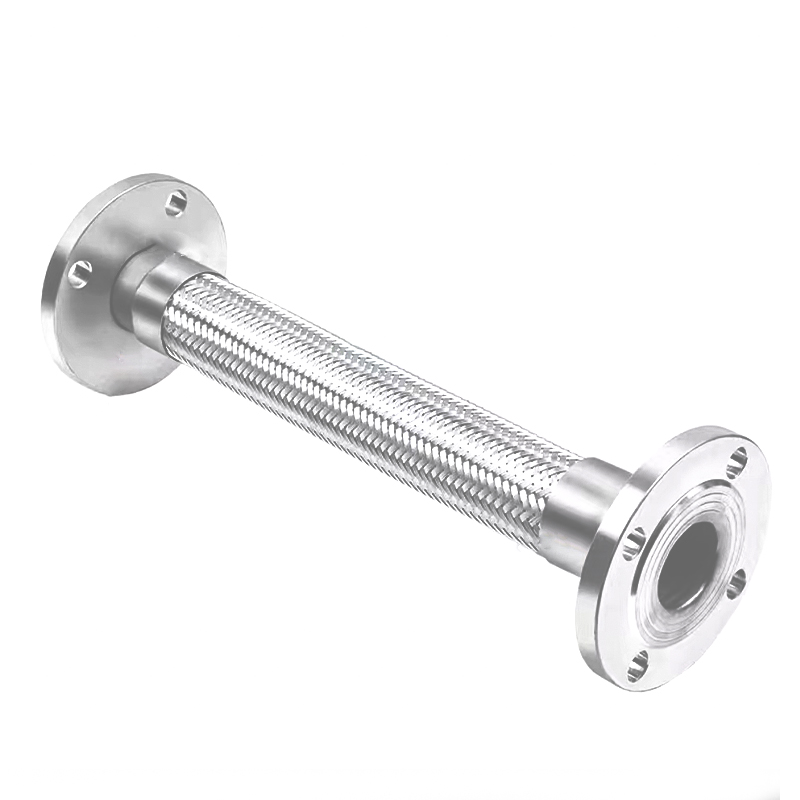
Metal bellows expansion joints use a thin-walled corrugated cylinder that flexes like an accordion. According to the Expansion Joint Manufacturers Association (EJMA), the bellows is the primary pressure-containing element. A single bellows unit absorbs axial compression and extension but offers limited lateral movement. A universal (double) bellows adds a center pipe between two bellows, which lets the unit handle lateral deflection and angular rotation. For piping systems where thermal growth is large and anchors are expensive, the universal type often pays for itself.
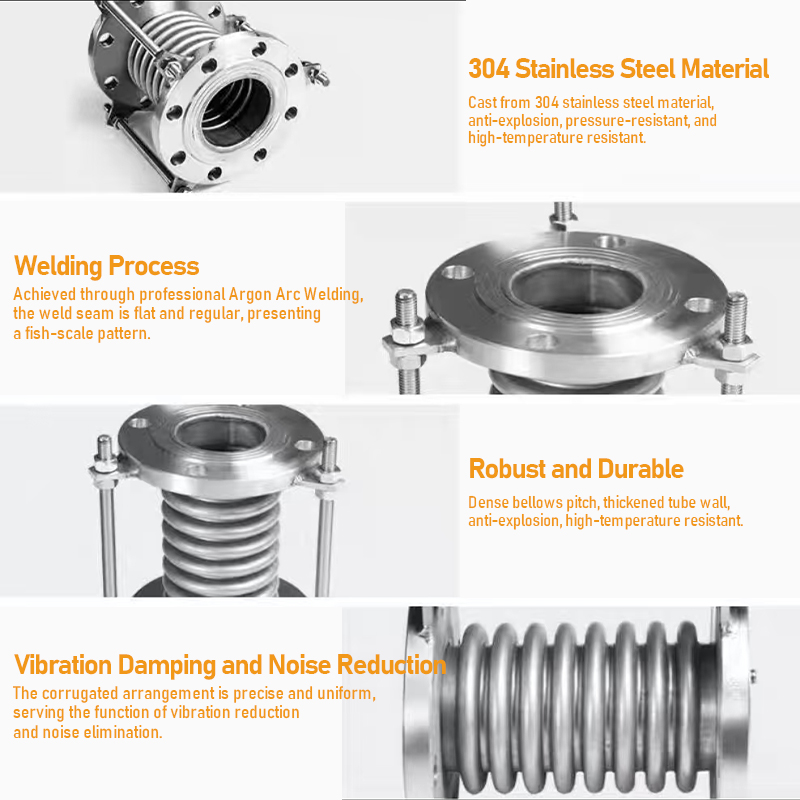 Flexible Metal Compensator Corrugated Expansion Joint for Piping SystemsThis flexible metal compensator absorbs axial, lateral, and angular movement, vibration, and noise in water, steam, or oil piping, with flange or welded connections.View Product →
Configurations such as hinged, gimbal, and pressure-balanced joints change how the thrust load is managed. A hinged joint rotates in one plane and carries the pressure thrust through its hinges, so the pipe anchors only need to resist the bending moment. A gimbal joint allows rotation in any plane. A pressure-balanced joint uses a third bellows or a balancing chamber to eliminate the thrust load on the anchors—useful on turbine exhausts or large-diameter lines where anchors would be enormous.
Hinged, Gimbal, and Pressure-Balanced Configurations
Hinged and gimbal joints are common in flue gas ducts and hot air lines. Pressure-balanced joints appear in compressor discharge and turbine exhaust systems. Each configuration trades cost and complexity for lower anchor loads. If you are unsure which one fits, start with the movement diagram for your line.
For a deeper look at sizing and installation, see this pipe expansion joint types sizing and installation guide.
Rubber, Fabric, and PTFE Expansion Joints
Rubber Expansion Joints
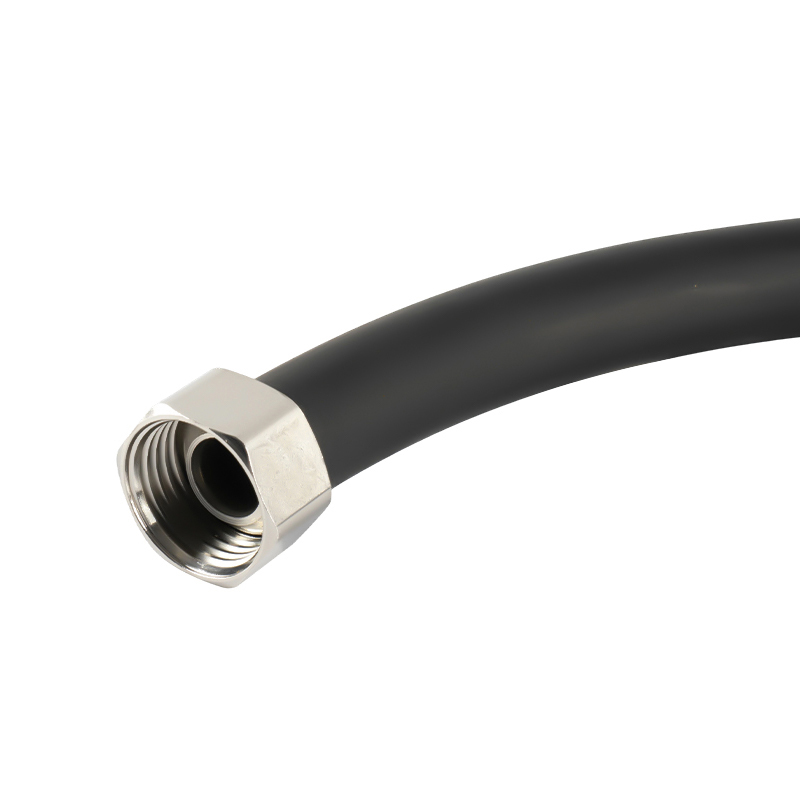
Rubber expansion joints are molded from natural or synthetic rubber with fabric reinforcement. They cost less than metal bellows and damp vibration well, which makes them popular on chilled water and condenser lines. The trade-off is temperature and pressure. Most standard rubber joints are limited to about 120°C and 1.6 MPa. Exceeding those limits risks delamination or ballooning. They also need careful alignment—rubber is not forgiving of offset flanges.
Fabric Expansion Joints
Fabric expansion joints are built from flexible fabrics, sometimes with layers of PTFE or fiberglass. They handle very high temperatures and large ducts, but they are not pressure-containing in the same way as metal or rubber. You will see them on boiler flue gas ducts and air handling systems. Their weakness is abrasion and chemical attack; a fabric joint in a duct carrying ash or corrosive gas needs a protective liner.
PTFE Expansion Joints
PTFE expansion joints combine a PTFE liner with a rubber or metal carcass. The PTFE resists acids, solvents, and caustics that would destroy rubber. They are common in chemical processing, pharmaceutical, and food plants. Because PTFE creeps under load, these joints usually need external limit rods or guides to control movement. They are not a good choice for high-pressure steam.
Slip-Type and Other Specialized Expansion Joints
Slip-type expansion joints use a packing gland that allows a pipe to slide in and out. They absorb axial movement only, but they offer a large travel range in a compact body. Steam plants like them because they are easy to repack and do not generate thrust. The downside is leakage risk—the packing must be maintained. Other specialized types include lens expansion joints for high-pressure boilers, rectangular joints for ductwork, and externally pressurized joints for low-pressure, large-diameter lines.
How to Match the Right Type to Your Piping System
Start with the movement. If the pipe grows axially, a single bellows or slip joint works. If the line also shifts laterally, you need a universal or gimbal joint. Next, check the medium and temperature. Rubber is out above 120°C; PTFE is out above 260°C; metal bellows can go much higher. Then look at pressure and the anchor load. A pressure-balanced joint may cost more upfront, but it can eliminate massive anchor structures.
Finally, think about maintenance access and anchor design. A joint that is buried or surrounded by scaffolding will not get the inspection it needs. For critical lines, a pressure-balanced or hinged joint can reduce the anchor steel by several tons, which often offsets the higher unit price.
Expansion Joint vs. Pipe Loops: A Practical Comparison
Before you buy an expansion joint, compare it with a pipe loop. A loop is just extra pipe bends that flex with thermal growth. It has no moving parts, no packing, and no bellows to fatigue. But it needs space, more pipe, and more insulation. On a 12-inch steam line, a loop may take a 6-meter by 6-meter footprint. An expansion joint can fit in the same space as a flange. The trade-off is maintenance: a metal bellows has a finite fatigue life, while a pipe loop does not. For clean, high-pressure steam in a crowded plant, the joint usually wins. For buried or inaccessible lines, a loop may be the safer choice.
Installation and Maintenance Checks That Prevent Failures
Most expansion joint failures trace back to installation, not manufacturing. Never use the joint to pull misaligned flanges together. Support the pipe so the joint does not carry the weight of the line. Remove shipping rods only after the joint is installed and the anchors are ready. During operation, inspect for corrosion, bellows dents, and loose liner. For rubber joints, check for cracking and hardening. For slip-type joints, monitor packing leakage and adjust the gland. A simple annual inspection can double service life.
Frequently Asked Questions
Q1: What is the most common pipe expansion joint type?
Metal bellows expansion joints are the most common in industrial piping because they handle high temperatures and pressures. Rubber joints are more common in low-pressure water and HVAC systems.
Q2: How do I choose between metal and rubber expansion joints?
Check temperature first. Metal bellows work from cryogenic to 800°C or higher. Rubber is limited to about 120°C. If the line carries steam or hot oil, choose metal. For chilled water or air, rubber is usually enough.
Q3: What is the difference between a single and universal expansion joint?
A single expansion joint has one bellows and mainly absorbs axial movement. A universal joint has two bellows with a center pipe, so it can absorb lateral and angular movement as well.
Q4: How long do metal bellows expansion joints last?
Service life depends on cycle count, pressure, and temperature. According to EJMA guidelines, bellows are designed for a specific number of full cycles. A typical steam line joint may last 10 to 20 years if installed and maintained correctly.
Q5: Can expansion joints handle both axial and lateral movement?
Yes, but not all types. Universal, gimbal, and hinged joints can handle lateral and angular movement. Single bellows and slip-type joints are mostly for axial movement.
Q6: What causes expansion joint failure in piping systems?
Common causes include misalignment during installation, missing pipe guides, corrosion, and exceeding the rated pressure or temperature. A simple annual inspection can catch most problems early.