




 English
  Español
  русский


To detect a leak in a stainless steel flexible gas connector, apply a liquid leak detection solution or thick soapy water to every fitting, joint, and corrugation along the connector body while the gas supply is on, then watch for bubbles — any bubble formation, however small, confirms a leak. Never use a flame to test for gas leaks. This method is reliable, low-cost, and suitable for both natural gas and propane systems. If bubbles appear, shut off the gas supply immediately, ventilate the area, and replace the connector before restoring service. This article covers the full detection process, the conditions that cause leaks, and the safety steps that must follow.
Why Gas Connector Leaks Are a Serious Safety Risk
A leaking stainless steel flexible gas connector is not a minor maintenance issue — it is a fire and carbon monoxide hazard. Natural gas (primarily methane) becomes flammable at concentrations of just 5–15% in air (the lower and upper explosive limits). Propane is even more hazardous, with a flammable range of 2.1–9.5%. In an enclosed kitchen or utility room, a small, slow leak can reach these concentrations in minutes if ventilation is inadequate.
According to the U.S. Consumer Product Safety Commission (CPSC), gas connector failures are implicated in approximately 50–80 residential gas incidents per year in the United States, including fires and explosions. The National Fire Protection Association (NFPA) identifies improper installation and aging connectors as the two leading contributing factors in these events.
- Natural gas leaks: Odorless by nature — mercaptan odorant (rotten egg smell) is added by utilities, but concentrations below the detectable threshold can still accumulate to hazardous levels.
- Propane leaks: Heavier than air — settles at floor level and in low-lying areas, making it particularly dangerous in basements and utility closets.
- Carbon monoxide risk: A partially restricted or leaking connector can disrupt burner combustion, causing incomplete combustion and CO generation even without a visible flame anomaly.
Step-by-Step Leak Detection Method
The following procedure applies to any corrugated stainless steel gas connector pipe installed on a residential or light commercial gas appliance. Perform this test at least once a year and any time the connector has been disturbed, moved, or subjected to mechanical stress.
Tools and Materials Required
- Commercial gas leak detection solution (preferred) or dish soap mixed with water to a thick, gel-like consistency
- Small paintbrush or applicator bottle for precise application
- Flashlight for inspecting corrugation valleys and fitting threads
- Clean dry cloth for wiping solution after the test
- Optional: electronic combustible gas detector for confirming results or testing in areas where visual inspection is difficult
Detection Procedure
- Ensure the area is ventilated. Open windows and doors before beginning. Turn off all ignition sources — pilot lights, electrical switches, and open flames.
- Turn on the gas supply at the shutoff valve. Do not operate the appliance — you need gas pressure in the connector without combustion.
- Apply leak detection solution generously to both end fittings (flare nuts or NPT connections), the entire length of the corrugated body, and any mid-connector unions if present. Work the solution into every corrugation valley along the pipe body.
- Wait 10–15 seconds and observe closely. Bubbles forming and growing at any point indicate escaping gas. A single small bubble that appears and pops counts as a positive result.
- If no bubbles appear after 30 seconds, wipe the solution off thoroughly with a dry cloth. Residual solution left on stainless steel fittings can promote chloride-induced corrosion over time.
- If bubbles appear, shut off the gas supply valve immediately, leave the area, ventilate thoroughly, and do not restore gas service until the connector has been replaced by a qualified person.
Using an Electronic Gas Detector
A combustible gas detector is particularly useful for connectors routed behind appliances where visual access is limited. Probe the detector tip slowly along the full length of the connector, holding it within 1–2 cm of the surface. Most detectors alarm at gas concentrations of 10–20% of the lower explosive limit (LEL), well below any dangerous threshold. This method detects leaks that may be too slow or too small to produce visible bubbles in a brief soap test.
Warning Signs of a Leaking Gas Connector Without Testing
Not all leaks are discovered through scheduled testing. The following warning signs during normal appliance use should prompt immediate investigation with the soap-bubble method:
| Warning Sign | Likely Cause | Urgency Level |
|---|---|---|
| Rotten egg or sulfur smell near appliance | Mercaptan odorant escaping with gas | Immediate — evacuate and call utility |
| Hissing sound near connector | High-velocity gas escaping through a crack or loose fitting | Immediate — shut off gas supply |
| Yellow or orange burner flame (normally blue) | Incomplete combustion; possible pressure anomaly from partial leak | High — test and inspect within 24 hours |
| Higher-than-normal gas bill without usage change | Slow leak continuously venting gas | Moderate — inspect all connectors |
| Visible corrosion, discoloration, or deformation on connector | Physical damage to corrugated body or fittings | High — replace connector before next use |
| Dead vegetation or bubbling in soil near outdoor gas line | Underground gas migration from a connector leak | Immediate — call utility company |
Common Causes of Leaks in a Corrugated Stainless Steel Gas Connector Pipe
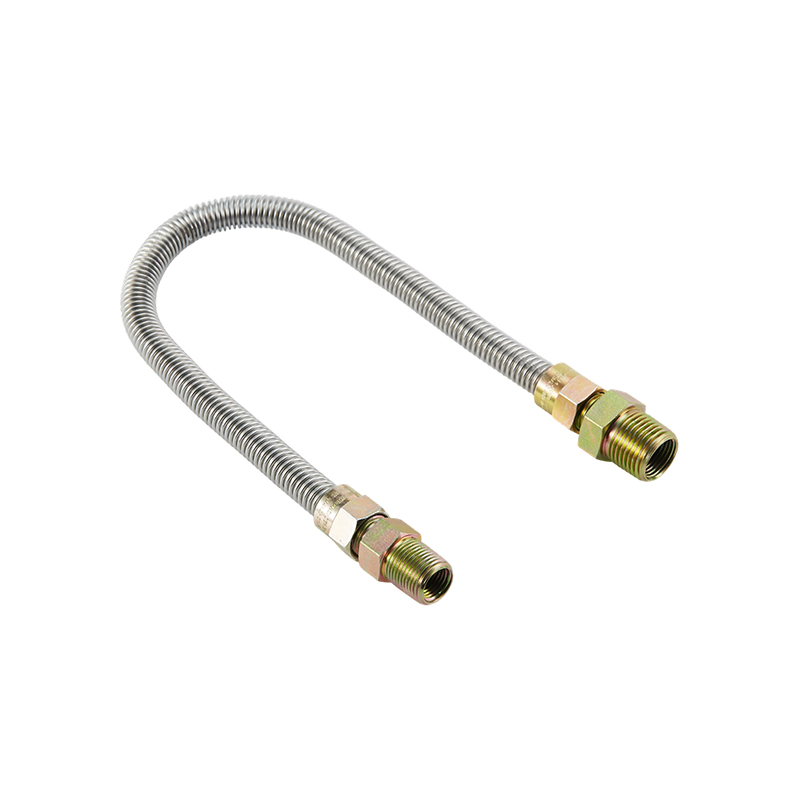
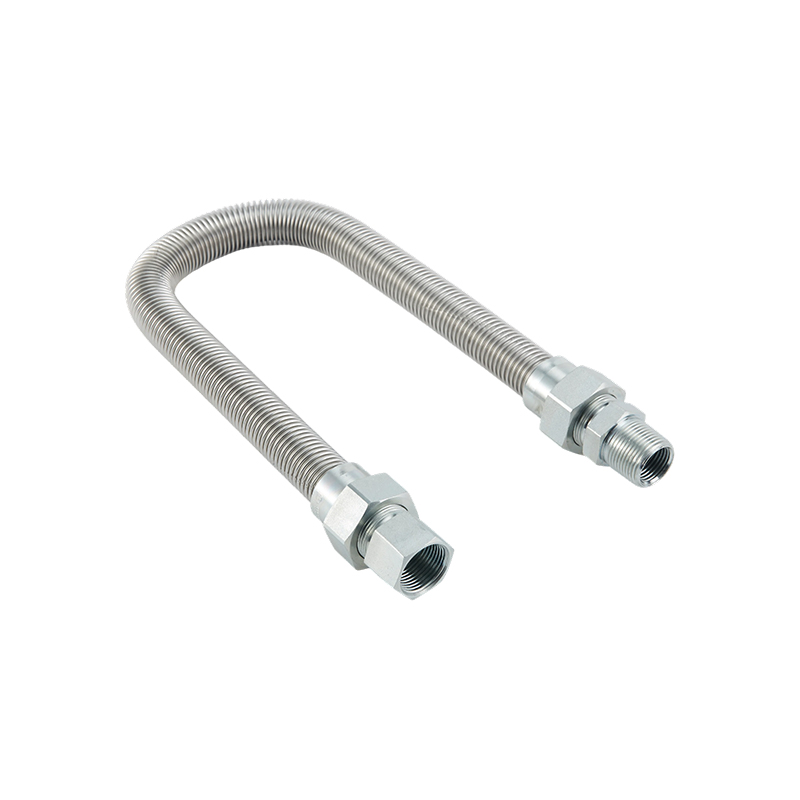
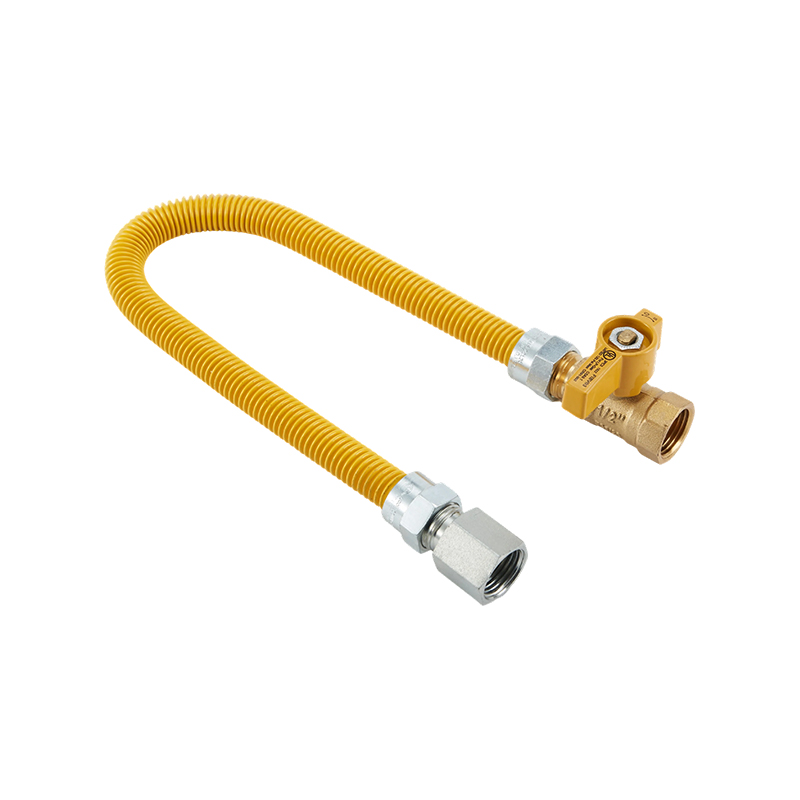
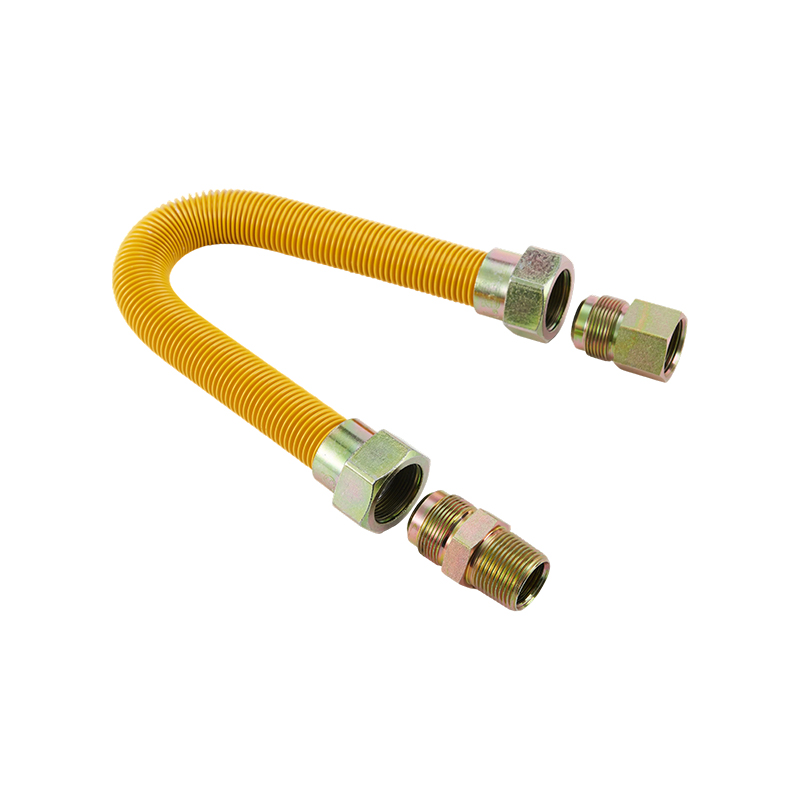
Understanding why leaks occur is essential for both correct detection (knowing where to test most carefully) and prevention. A corrugated stainless steel gas connector pipe is designed to flex and accommodate minor appliance movement, but several conditions cause premature failure.
Overtightened or Undertightened End Fittings
The most common leak point is at the threaded end fittings, not the corrugated body itself. Overtightening flare nuts can crack the flare seat or deform the sealing surface, while undertightening leaves thread gaps. Properly torqued brass flare fittings typically require 1/4 to 1/2 turn past hand-tight with a wrench — consult the fitting manufacturer's torque specification, typically 35–55 ft-lb for 1/2" connectors.
Mechanical Stress and Kinking
Corrugated stainless steel connectors have minimum bend radius requirements — typically 3–4 inches for 1/2" diameter connectors. Bending tighter than this collapses corrugation peaks, creating stress concentration points that eventually crack under gas pressure cycling. A kinked connector should always be replaced, not straightened — straightening work-hardens the stainless steel and increases fracture risk.
Chloride-Induced Stress Corrosion Cracking
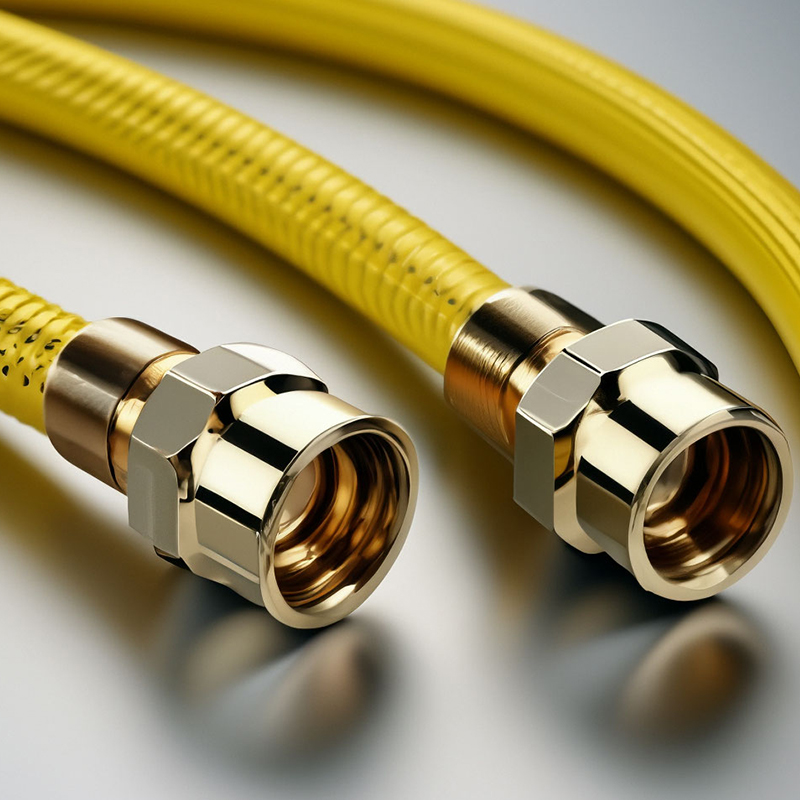
This is the most insidious failure mode — and historically the cause of several serious residential gas incidents in the 1980s and 1990s that led to widespread recalls of uncoated stainless steel connectors. Chlorides from cleaning products, salt air in coastal environments, or pool chemicals attack the 304 stainless steel corrugated body under residual tensile stress, forming microscopic cracks that propagate through the wall. Modern CSA certified stainless steel gas connector products use polymer-coated or jacketed corrugated bodies specifically to eliminate direct chloride contact with the metal surface.
Age and Fatigue
ANSI Z21.24 and CSA 6.10 standards — which govern flexible gas connectors in North America — do not assign a formal service life, but most industry guidance recommends replacement every 8–10 years, or whenever an appliance is moved or replaced. Connectors manufactured before 1993 (pre-recall era) should be replaced immediately regardless of apparent condition.
Where Leaks Are Most Likely to Occur Along the Connector
When performing a leak test, concentrate extra attention on these zones, listed in order of statistical likelihood based on field service data:
Figure 1: End fitting threads and flare seats account for over 60% of all gas connector leak locations, making them the highest-priority zones during any leak detection inspection.
What Makes a CSA Certified Stainless Steel Gas Connector Safer
Not all flexible gas connectors offer the same level of safety. A CSA certified stainless steel gas connector has been independently tested and listed to ANSI Z21.24 / CSA 6.10 — the North American standard for flexible connectors for gas appliances. Choosing a certified product is not optional under most building codes; it is a legal and insurance requirement for any gas appliance installation.
| Certification Requirement | What It Verifies | Why It Matters |
|---|---|---|
| Pressure test at 3× working pressure | No failure or deformation at 3× rated pressure | Ensures adequate safety margin above normal operating pressure |
| Corrosion resistance test | Salt spray exposure per ASTM B117 | Confirms resistance to chloride-induced corrosion in real-world environments |
| Flexibility and bend cycle testing | Connector survives required bend cycles without leakage | Validates durability under repeated appliance movement |
| End fitting pull-out test | Fitting withstands specified axial pull force without separation | Prevents fitting ejection under accidental tension load |
| Polymer jacket or coating (where applicable) | Complete chloride barrier over corrugated body | Eliminates stress corrosion cracking risk — the primary historical failure mode |
The CSA certification mark (or UL listing in the U.S.) should be physically marked on the connector label or packaging. Never install an unlisted or uncertified flexible gas connector — doing so voids most homeowner insurance policies and violates plumbing and mechanical codes in all U.S. states and Canadian provinces.
Annual Inspection Checklist for Stainless Steel Flexible Gas Connectors
Beyond leak testing, a visual and physical inspection should be performed at least once per year for every gas connector in the home. Use the following checklist:
- Check connector age: Record the installation date on a label affixed to the connector or appliance. Plan replacement at 8–10 years maximum service life, or immediately upon moving or replacing the appliance.
- Inspect for physical kinks or sharp bends: The connector should follow a smooth, gradual curve. Any section where the corrugation is visibly compressed or flattened requires immediate replacement.
- Look for discoloration or pitting on the corrugated body: Brown, orange, or dark spots on the stainless steel surface can indicate chloride attack or heat damage — particularly relevant for connectors near a range back panel.
- Check that the connector is not in contact with the floor, walls, or other metal surfaces: Constant contact creates abrasion points and, in the case of galvanic contact with dissimilar metals, can accelerate corrosion.
- Verify the polymer jacket (if present) is intact: Cuts, abrasions, or melted areas in the jacket expose the underlying stainless steel corrugations to chloride contact and must be addressed by connector replacement.
- Confirm the connector is not routed through a wall, floor, or enclosed cabinet: All codes prohibit concealed flexible gas connector installation — the connector must remain accessible and inspectable at all times.
Gas Connector Inspection Compliance Rate by Homeowner Type
Industry surveys indicate that annual gas connector inspection rates remain alarmingly low across most homeowner categories. The chart below summarizes inspection compliance data from a 2024 residential gas safety survey across North American households.
Figure 2: Over 30% of owner-occupied homes and more than half of rental properties have never had a gas connector inspection — a significant and preventable safety gap.
What to Do Immediately If You Confirm a Gas Leak
If the soap-bubble test or gas detector confirms a leak, the response must be immediate and methodical. The following steps are based on guidance from the American Gas Association (AGA) and NFPA 54:
- Do not operate any electrical switches, light switches, or appliances — sparks from electrical contacts can ignite accumulated gas.
- Turn off the gas supply at the appliance shutoff valve (the valve on the supply pipe immediately behind or beneath the appliance). If the leak is large or the shutoff valve is inaccessible, turn off the main gas meter valve.
- Open windows and doors to ventilate the area and leave immediately. Do not attempt any repairs before the space is fully ventilated.
- Do not re-enter the building until the gas smell has completely cleared and the area has been confirmed safe by a qualified gas technician or your gas utility.
- Call your gas utility's emergency line if the leak is large, persistent, or you cannot locate the shutoff. Utility emergency services are available 24/7 at no charge and can assess the severity of the leak.
- Replace the connector before restoring service — never attempt to repair a leaking flexible gas connector with sealants, tape, or clamps. Flexible connectors are single-use components and must be fully replaced.
Frequently Asked Questions
Q1: Can I use regular dish soap to test for a gas leak on a stainless steel flexible gas connector?
A1: Yes, dish soap mixed with water to a thick, gel-like consistency is an effective and widely accepted leak detection method for field use. Commercial leak detection solutions are preferred because they form more stable bubbles and are less likely to dry out quickly during testing. Either way, apply generously to all fittings and the full corrugated body and watch for bubble formation over at least 30 seconds. Wipe all residue off promptly after testing to prevent chloride exposure on the stainless steel surface.
Q2: How long should a stainless steel flexible gas connector last before replacement?
A2: Most industry guidance recommends replacing flexible gas connectors every 8–10 years, or whenever the connected appliance is moved or replaced — whichever comes first. Connectors should also be replaced immediately if they show any kinking, corrosion, discoloration, jacket damage, or if they were manufactured before 1993 (pre-recall era uncoated connectors). There is no repair option for a damaged connector — replacement is always required.
Q3: What is the difference between a corrugated stainless steel gas connector pipe and a standard flexible connector?
A3: A corrugated stainless steel gas connector pipe uses an accordion-like corrugated wall that provides flexibility while maintaining pressure integrity — the corrugations allow the connector to bend and absorb minor movement without stressing the metal. Earlier flexible connectors used brass or uncoated stainless constructions that were vulnerable to stress corrosion cracking. Modern corrugated stainless connectors, particularly those with polymer jackets, are significantly more corrosion-resistant and are the current standard for residential and light commercial gas appliance connections.
Q4: Why is a CSA certified stainless steel gas connector required instead of any flexible pipe?
A4: A CSA certified stainless steel gas connector has been independently tested to ANSI Z21.24 / CSA 6.10, verifying it meets minimum pressure, corrosion resistance, flexibility, and pull-out strength requirements. Most building codes and gas utility regulations in North America legally require a listed connector for all gas appliance hookups. Using an unlisted or uncertified connector typically voids homeowner insurance coverage for gas-related incidents and can result in code violations during home sale inspections.
Q5: Can I repair a leaking flexible gas connector instead of replacing it?
A5: No. Flexible gas connectors must never be repaired — no sealant, tape, clamp, or fitting modification is an acceptable fix for a leaking connector. The connector must be fully replaced with a new CSA-certified unit of the correct diameter and length. If the leak is at a threaded fitting, the supply pipe threads should also be inspected and re-taped with yellow PTFE gas-rated thread tape before installing the new connector.
Q6: How do I detect a gas leak if the connector is behind an appliance I cannot easily move?
A6: Use an electronic combustible gas detector with a flexible probe or extension wand that can be inserted into the gap behind the appliance. Slowly pass the detector tip along the length of the connector and around both end fittings. Most detectors alarm at 10–20% of the lower explosive limit — well below any dangerous concentration. If a detector is not available and the connector cannot be fully accessed for a soap test, have a licensed gas technician perform a pressure decay test on the gas supply system, which can confirm whether any leak is present without requiring visual access to every component.