



 English
  Español
  русский


Yes — metal hose compensators are not only suitable for high-temperature applications, they are among the most reliable solutions specifically engineered for them. When correctly specified and installed, a metal hose and compensator assembly can handle continuous service temperatures ranging from -270°C to over 800°C depending on the alloy selected, far exceeding the capability of rubber, PTFE, or thermoplastic flexible connectors. The key is matching the alloy composition, braid configuration, and end-fitting specification to the precise thermal, pressure, and movement demands of the application. This article explains how metal hose compensators perform at elevated temperatures, which materials are appropriate for which conditions, and what engineers and maintenance professionals need to know before specifying them.
What Metal Hose Compensators Are Designed to Do
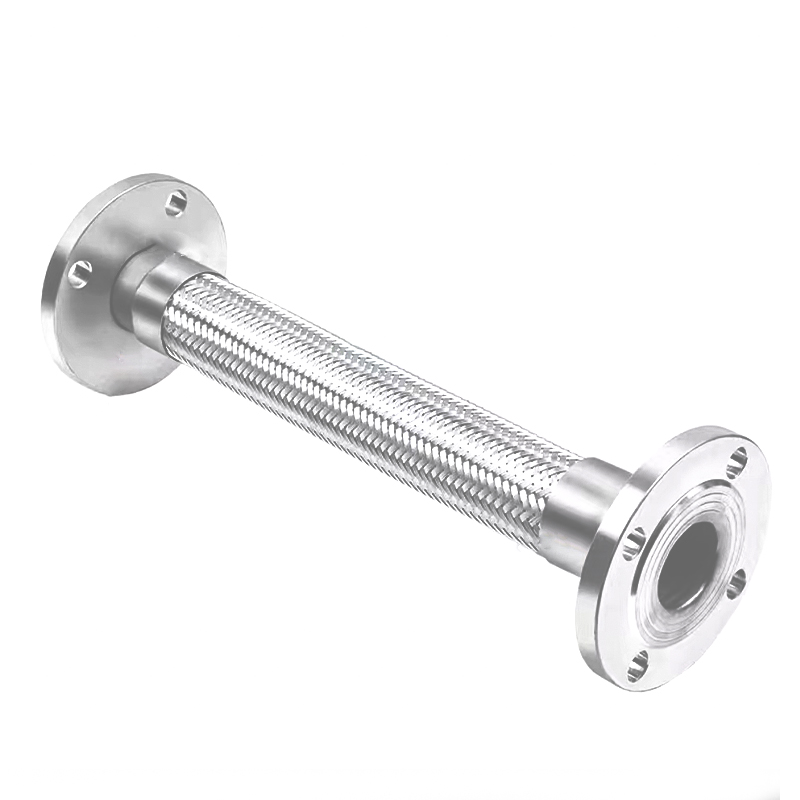
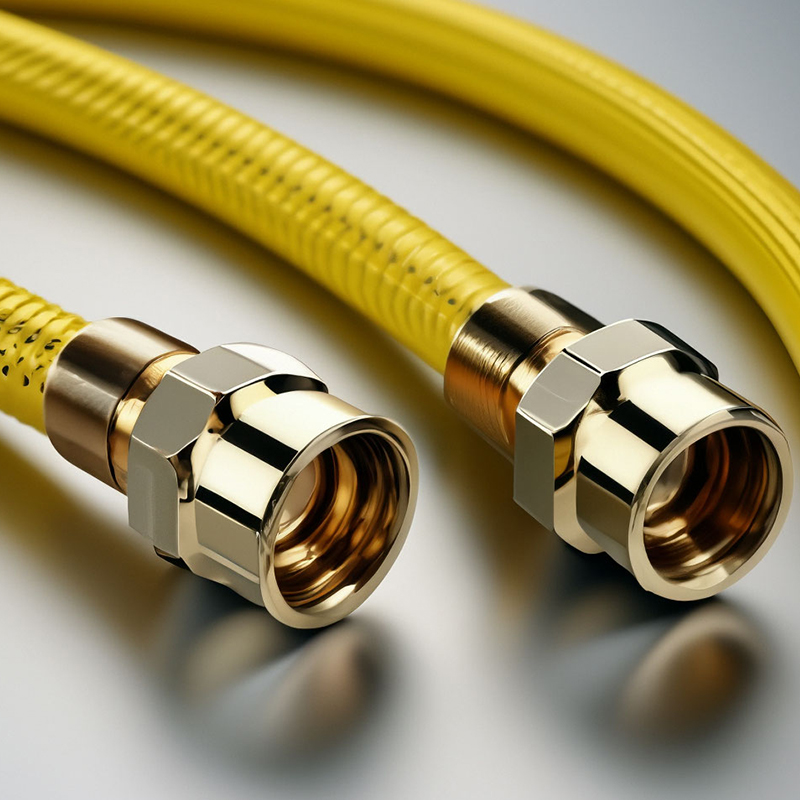
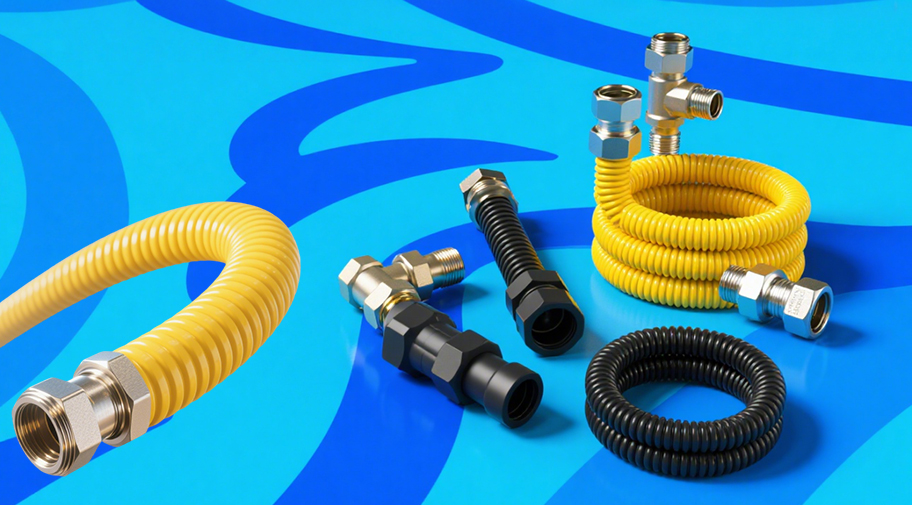
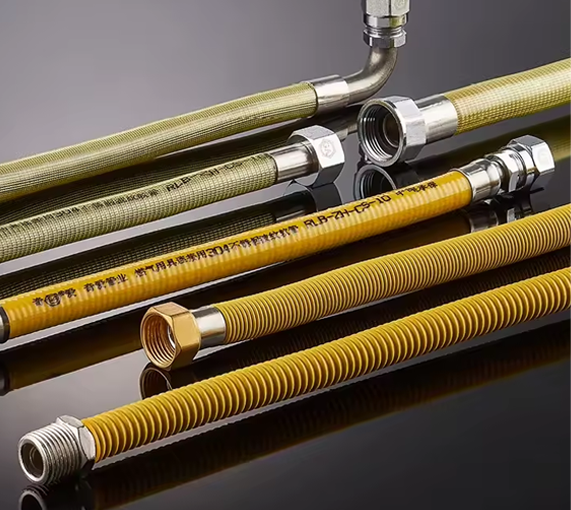
A metal hose and compensator is a flexible piping element constructed from a corrugated inner hose — the bellows — typically surrounded by one or more layers of wire braid for pressure reinforcement and mechanical protection. The assembly serves three primary engineering functions simultaneously:
- Thermal expansion absorption: Rigid pipe systems expand under heat — steel pipe expands approximately 12mm per 10 meters per 100°C of temperature rise. A compensator in the line absorbs this movement, preventing pipe stress, flange leaks, and structural damage to connected equipment.
- Vibration isolation: Pumps, compressors, turbines, and engines generate mechanical vibration that travels through connected pipework. A flexible metal hose assembly interrupts this vibration path, protecting both the piping system and connected equipment from fatigue damage.
- Misalignment compensation: Real-world installations rarely achieve perfect pipe alignment. The lateral and angular flexibility of a metal hose assembly accommodates minor misalignments that would otherwise impose bending stress on rigid pipe connections.
In high-temperature systems, the thermal expansion absorption function is often the primary driver for specifying a metal expansion joint compensator. As operating temperatures climb, the thermal movement in rigid pipework becomes substantial — a 50-meter run of carbon steel pipe operating at 400°C generates approximately 240mm of linear expansion. Without a compensating element, this movement is transferred as load into pipe supports, flanges, and connected nozzles.
Temperature Limits by Material: What Alloy Is Right for Your Application
The temperature capability of a high temperature metal hose assembly is determined primarily by the alloy used for the corrugated inner hose and the braid wires. Selecting the wrong alloy for the operating temperature is the most common cause of premature failure in metal hose applications.
Austenitic Stainless Steels (304 and 316 Series)
304 stainless steel is the most widely used material for stainless steel flexible metal hose assemblies in general industrial service. It maintains adequate strength and oxidation resistance up to approximately 870°C (1,600°F) in continuous service, though creep considerations typically limit practical pressure-bearing applications to around 600°C (1,112°F).
316L stainless steel adds molybdenum content for superior resistance to chloride-induced stress corrosion cracking and provides slightly improved high-temperature strength. It is preferred in applications involving steam, seawater, or process fluids containing chlorides at elevated temperatures.
High-Nickel Alloys for Extreme Temperatures
For applications above 600°C, high-nickel superalloys provide the necessary combination of creep resistance, oxidation resistance, and retained tensile strength:
- Inconel 625: Suitable for continuous service up to 980°C (1,800°F). Excellent oxidation and carburization resistance. Widely used in exhaust systems, furnace applications, and gas turbine components.
- Hastelloy C-276: Continuous service to approximately 1,040°C (1,900°F). Superior resistance to oxidizing and reducing atmospheres, making it suitable for chemical processing environments at high temperature.
- Alloy 310 stainless: Continuous service to 1,100°C (2,012°F). The highest-temperature austenitic stainless option before entering true superalloy territory, used in furnace ducts, kiln connections, and heat treatment equipment.
Carbon Steel and Lower-Alloy Steels
Carbon steel hose assemblies are limited to approximately 400°C (752°F) in dry service before oxidation scaling and reduced tensile strength become unacceptable. They are cost-effective for steam systems, hot water, and moderate-temperature hydraulic service, but should not be specified for continuous service above this threshold.
Temperature and Pressure Capability by Alloy
| Alloy | Max Continuous Temp | Typical Application | Key Advantage |
|---|---|---|---|
| Carbon Steel | 400°C (752°F) | Steam, hot water, hydraulics | Low material cost |
| 304 Stainless Steel | 600°C (1,112°F) | General industrial, exhaust | Widely available, corrosion resistant |
| 316L Stainless Steel | 600°C (1,112°F) | Steam, chemical, marine | Chloride resistance |
| 310 Stainless Steel | 1,100°C (2,012°F) | Furnace ducts, kilns | High oxidation resistance |
| Inconel 625 | 980°C (1,800°F) | Turbine exhaust, aerospace | High creep strength |
| Hastelloy C-276 | 1,040°C (1,904°F) | Chemical processing, reactors | Reducing atmosphere resistance |
How Temperature Affects Pressure Rating — The Derating Principle
One of the most important and frequently overlooked engineering considerations for high temperature metal hose assemblies is that the pressure rating of any metal hose decreases as operating temperature increases. This is due to the reduction in tensile strength and yield strength of metallic materials at elevated temperatures — a property known as creep behavior.
As a practical example: a stainless steel flexible metal hose assembly rated at 25 bar at 20°C may have a derated allowable working pressure of only 16–18 bar at 400°C and 10–12 bar at 600°C, depending on the specific alloy and hose construction. Engineers must apply the manufacturer's temperature derating factors to the ambient-temperature pressure rating before confirming suitability for a high-temperature service.
Figure 1: Illustrative pressure rating retention curves by alloy versus operating temperature — always consult manufacturer's certified derating tables for design calculations
This derating principle applies equally to the metal expansion joint compensator bellows — the axial, lateral, and angular movement capacity also changes at elevated temperatures as the material's modulus of elasticity decreases. A competent supplier will provide temperature-specific movement ratings alongside pressure derating data for any compensator specified for service above 200°C.
Construction Details That Matter in High-Temperature Service
Not all stainless steel flexible metal hose assemblies are equivalent in high-temperature service, even when made from the same alloy. Construction details determine how the assembly performs and how long it lasts.
Corrugation Profile
The corrugated bellows is available in two principal profiles: annular (individual ring-shaped corrugations) and helical (a continuous spiral corrugation). For high-temperature applications, annular corrugated hose is generally preferred because each corrugation acts as an independent expansion unit — thermal stress is distributed more evenly than in a helical profile. Helical hose is suitable for moderate-temperature applications where greater flexibility and longer assembly lengths are required.
Braid Configuration
Single-braid assemblies provide pressure reinforcement suitable for most applications up to approximately 40 bar at moderate temperatures. In high-temperature service, the pressure rating derating described above may make double-braid construction necessary to maintain an adequate safety factor at the reduced working pressure. The braid wire alloy must match or exceed the temperature capability of the inner hose — a 316L inner hose with a carbon steel braid will see the braid oxidize and lose structural integrity at temperatures the inner hose could otherwise tolerate.
End Fittings and Connection Method
End fittings on a high temperature metal hose assembly are typically attached by full-penetration orbital welding or manual TIG welding. In high-temperature service, the weld joint between the hose end and the fitting is a critical zone — the heat-affected zone of the weld has slightly different metallurgical properties from the parent material and must be inspected to the appropriate standard (typically ISO 10380 or equivalent) for pressure service. Mechanical crimped end connections are not recommended for continuous service above 300°C as the crimp may relax under thermal cycling.
Liner Options for Flow Optimization
In high-velocity flow applications, the corrugated inner surface of a metal hose creates turbulence that increases pressure drop and can cause flow-induced vibration — a phenomenon called resonant frequency excitation that can damage the hose under sustained flow conditions. A smooth bore liner tube installed inside the corrugated hose eliminates this problem by providing a smooth internal flow path. The liner is attached at one end only, allowing it to expand freely with the hose under thermal movement.
Installation Requirements for High-Temperature Metal Hose Compensators
Even a correctly specified metal expansion joint compensator will fail prematurely if installed incorrectly. High-temperature applications impose additional installation requirements beyond those needed for ambient-temperature service:
- Pre-set for thermal expansion: In systems where the hose is installed cold and the pipe expands toward the hose on startup, the hose should be pre-compressed during installation by the calculated cold-condition offset — typically 50% of the total expected expansion movement — so that at operating temperature the hose sits at its neutral position and exercises both compression and extension capability symmetrically over its life.
- Pipe anchor and guide requirements: Metal hose compensators absorb movement — they do not resist it. Proper pipe anchors must be installed to direct expansion toward the compensator and prevent it from being transferred elsewhere in the system. Pipe guides should be installed within 4 pipe diameters of each hose end to prevent lateral movement from inducing bending stress at the end fittings.
- Minimum bend radius: Metal hose assemblies have a specified minimum bend radius that must not be exceeded during or after installation. At high temperatures, the reduced material stiffness means that gravity-induced sag in a horizontally installed assembly can approach the minimum bend radius — consider installing with a slight arch or adding an intermediate support for long assemblies.
- Avoid torsion: Metal hose assemblies must never be installed in torsion — twisted around their central axis. Torsional loading dramatically increases stress at the corrugation roots and will cause premature fatigue failure, particularly under the thermal cycling common in high-temperature service.
- Thermal insulation coordination: Where the hose is installed in an insulated pipe system, the transition between insulated and uninsulated sections at the hose location creates a thermal gradient. Ensure insulation termination is at the hose end fittings, not mid-hose, to prevent concentrated thermal stress at a point of reduced mechanical strength.
Industries and Applications Where High-Temperature Metal Hose Is Standard
High temperature metal hose assemblies and compensators are specified across a broad range of industrial sectors wherever elevated temperature, pressure, and flexibility requirements coexist:
| Industry | Typical Application | Typical Temp Range | Recommended Alloy |
|---|---|---|---|
| Power Generation | Steam turbine connections, boiler feed | 250–550°C | 316L / 321 SS |
| Petrochemical | Reactor feed, heat exchanger connections | 300–650°C | 316L / Inconel 625 |
| Automotive / Exhaust | Exhaust decoupler, turbocharger connections | 400–900°C | 304 / Inconel 625 |
| Industrial Furnaces | Burner supply, flue gas connections | 600–1,100°C | 310 SS / Alloy 601 |
| Marine / Offshore | Engine exhaust, steam systems | 300–600°C | 316L (chloride resistant) |
| Cement / Mining | Kiln gas, hot air conveying | 500–900°C | 310 SS / Inconel |
Inspection, Service Life, and Replacement Indicators
Metal hose assemblies in high-temperature service have a finite fatigue life governed by the number of thermal cycles, the magnitude of movement per cycle, the operating pressure, and the environmental corrosivity. Unlike rubber hoses, which degrade gradually and visibly, metal hose fatigue failure can occur at the corrugation roots as a crack that propagates rapidly — making periodic inspection essential.
Recommended inspection intervals and replacement indicators for metal hose and compensator assemblies in high-temperature service:
- Visual inspection every 12 months: Check for braid wire breakage, corrosion or discoloration of end fittings, and any signs of leakage at weld joints or fittings.
- Replace immediately if: Any braid wires are visibly broken, the corrugated hose shows surface cracking or pitting, the assembly has been subjected to over-extension or torsional distortion, or any detectable leakage is observed.
- Planned replacement intervals: For safety-critical high-temperature applications, many operators adopt a preventive replacement interval of 5 to 10 years regardless of visual condition, based on calculated fatigue life from design parameters.
- After process upsets: Inspect immediately after any event where the system exceeded design temperature, pressure, or experienced water hammer — all of which can cause damage not visible in normal operation.
Frequently Asked Questions
Q1What is the maximum temperature a stainless steel flexible metal hose can handle? +
For standard 304 or 316L stainless steel, the practical maximum continuous operating temperature for a pressure-bearing assembly is approximately 600°C (1,112°F), accounting for strength derating. The material can tolerate higher temperatures in non-pressure or low-pressure applications — 304 SS resists oxidation to about 870°C. For continuous service above 600°C under pressure, upgrade to 310 stainless steel or a nickel superalloy such as Inconel 625, which maintains usable strength to 980°C.
Q2Can metal hose compensators handle thermal cycling as well as continuous high temperature? +
Yes, but thermal cycling imposes a fatigue load on the corrugated bellows that is distinct from static high-temperature service. Each startup-shutdown cycle causes the hose to flex through its full thermal expansion movement, accumulating fatigue cycles at the corrugation roots. The design life of a metal expansion joint compensator in cyclic service is expressed as a number of cycles at a given movement amplitude — a hose designed for 10,000 cycles at ±10mm may reach its fatigue limit in a plant that cycles twice daily within 14 years. Always provide the expected cycle frequency and movement per cycle to the supplier when specifying for thermally cyclic service.
Q3Is a metal hose compensator the same as a bellows expansion joint? +
They share the same fundamental component — a corrugated metallic bellows — but differ in construction and application. A metal hose and compensator assembly includes a wire braid over the bellows for pressure reinforcement and mechanical protection, making it suitable for pressure service and vibration isolation. A bare bellows expansion joint (without braid) has higher flexibility and movement capability but lower pressure resistance, and is typically used in ducting, low-pressure service, or within constrained pipe systems where external mechanical protection is provided by the pipe guides. Both can be specified for high-temperature service with appropriate alloy selection.
Q4How do I specify the correct length for a high-temperature metal hose assembly? +
The installed length should be determined by three factors: the total movement the hose must absorb (axial, lateral, or angular), the minimum bend radius of the hose in lateral applications, and the space constraints of the installation location. As a general principle, a longer hose assembly accommodates the same movement with less stress on each individual corrugation — a hose twice as long experiences approximately half the strain per corrugation for the same total movement. For high-temperature service with significant thermal expansion movement, err on the side of a longer assembly to reduce corrugation fatigue. Always consult the manufacturer's movement vs. length tables for the specific hose construction being specified.
Q5What standards govern the design and testing of metal hose assemblies for high-temperature service? +
The primary international standard for metallic flexible hose assemblies is ISO 10380, which covers dimensions, performance testing, pressure ratings, and marking requirements. In the United States, ASME B31.3 (Process Piping) governs the use of flexible hose assemblies in process piping systems, including requirements for materials, testing, and installation. For expansion joints specifically, the EJMA (Expansion Joint Manufacturers Association) Standards provide detailed guidance on design, fabrication, and testing. High-temperature applications in regulated industries typically require hose assemblies to be supplied with full material certification (EN 10204 3.1 or 3.2) and hydrostatic test certificates.