




 English
 Español
 русский



Practical buying note
A braided water hose seldom fails because the 304 braid suddenly dissolves. More often, the liner has been pinched at a tight bend, the crimp has lost preload, or the assembly was selected for the wrong water chemistry. The practical rule is simple: specify the whole assembly - liner, braid, ferrules, nuts, length, and certification - not just the word "304."
That matters for faucet connectors, washing machine hoses, water heater connectors, and flexible plumbing links where a leak can damage cabinets, floors, or ceilings. A 304 stainless steel braided water hose can be a reliable choice, but only when the braid, inner tube, and end fittings are matched to the actual service condition.
Assembly anatomy
What a 304 Stainless Steel Braided Water Hose Contains
A 304 stainless steel braided water hose is a flexible water connector built from three functional parts: a polymer inner tube that carries water, a 304 stainless steel wire braid that resists internal pressure and external abrasion, and end fittings that transfer the load from the braid to the plumbing connection. The braid is reinforcement; it is not the water barrier. If the liner cracks or the crimp leaks, the braid cannot rescue the assembly.
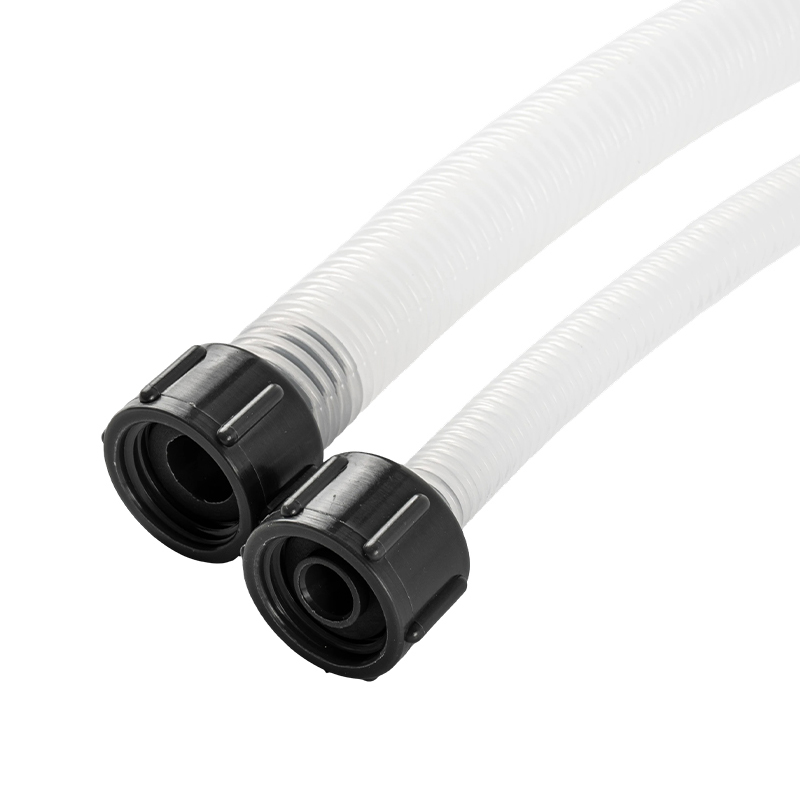 EPDM Inner Tube for Braided Water Hose AssembliesEPDM inner liner option for plumbing water lines, noted for water and hot-moisture resistance where the tube serves as the water barrier.View Product →
Layer-by-layer function
- Inner tube: EPDM is common for hot and cold water; PE and PVC are used in some cold-water or specialty assemblies. Confirm potable-water approval where drinking water is involved.
- 304 braid: wire diameter, strand count, and braid coverage affect pressure containment and abrasion resistance. A tight, uniform braid is easier to inspect than a loose or distorted sleeve.
- Ferrules and collars: the crimp or swage is a critical joint. Pull-off strength, insertion depth, and ferrule material should be controlled, not left to visual judgment.
- Nuts and threads: brass, stainless steel, and nylon nuts serve different corrosion, weight, and dielectric needs. Thread standard and sealing method must match the mating fitting.
Cutaway schematic of a braided water hose assembly; proportions are illustrative, not a dimensional drawing.
Material choice
Why 304 Braid Earns Its Place - and Where It Does Not
304 is a sound default for many indoor water connectors because it combines strength, formability, and reasonable corrosion resistance at a manageable cost. It is not a universal answer for every water condition. Chlorides, low pH, stagnant water, coastal air, and some cleaning chemicals can attack stainless steel, and 304 is more vulnerable to pitting than 316 or 316L in high-chloride service.
The braid also does not protect the inner tube from chlorine, scale, or hot-water oxidation. If the liner compound is wrong for the water, a premium 304 sleeve will not prevent cracking. Buyers should separate three questions: what carries the water, what carries the pressure, and what connects the assembly. A supplier who can answer all three is easier to qualify than one who only quotes "304 braid."
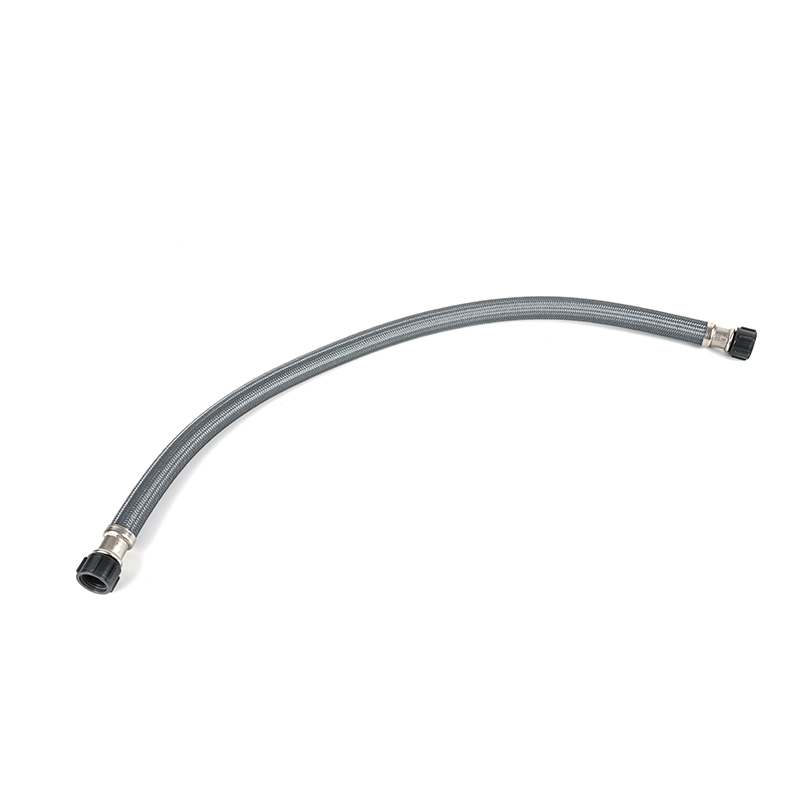 Stainless Steel Outer Braid for Flexible Plumbing HosesOuter stainless steel wire braid for flexible plumbing assemblies, offering mechanical strength and corrosion resistance while the inner liner remains the water barrier.View Product →
304 versus 304L
304L has lower carbon, which can improve weldability and reduce sensitization in some fabricated parts. Braid wire is often specified as 304, but the purchase order should state the grade, wire diameter, and documentation requirement. For aggressive water or coastal installations, ask whether 316L is needed instead of assuming that any shiny braid is equal.
Specification control
Sizing, Threads, and Pressure Ratings: The Details That Cause Returns
Most returns are not caused by a missing feature. They are caused by a mismatch between the assembly and the installation: the thread seals on the wrong face, the length leaves no bend radius, or the working pressure is quoted at room temperature but the hose sees hot water. Start with the appliance or fixture inlet, then work backward through thread, length, bend radius, and rating.
| Specification | What to confirm | Why it matters |
|---|---|---|
| Nominal size | DN or inch size, flow requirement, and fixture inlet | An undersized connector can restrict flow; an oversized one may not fit the cabinet or appliance space. |
| Thread and seal | G, NPT, compression, or proprietary thread; flat-face, cone, or washer seal | Wrong sealing geometry is a common leak path even when the thread appears to fit. |
| Length and bend radius | End-to-end length including fittings; minimum bend radius; offset and routing | A tight bend can kink the liner or fatigue the braid near the ferrule. |
| Pressure and temperature | Working pressure at maximum temperature; burst pressure kept separate | Burst pressure is not a working rating; hot water reduces the margin of many polymer liners. |
| Water contact materials | EPDM, PE, or PVC liner; lead-free brass or stainless nuts; potable-water approval | Drinking-water and hot-water applications require material and certification checks beyond braid strength. |
Haoyin's plumbing pipe and water liner range covers inner tubes, outer wires, nuts, and elbow fittings, which makes it easier to compare the components that determine service life rather than buying a braid by description alone.
Application fit
Selection Guide: Match the Hose to the Water, the Space, and the Code
Begin with the application, then choose materials. For potable water, look for a liner and wetted materials with the relevant potable-water approval, such as NSF/ANSI 61 or the local equivalent. For a water heater connector, confirm the temperature rating, pressure relief arrangement, and any code requirement for a flexible connector. For washing machine and faucet hoses, the limiting factors are often length, bend radius, and strain relief rather than nominal pressure.
Illustrative qualitative comparison for early selection only; actual performance depends on liner compound, braid construction, fittings, and certification.
Outdoor, buried, or chemical-exposure service needs a separate review. UV, soil chemistry, and chloride levels can change the material decision. A hose that is excellent under a kitchen sink may be a poor choice on a coastal exterior wall or in a chlorine-rich water system.
Field practice
Installation and Maintenance: Protect the Braid, Protect the Joint
Most braided hose failures start at the ends. Do not twist the assembly during tightening; use a wrench on the fitting body, not on the braid. Leave a gentle bend, support the hose where it changes direction, and keep it away from sharp cabinet edges and heat sources. For a water heater connector, allow the specified clearance and avoid using the hose to pull the pipe into alignment.
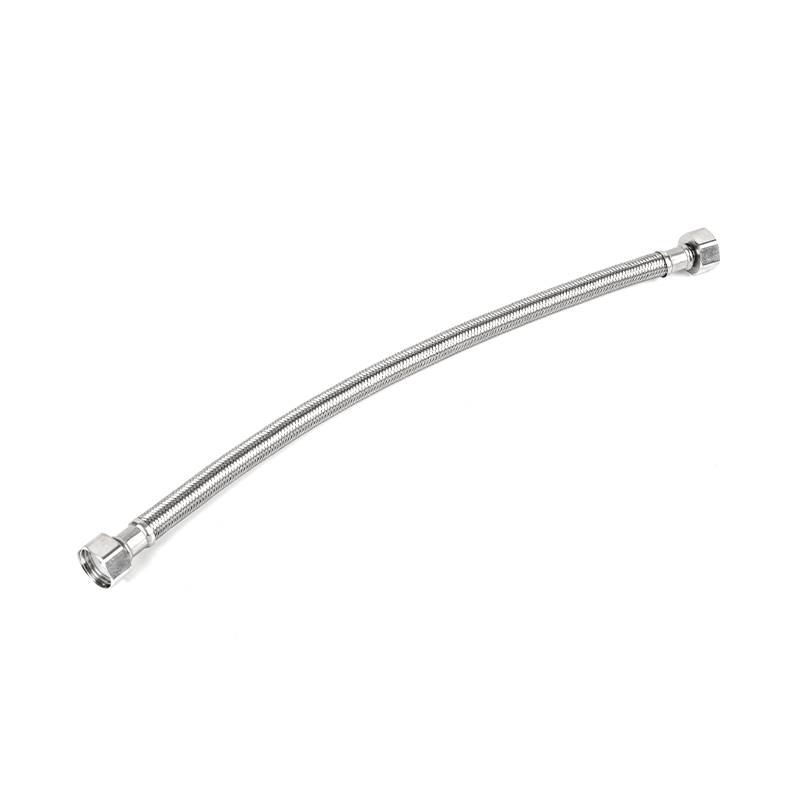 Flexible Stainless Steel Connector with Thickened Elbow FittingsCorrugated stainless steel connector with elbow fittings for gas, HVAC, boiler and water-heater connections, suited to confined spaces and inspection at end fittings.View Product →
Inspection should be simple: look for frayed or flattened braid, bulging near the ferrule, weeping threads, cracked liner at the cut end, and corrosion staining. Replace the assembly if the braid is damaged or the fitting has moved. For a deeper component checklist, see this flexible plumbing pipe buying guide.
Risk control
Common Failure Modes and Procurement Checks
Failure modes to watch
- Ferrule pull-off or crimp relaxation under pressure cycling
- Liner kinking at a tight bend or behind an appliance
- Chloride pitting or staining of 304 braid in aggressive water
- Abrasion from cabinet edges, floor contact, or vibration
- Over-tightening, mismatched threads, or wrong seal geometry
What to request from a supplier
- Working pressure and temperature rating, not only burst pressure
- Material grade and traceability for the 304 braid and wetted parts
- Braid coverage, wire diameter, and ferrule pull-off test data
- Potable-water or application-specific certification where required
- Length, thread, bend radius, packaging, and batch identification
Buyer questions
Frequently Asked Questions
What is a 304 stainless steel braided water hose used for?
It is used as a flexible water connector for faucets, washing machines, water heaters, and plumbing links where a rigid pipe is difficult to route. The liner carries the water; the 304 braid reinforces pressure and abrasion resistance.
Is a 304 braided hose safe for drinking water?
Only if the wetted materials and the finished assembly carry the required potable-water approval. Ask for the liner compound, lead-free wetted parts, and certification such as NSF/ANSI 61 or the local equivalent.
Can I use a 304 braided water hose for hot water or a water heater connector?
Often yes, but the temperature rating of the inner tube and fittings controls the answer. A water heater connector should be rated for the actual hot-water temperature and pressure, and it should be installed with the required clearance and relief protection.
What is the difference between 304 and 304L braid?
304L has lower carbon, which can improve weldability in some fabricated parts. For braid wire, grade alone is not enough: confirm wire diameter, braid coverage, and material certification for the actual assembly.
How do I choose the right braided hose size and connector?
Match the nominal size to the fixture inlet, confirm the thread standard and sealing method, then check length and bend radius in the installed space. Do not choose by thread appearance alone; a G thread and an NPT thread can look similar but seal differently.
How long does a stainless steel braided water hose last?
Service life depends on water chemistry, temperature, pressure cycling, installation, and fitting quality. Inspect regularly for braid damage, bulging, weeping, or corrosion, and replace the assembly when any of these signs appear.