


Haoyin (Ningbo) Bellows Technology Co., Ltd.
  • TEL:

    +86-574-62166708
  • Fax:

    +86-18616887802
  • Address:

    No. 25 Gubei Road, Simen Town, Yuyao, Ningbo City, Zhejiang Province, China

Feel Free To Contact Us :

[email protected]

Our Products

Haoyin corrugated pipe, connecting the world's pipelines with professional expertise for the future. Green factories produce high-quality products, specializing in precision and showcasing new strength.

About

Haoyin (Ningbo) Bellows Technology Co., Ltd. is a professional enterprise specializing in the R&D, design, manufacturing, and sales of stainless steel bellows.

Service

Through our many years of professional experience, we provide you with comprehensive and considerate services

NEWS

Provide you with the latest enterprise and industry news.
+86-574-62166708
< DRAG>

Industry News

konw more about us

Home / News / Industry News / Why must stainless steel corrugated hose be used for household gas connection?

Why must stainless steel corrugated hose be used for household gas connection?

1. Safety hazards of traditional rubber hoses
There are many safety hazards in the long-term use of traditional rubber hoses for household gas, which directly affect the safety of users' lives and property. Rubber materials are prone to aging and cracking during use. Data shows that rubber hoses will harden and crack after 2-3 years of use. Ordinary families often ignore regular replacement, resulting in long-term safety hazards. In addition, rubber hoses are very easy to become targets for rodents to bite. Many gas leakage accident investigations show that rats biting rubber hoses is one of the main causes of accidents.

The temperature resistance of rubber hoses also restricts their safety. The operating temperature range of ordinary rubber hoses is usually between -10℃ and 60℃, and aging will be accelerated beyond this range. When the hose is close to the high temperature area of ​​the stove, long-term heating will cause the rubber molecular chain to break and the material performance will be significantly reduced. In addition, the rubber hose also has the problem of loose connection. It uses a simple clamp fixing method, which is easy to fall off when pulled by external force, causing gas leakage.

From the perspective of material properties, the air permeability of rubber is also a potential danger. Even if there is no obvious damage, small molecules in the gas can slowly seep out of the rubber tube wall. The existence of these safety hazards has gradually replaced rubber hoses with stainless steel corrugated hoses with higher safety standards.

2. Safety advantages of stainless steel corrugated hoses
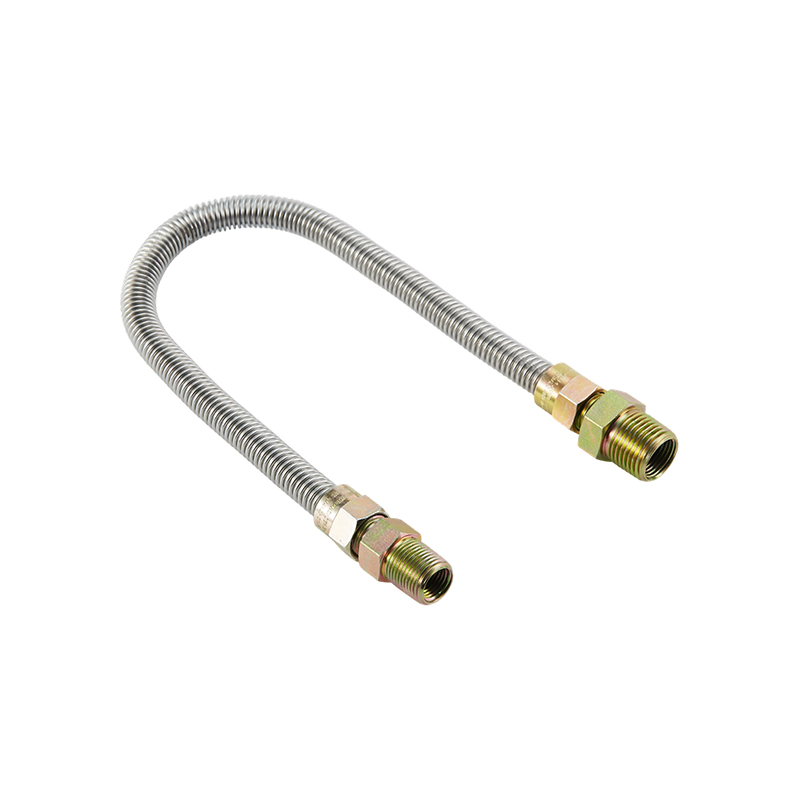
Stainless steel corrugated hoses have shown high safety performance in the field of household gas connections due to their unique structure and material. Its metal material characteristics solve the air permeability problem of rubber hoses, completely block the penetration of gas molecules, and ensure the absolute sealing of medium transportation. This all-metal structure can also withstand special temperature conditions, with an operating temperature range of -40℃ to 150℃, and a melting point of up to 1500-1600℃, which is higher than the melting point of copper and galvanized pipes. Even if it encounters high temperatures in fires, the port will not fall off and cause secondary disasters.

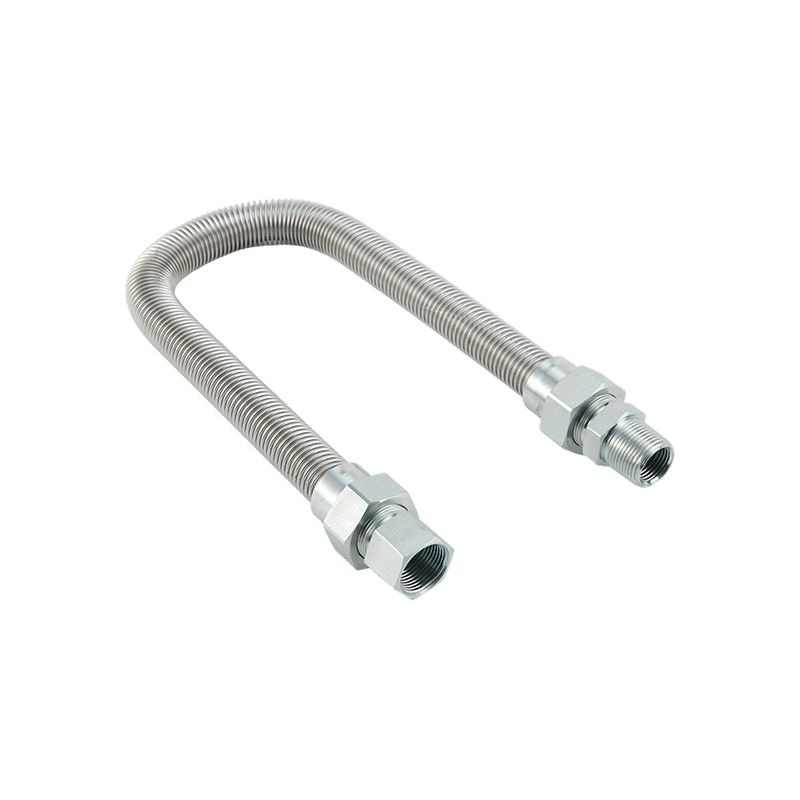
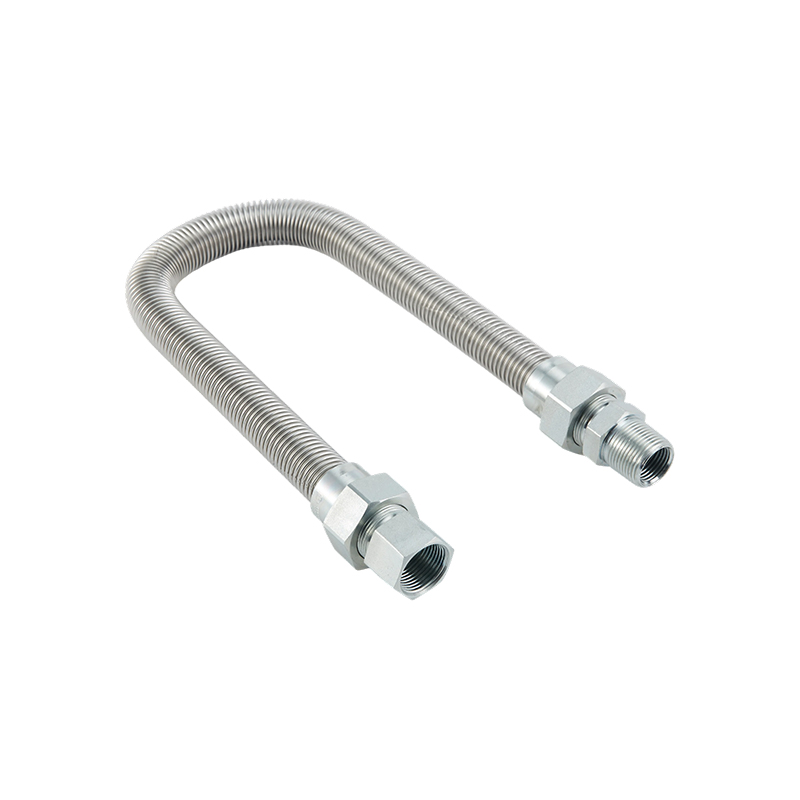
The anti-destruction ability of stainless steel corrugated hoses is significantly better than that of traditional products. The corrugated pipe has strong compressive and tensile properties. Experiments show that the tube body can stretch 40% of its own length without breaking, and can effectively resist external impact. In terms of connection, the stainless steel corrugated hose adopts all-metal threaded connection, and the joint is made of brass or stainless steel. The end face sealing technology ensures a firm connection and eliminates the risk of accidental detachment. This connection method is more reliable than the clamp fixation of the rubber hose and can withstand greater pull-off force.

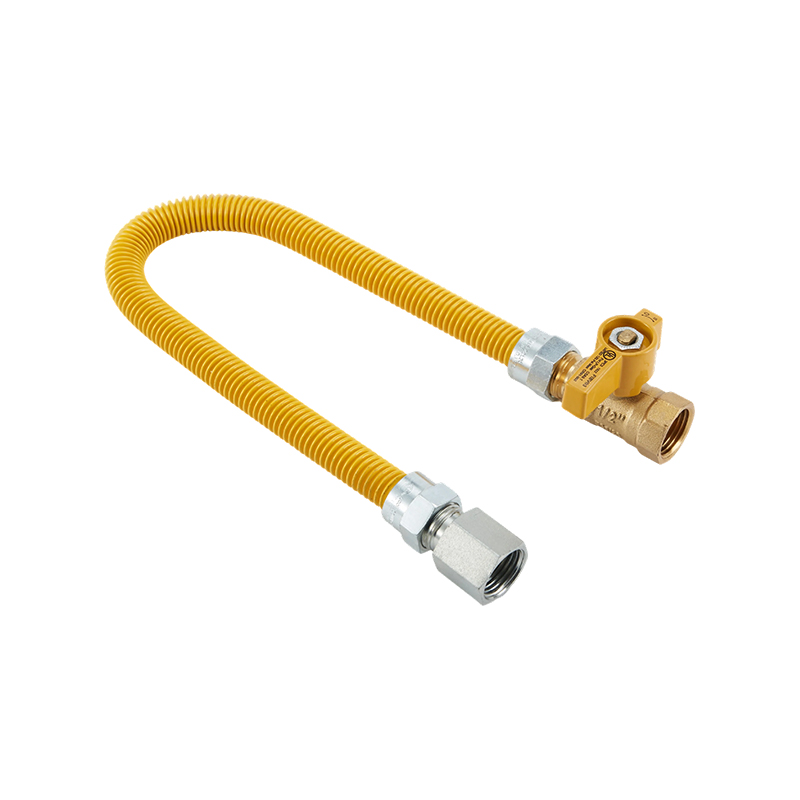
From the appearance design point of view, the stainless steel corrugated hose is usually equipped with a PVC protective jacket, which not only has a flame retardant function, but also prevents the metal corrugated part from directly rubbing against external hard objects, thereby extending the service life. As a food-grade material, 304 stainless steel contains 18% chromium and 9% nickel, has good corrosion resistance and processing performance, and can meet the needs of household gas connection.

3. Economic analysis of installation, maintenance and long-term use
The convenience of installation of stainless steel corrugated hose is also an important factor in its popularity. Compared with traditional galvanized steel pipes that require a large number of pipe fittings and complex tools, stainless steel corrugated hoses are simple to install, easy to carry, and require simple tools. Its flexibility allows manual bending operations, can adapt to various complex installation environments, and is particularly suitable for pipeline renovation for old users. Professional installers said that the installation efficiency of stainless steel bellows is more than three times that of traditional methods, reducing labor costs.
Latest Articles

  • Jul 09,2025

    Haoyin (Ningbo) Bellows Technology Co., Ltd.

    Haoyin (Ningbo) Bellows Technology Co., Ltd. is a professional enterprise specializing in the R&D, design, manufacturing, and sales of stainless steel bellows. It is committed to providing safe, efficient, and durable flexible connection solutions for gas, plumbing, heating, and other fields. Covering an area of 35 mu, the company has 18,000 square meters of standardized workshops and has obtained multiple management system certifications, such as ISO9001, ISO14001, and ISO45001.
    As a "National High-tech Enterprise" and "Green Factory", Haoyin has always adhered to the production philosophy of "Striving for Excellence, Forging Quality". It has built a full-process quality management system from raw material screening, structural design, manufacturing, performance testing to after-sales support, continuously creating higher value for customers.
  • Jul 09,2025

    Say goodbye to rubber hoses! How can stainless steel bellows eliminate the risk of gas leakage?

    1. Hidden dangers of rubber hoses: Why must they be eliminated?

    Traditional rubber hoses have the following fatal defects:

    Easy to age: They will harden, crack, and lose their sealing properties in about 2 years.
    Not resistant to high temperatures: They are easily deformed by long-term heat, increasing the risk of leakage.
    Afraid of rat bites: Rubber materials are easily bitten by rats, causing gas leakage.
    Unstable connection: The clamp is not firmly fixed and is easy to loosen and fall off.


    2. Four major safety advantages of stainless steel below

    ① Super corrosion resistance, lifespan of up to 8-10 years

    Using 304/316 stainless steel, it is corrosion-resistant and oxidation-resistant, and is not affected by kitchen fumes and humid environments. Its service life far exceeds that of rubber hoses (national regulations require that gas connection pipes be used for no less than 8 years).


    ② Explosion-proof and pressure-resistant, high and low temperature resistant

    Temperature range: -20℃ to 150℃, suitable for various environments.

    Strong pressure resistance: can withstand pressure above 0.4MPa, which is much higher than the household gas standard (0.01-0.1MPa).


    ③ Anti-rat bite and anti-fall design

    Metal braided layer: cannot be bitten by rats, eliminating the risk of animal damage.

    Threaded interface: a metal nut + sealing gasket is used, which is more firmly fixed than the clamp of the rubber tube.


    ④ Flexible and bendable, easy to install

    Stainless steel bellows have a certain flexibility and can adapt to different installation angles to avoid stress problems caused by hard pipe connection.


    3. How to correctly purchase and install stainless steel bellows?
    Purchase points

    Recognize the national standard: choose products that meet the GB/T 26002-2020 standard.

    Material selection: 304 stainless steel (sufficient for home use) or 316 stainless steel (more corrosion resistant).

    Suitable length: not too long (generally not more than 2 meters) to avoid bending and affecting airflow.


    Installation precautions

    Must be installed by professional gas company personnel and cannot be operated by yourself.

    Check the sealing: After installation, use soapy water to check whether the interface is leaking.

    Regular inspection: Check the pipeline status every 1-2 years to ensure that there is no deformation or rust.


    4. Stainless Steel Bellows FAQ (Frequently Asked Questions)
    Will the stainless steel bellows leak?

    Rarely leaks if properly installed:

    The threaded thread + sealing gasket is used, which is more secure than the clamp of the rubber tube;

    It must be installed by professionals of the gas company and the sealing must be tested with soapy water.


    Can you install the stainless steel below?

    Self-installation is prohibited!

    Gas pipelines involve safety and must be operated by licensed gas company personnel.

    Self-installation may cause leakage or even an explosion.


    Can the stainless steel bellows be bent?

    It can be bent moderately, but repeated bending is prohibited:

    The natural curvature must be maintained during installation to avoid right-angle bending that affects the airflow.

    Excessive bending may cause metal fatigue and reduce the service life.

  • Jul 09,2025

    Safety first choice: Why is metal spiral hose recommended for gas appliances?

    Gas safety is an important part of family life that cannot be ignored, and the hoses connecting gas stoves, water heaters, and other appliances are directly related to gas safety. In recent years, metal spiral hoses have gradually replaced traditional rubber hoses and become the choice for gas connections. Why do professional organizations and gas companies recommend the use of metal spiral hoses? What are its advantages?

    1. Hidden dangers of traditional rubber hoses
    Before the popularity of metal spiral hoses, families used rubber hoses to connect gas equipment. However, rubber hoses have many safety hazards:

    Easy to age and crack: Rubber is exposed to the kitchen environment for a long time, affected by high temperature, oil smoke, humidity, etc., and is prone to harden and crack, causing gas leakage.
    Easy to be damaged by rat bites: The rubber material may be bitten by rats, causing damage and leakage, which can lead to safety accidents.
    Short service life: National standards stipulate that the service life of rubber hoses shall not exceed 18 months, but many families use them beyond the expiration date, increasing the risk.
    Poor pressure resistance: The rubber hose has a low pressure bearing capacity. If the gas pressure fluctuates greatly, it may rupture.

    These shortcomings have led to the gradual replacement of rubber hoses with safer metal spiral hoses.

    2. Advantages of metal spiral hoses
    Metal spiral hoses are made of 304 stainless steel wire braided layer + corrosion-resistant synthetic materials, which have significant advantages over rubber hoses:

    l Super corrosion resistance and high temperature resistance
    The stainless steel outer layer can resist the erosion of kitchen fumes and humid environments, and does not easily age.
    It has high temperature resistance and can withstand temperature changes from -30℃ to 150℃, suitable for various gas equipment.
    l Anti-rat bite and anti-wear
    The metal braided layer can effectively prevent rats from biting and avoid accidental damage.
    The outer metal protection makes the hose more wear-resistant and less likely to leak due to friction.
    l Pressure-resistant and explosion-proof, good sealing
    The metal spiral structure enhances the pressure-bearing capacity, can withstand higher gas pressure, and reduces the risk of leakage caused by pressure fluctuations.
    The threaded interface + sealing gasket is more secure than the snap-on connection of the rubber hose to prevent falling off.
    l Long service life
    The service life of metal spiral hose can reach 8-10 years, far exceeding the 18 months of rubber hose, reducing the trouble of frequent replacement.


    3. How to purchase and install correctly?
    Although metal spiral hose is safer, you still need to pay attention to the following when purchasing and installing:

    Recognize national standards: Choose products that meet GB/T 26002 or CJ/T 197 standards to ensure quality.
    Matching interface type: The interface of gas stoves and water heaters may be threaded or quick-insert, which needs to be confirmed before purchase.
    Moderate length: The hose should not be too long (generally not more than 2 meters) to avoid bending that affects airflow.
    Professional installation: It is recommended to be installed by a gas company or a certified technician to ensure that the interface is sealed and leak-free.

    4. What should be noted when using metal winding hoses?
    Regular inspection and replacement
    Leak detection method: Apply soapy water to the interface after installation and regularly to observe whether bubbles appear.
    Aging signs: If cracks, rust, hardening, or loose joints are found, stop using and replace immediately.
    Replacement cycle: Even if there is no damage, it is recommended to replace it every 2-3 years.

    Use taboos
    No wall penetration/hidden burial: The hose must be installed openly and cannot be hidden in the wall or cabinet to prevent leakage from being difficult to detect.
    Refitting is prohibited: The interface must not be cut off, lengthened, or modified by yourself.
    Adapter: Only for designated equipment, such as gas stoves and water heaters, not for high-pressure or non-gas scenes.

    Emergency treatment of leakage
    When a gas leak is found, immediately close the main valve, open the window for ventilation, do not touch the electrical switch, and go outside to call the emergency repair phone.