




 English
  Español
  русский


The direct answer: 85% of homeowners choose stainless steel gas connectors because they combine corrosion resistance, flexibility, long service life, and code compliance in a single product — advantages that older brass, uncoated steel, and rubber alternatives simply cannot match. Whether connecting a gas range, water heater, dryer, or outdoor grill, a stainless steel flexible gas connector is now the default specification recommended by plumbers, inspectors, and appliance manufacturers across North America and internationally. This article explains exactly why that preference exists, how different connector types compare, and what to check before purchasing or installing any flexible gas line.
The Core Problem with Non-Stainless Gas Connectors
Before stainless steel became the standard, most residential gas appliances were connected with uncoated steel or brass fittings. These materials perform adequately in dry, temperature-stable environments — but real kitchens, utility rooms, and mechanical spaces are rarely either. Moisture from cooking steam, cleaning products, humidity cycling, and condensation creates conditions that accelerate corrosion in both uncoated steel and brass connectors.
The consequences of connector failure are severe. Gas leaks from corroded or cracked connectors are responsible for a significant share of residential gas incidents. The U.S. Consumer Product Safety Commission (CPSC) issued safety warnings on uncoated brass connectors as far back as the 1990s, noting that stress corrosion cracking could cause sudden failure without visible warning. This history directly drove the industry-wide shift toward stainless steel construction.
Key failure modes in legacy connector materials:
- Stress corrosion cracking: Brass connectors exposed to ammonia-based cleaners or humid air develop micro-fractures along the corrugation peaks
- Pitting corrosion: Uncoated steel corrodes rapidly in environments with airborne chlorides (coastal homes, pool areas)
- Galvanic corrosion: Dissimilar metal contact between brass fittings and copper or iron pipe accelerates localized material loss
- Rubber deterioration: Rubber-lined connectors harden, crack, and degrade with age and gas exposure, typically within 5 to 8 years
Why Stainless Steel Outperforms Every Alternative
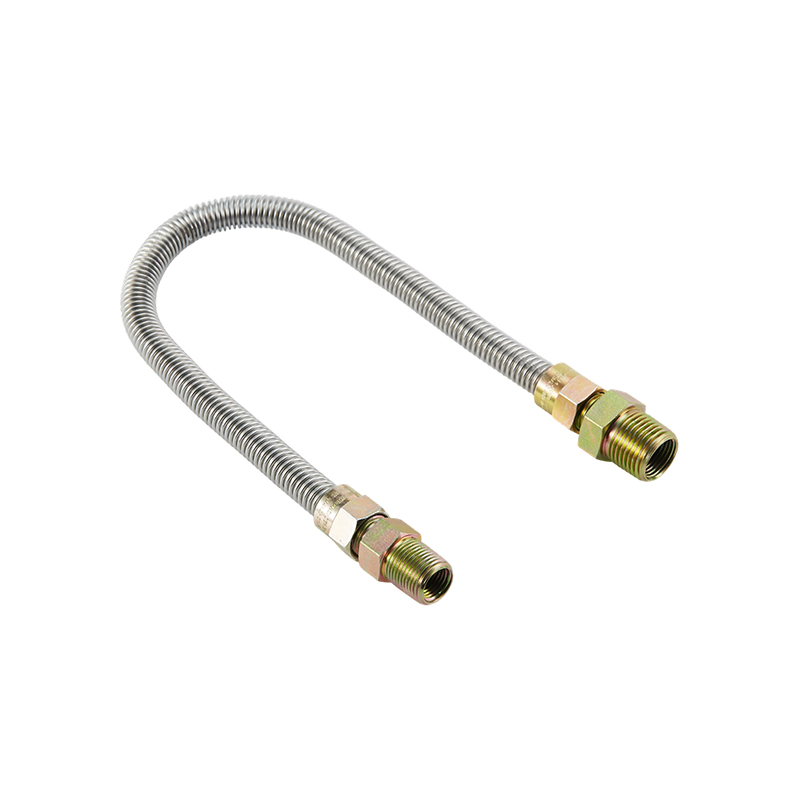
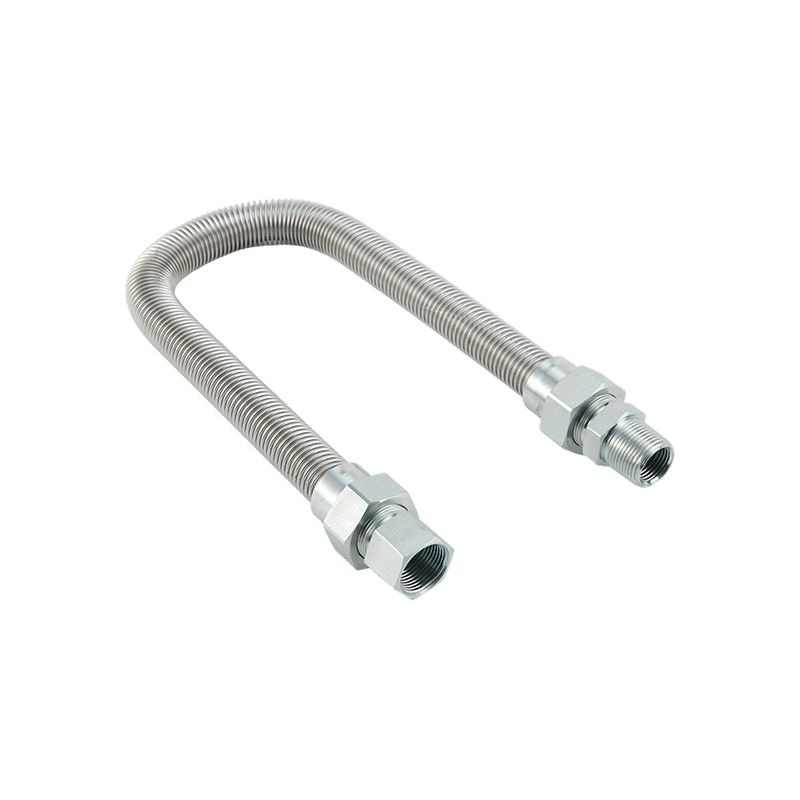
A stainless steel flexible gas hose — specifically constructed from 304 or 316 grade austenitic stainless steel — addresses every failure mode listed above through material properties rather than coatings or treatments. The chromium oxide passive layer that forms naturally on stainless steel provides self-repairing corrosion resistance that does not depend on surface integrity or applied finishes.
| Connector Material | Corrosion Resistance | Typical Service Life | Flexibility | Code Acceptance |
|---|---|---|---|---|
| Stainless Steel (304/316) | Excellent | 20+ years | High | Universal |
| Uncoated Brass | Poor (stress cracking) | 3–8 years | Moderate | Restricted in many codes |
| Uncoated Steel | Poor (pitting) | 5–10 years | Moderate | Limited |
| Rubber-Lined | Fair | 5–8 years | High | Limited to specific uses |
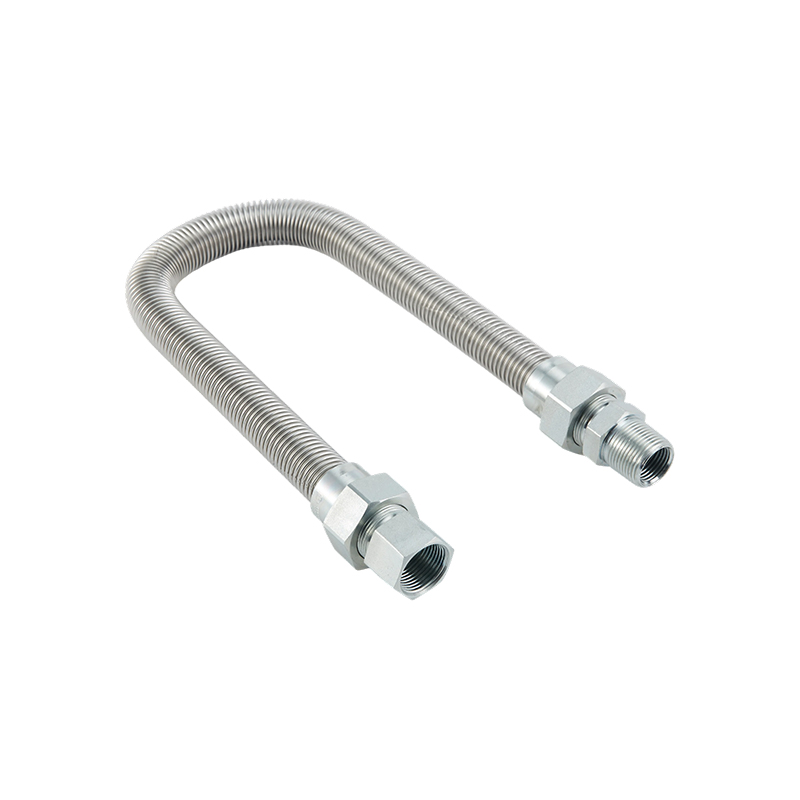
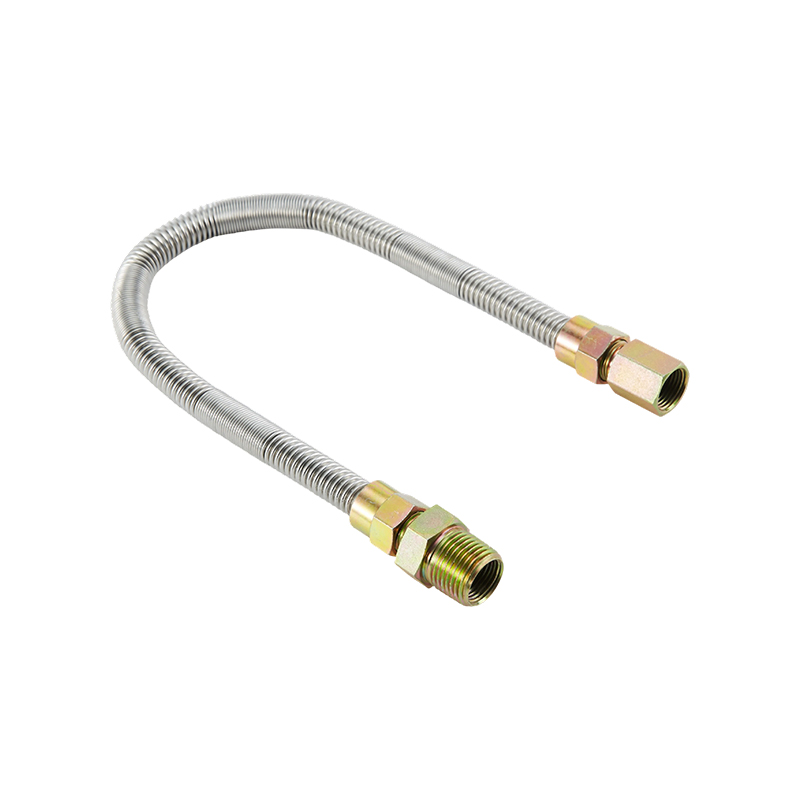
Beyond corrosion resistance, the corrugated construction of a corrugated stainless steel gas hose allows the connector to absorb vibration from appliances, accommodate minor misalignment during installation, and flex slightly when appliances are moved for cleaning or servicing — without cracking or fatiguing the metal.
Types of Stainless Steel Gas Connectors Explained
Not all stainless steel gas connectors are identical. Understanding the four main product types helps homeowners and contractors select the correct specification for each application.
CSST Gas Connector (Corrugated Stainless Steel Tubing)
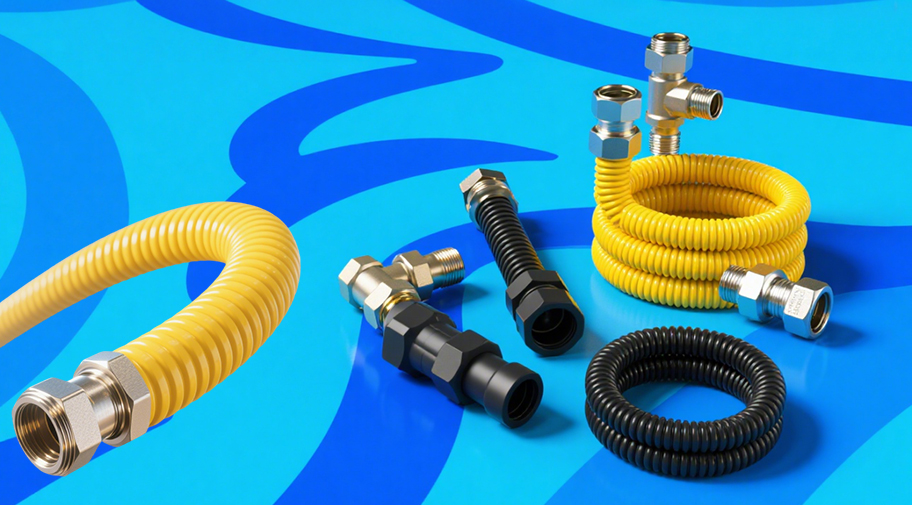
A CSST gas connector is a factory-formed corrugated stainless steel tube, typically covered in a yellow or black protective jacket. CSST is designed for semi-permanent gas distribution runs inside walls and under floors, as well as for flexible appliance drops. Its corrugated structure allows routing around obstacles without rigid fittings, dramatically reducing installation labor versus traditional black iron pipe. CSST must be bonded to the home's electrical grounding system per code to prevent lightning-induced arc damage.
PVC Coated Gas Connector
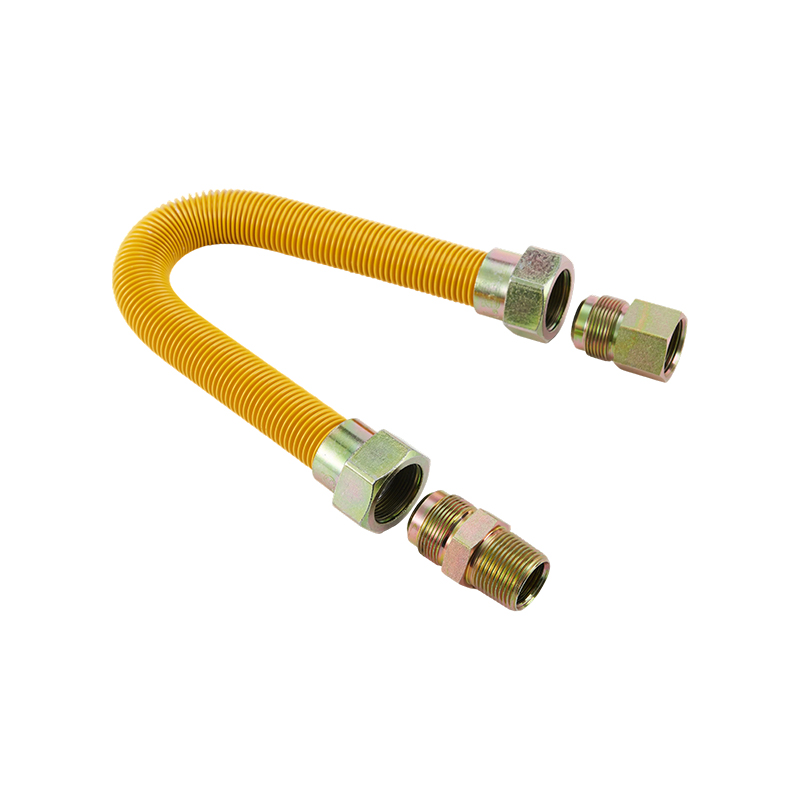
A PVC coated gas connector encases a corrugated stainless steel core in a smooth, color-coded PVC jacket — typically yellow for natural gas or blue for LPG in many international markets. The coating provides an additional barrier against surface moisture, cleaning chemicals, and physical abrasion. It also prevents galvanic contact if the connector touches copper or aluminum components. PVC coated connectors are widely specified in commercial kitchens and industrial food service environments where washdown cleaning is routine.
Yellow Coated Stainless Steel Gas Hose
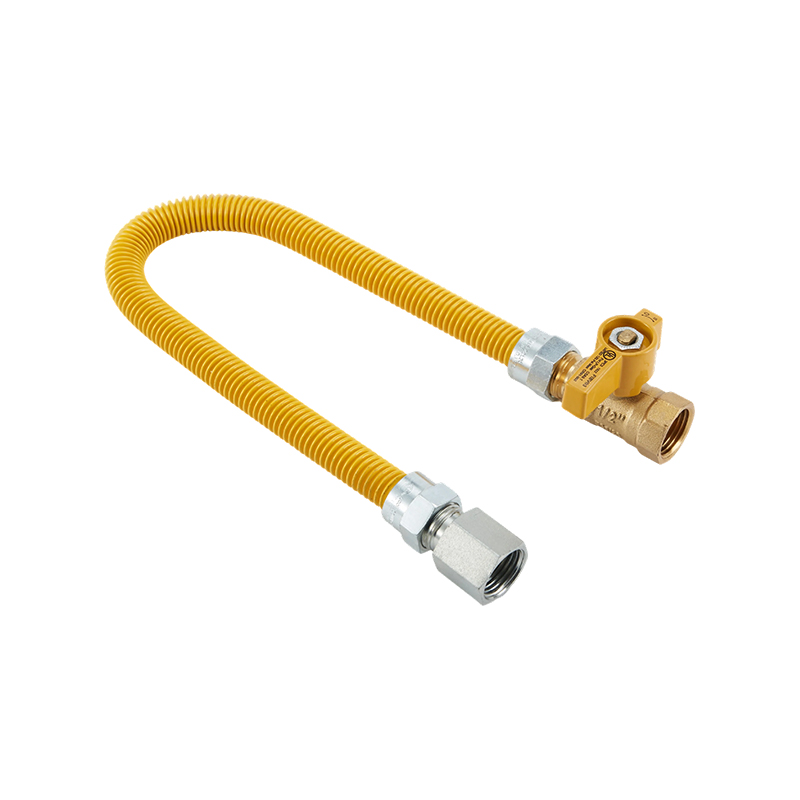
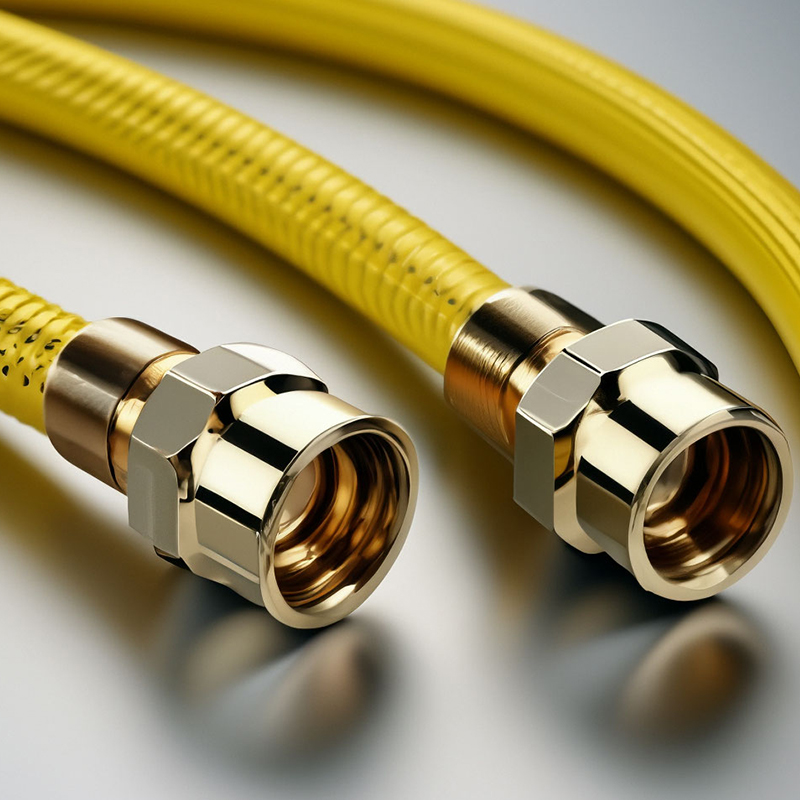
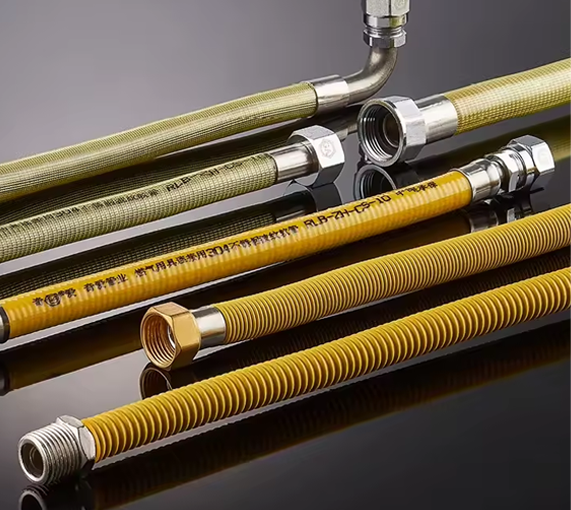
The yellow coated stainless steel gas hose is the most commonly recognized gas connector format in residential settings. The bright yellow PVC or polymer coating serves as an immediate visual identifier — yellow means gas — and is a code requirement in many jurisdictions. This format covers short appliance connection lengths (typically 12 to 60 inches) for ranges, dryers, water heaters, and furnaces. The coating is formulated to resist the specific cleaning agents and cooking vapors found in residential environments.
Braided Gas Connector Pipe
A braided gas connector pipe adds an outer layer of interlocked stainless steel wire braid over the corrugated inner tube. The braid functions as mechanical armor, protecting against physical damage in high-traffic utility areas, and provides additional burst-pressure capacity. Braided connectors are the preferred choice for high pressure flexible gas connector applications, outdoor grill connections, and any installation where the connector may be subject to foot traffic, contact with sharp edges, or exposure to UV radiation.
Connector Type Usage Rate by Application Category
Yellow Coated SS (Residential Appliance)72%
CSST (Whole-Building Distribution)65%
Braided SS (Outdoor / High Pressure)48%
PVC Coated SS (Commercial Kitchen)38%
Chart 1: Stainless steel gas connector type adoption rate by primary installation category
Safety Certifications That Matter — and What They Guarantee
A flexible gas appliance connector is a safety-critical product. Counterfeit and substandard connectors do exist in the market, and the consequences of failure are not recoverable. Before purchasing any connector, verify that it carries current certifications from recognized testing bodies:
- ANSI Z21.24 / CSA 6.10: The primary North American standard for flexible connectors for gas appliances. Covers pressure cycling, burst pressure (minimum 5× working pressure), bending fatigue, and end fitting pull-out resistance. Any connector sold for residential use in the U.S. or Canada should carry this mark.
- UL Listed: Underwriters Laboratories independent testing confirmation that the connector meets the ANSI standard. Look for the UL mark on both the product and the packaging.
- AGA / CSA Certified: American Gas Association or Canadian Standards Association product certification, confirming suitability for use with natural gas and LPG at rated pressures.
- CE Marking (European market): Confirms compliance with EU Gas Appliances Regulation (EU) 2016/426 for products sold in European markets.
- ISO 9001 Manufacturer Certification: Confirms the manufacturing facility operates a documented quality management system — a necessary but not sufficient condition for product quality.
A certified stainless steel gas line kit will clearly state the maximum operating pressure (typically 1/2 PSI for residential, up to 5 PSI for semi-rigid distribution), the approved gas types (natural gas, LP, or both), and the maximum installation length on the product label.
Choosing the Right Length and Fitting Size
Selecting the correct connector specification prevents both installation problems and code violations. The following practical guidelines apply to residential appliance connections:
Length Selection
Most building codes limit flexible gas appliance connectors to a maximum of 6 feet (72 inches) in length. This limit exists because longer connectors are more susceptible to mechanical damage and are more likely to be routed through walls or concealed spaces where they would require rigid piping instead. Choose the shortest connector that allows the appliance to be pulled forward for servicing — typically 18 to 36 inches for most kitchen ranges.
Fitting Thread Size
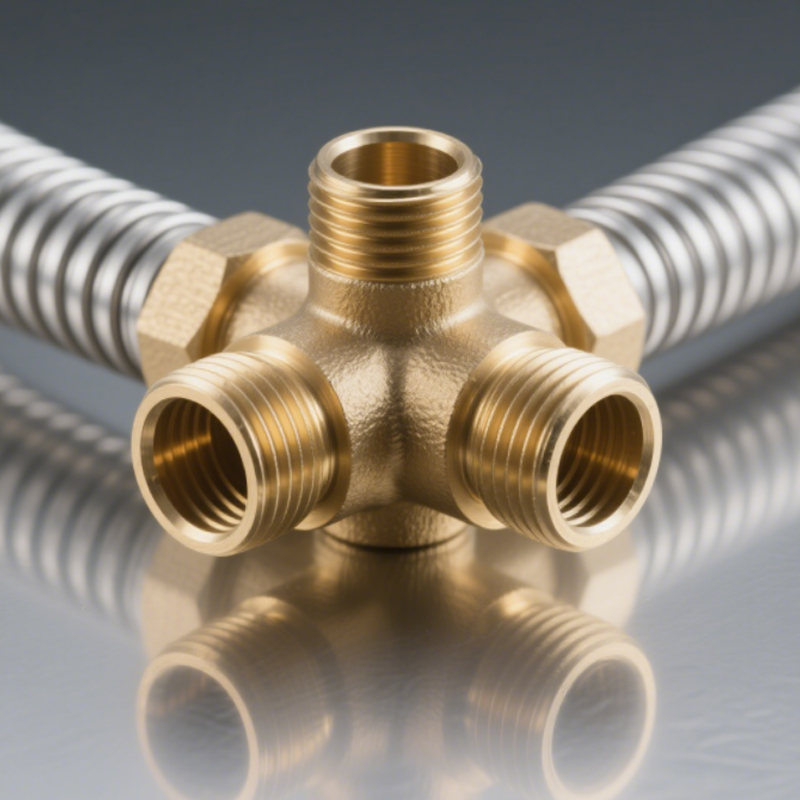
The two most common thread configurations for residential connectors are 3/8" FIP × 3/8" MIP (for ranges and dryers with standard male gas valves) and 1/2" FIP × 3/8" MIP (for water heaters and furnaces with larger supply connections). Always verify the thread size at both the gas valve outlet and the appliance inlet before purchasing — the wrong size requires an adapter that adds a potential leak point.
Diameter and Flow Capacity
High-BTU appliances such as commercial-style ranges (above 60,000 BTU/hr), pool heaters, or standby generators require larger bore connectors to deliver adequate gas flow without pressure drop. A high pressure flexible gas connector with 3/4" or 1" diameter is specified for these applications, compared to the 3/8" or 1/2" connectors used for standard residential appliances.
Approximate Max Gas Flow Capacity by Connector Diameter (Natural Gas, 0.5 PSI)
~40K BTU
3/8"
~80K BTU
1/2"
~160K BTU
3/4"
~280K BTU
1"
Chart 2: Approximate BTU flow capacity by stainless steel gas connector internal diameter at standard residential supply pressure
Installation Best Practices That Prevent Leaks
Even a certified, high-quality corrugated stainless steel gas hose can leak if installed incorrectly. The following practices represent the standard approach recommended by gas utility companies and certified plumbers:
- Never reuse a connector. Each flexible gas connector is a single-use product. If the appliance is moved, replaced, or the connector is disconnected for any reason, install a new connector. Reconnecting a previously installed connector introduces fatigue at the end fitting seal surfaces.
- Do not over-bend or kink. Corrugated connectors have a minimum bend radius — typically 3 to 4 times the outer diameter. Kinking collapses the corrugation walls and creates a permanent weak point. Route the connector with gentle curves rather than sharp turns.
- Apply thread sealant correctly. Use only gas-rated thread sealant (pipe dope rated for gas service) or PTFE tape on male threads. Never apply sealant to the first thread, as it can enter the gas stream and clog burner orifices.
- Hand-tighten first, then wrench 1 to 2 additional turns. Over-tightening distorts the end fitting seat and creates leak paths. Under-tightening allows gas to escape past the thread engagement.
- Test every connection with leak detection solution. After installation, turn on the gas supply and apply approved leak detection fluid to every threaded connection and the full length of the connector. Bubbles indicate a leak that must be addressed before the appliance is operated.
- Maintain clearance from heat sources. Position the connector away from burner areas, oven vents, and other heat sources. While stainless steel connectors tolerate higher temperatures than rubber alternatives, sustained heat exposure degrades polymer coatings and can affect the integrity of end fitting seals.
When to Replace Your Gas Connector
A quality stainless steel flexible gas connector does not have a fixed mandatory replacement interval like a car timing belt, but it should be inspected annually and replaced immediately if any of the following conditions are present:
- Any visible kink, crimp, or flattening of the corrugated section
- Corrosion, discoloration, or pitting visible on the stainless steel surface
- Cracking, brittleness, or peeling of the PVC or polymer coating
- Any detectable gas odor near the connector during operation
- The connector is more than 10 years old, regardless of apparent condition
- The appliance connected to it has been replaced or moved
- Any uncoated brass connector remains in service — these should be replaced with stainless steel immediately
About Haoyin (Ningbo) Bellows Technology — Stainless Steel Gas Connector Specialists
Haoyin (Ningbo) Bellows Technology Co., Ltd. is a professional enterprise specializing in the R&D, design, manufacturing, and sales of stainless steel bellows and flexible connection products. The company is committed to providing safe, efficient, and durable flexible connection solutions for gas, plumbing, heating, and related fields.
As a professional OEM stainless steel flexible gas connector manufacturer and ODM custom CSST gas connector factory, Haoyin covers an area of 35 mu with 18,000 square meters of standardized workshops and has obtained multiple management system certifications including ISO 9001, ISO 14001, and ISO 45001. Recognized as both a National High-tech Enterprise and a Green Factory, Haoyin has built a full-process quality management system spanning raw material screening, structural design, manufacturing, performance testing, and after-sales support.
The company's production philosophy — "Striving for Excellence, Forging Quality" — is reflected in every product that leaves the facility. From standard residential yellow coated gas hoses to custom high-pressure braided connector assemblies for industrial applications, Haoyin's vertically integrated manufacturing approach ensures consistent quality and single-source accountability for clients worldwide.
Frequently Asked Questions
Q1: How long does a stainless steel flexible gas connector last?
A certified stainless steel flexible gas hose installed correctly in a residential setting typically lasts 15 to 25 years before requiring replacement. However, the industry-standard recommendation is to replace any flexible connector whenever an appliance is moved or replaced, and to inspect annually regardless of age. Do not exceed 10 years of service without a professional inspection.
Q2: Can I use the same connector for both natural gas and propane (LPG)?
Many certified flexible gas appliance connectors are rated for both natural gas and LP gas, but always verify the product label before installation. The connector's certification mark should explicitly list both gas types if dual-fuel use is intended. The fittings, regulators, and appliance orifices also need to be matched to the gas type — the connector alone does not determine compatibility.
Q3: Is a yellow coated connector required by code, or can I use bare stainless steel?
Code requirements vary by jurisdiction. In many U.S. states and Canadian provinces, a yellow coated stainless steel gas hose is required for residential appliance connections because the yellow color provides immediate visual identification as a gas line. Bare stainless connectors may be permitted in some commercial or industrial applications. Always check the local gas code or consult a licensed plumber before selecting a connector format.
Q4: What is the difference between a CSST gas connector and a standard flexible appliance connector?
A CSST gas connector (corrugated stainless steel tubing) is designed for semi-permanent gas distribution runs — running inside walls, under floors, and between floors — and can extend for tens of feet in a continuous length with fittings only at the connection endpoints. A standard flexible appliance connector is a short-length product (typically under 6 feet) used specifically to make the final connection between the rigid gas supply valve and the appliance. The two products have different pressure ratings, installation requirements, and code provisions.
Q5: Do I need a professional to install a gas connector, or can I do it myself?
Licensing requirements for gas work vary by location. In many U.S. states and Canadian provinces, connecting gas appliances requires a licensed plumber or gas fitter. Even where DIY installation is legally permitted, it is strongly recommended to have any gas connection work — including flexible connector replacement — performed or verified by a qualified professional. A missed leak can have life-safety consequences that far outweigh the cost of professional installation.