




 English
  Español
  русский


Quick Answer: How to Choose the Right Stainless Steel Bellows Type
The right stainless steel bellows type depends on three practical factors: the movement the system needs to absorb (axial, lateral, or angular), the working pressure and temperature of the line, and the corrosion profile of the media involved. For compact installations that need a large stroke in a small envelope, edge-welded bellows are typically the preferred flexible metal bellows format. For higher-pressure, lower-cycle duty such as pipeline expansion joints, formed (hydroformed) bellows are generally more suitable because their thicker, rolled convolutions handle pressure loading well.
Material selection follows a similarly simple rule of thumb: 304 stainless steel is commonly specified for general-purpose, low-chloride environments, while 316 stainless steel is the usual choice when chloride exposure, humid coastal air, or more demanding corrosion resistance is required. The remainder of this guide breaks each of these selection factors down with comparison charts, reference tables, and practical examples, so that engineering and sourcing teams working with a stainless steel bellows manufacturer can match a product specification to real operating conditions rather than guesswork.
What Is a Stainless Steel Bellows and How Does It Work
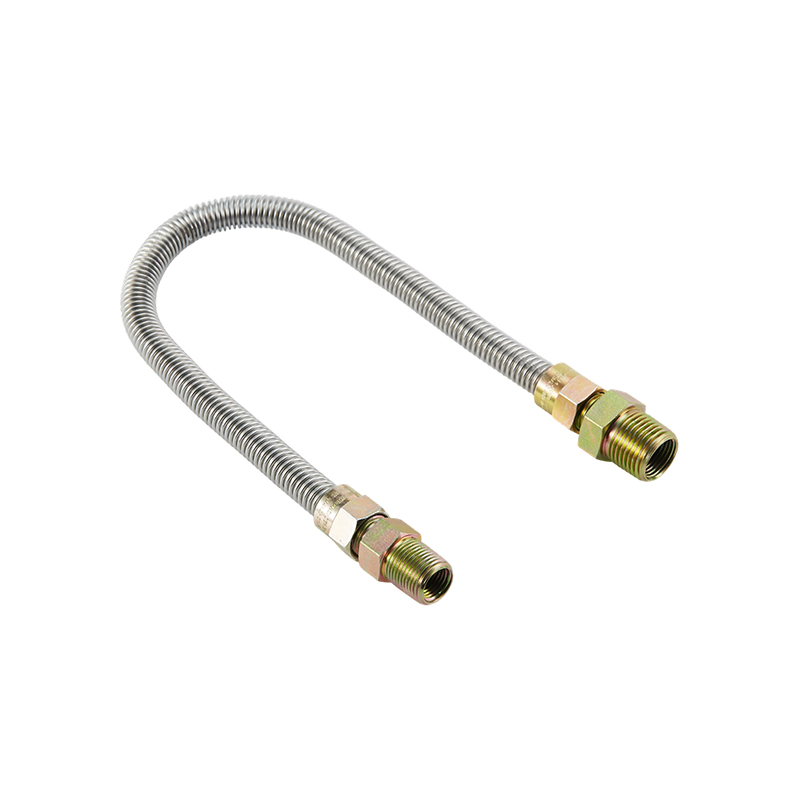
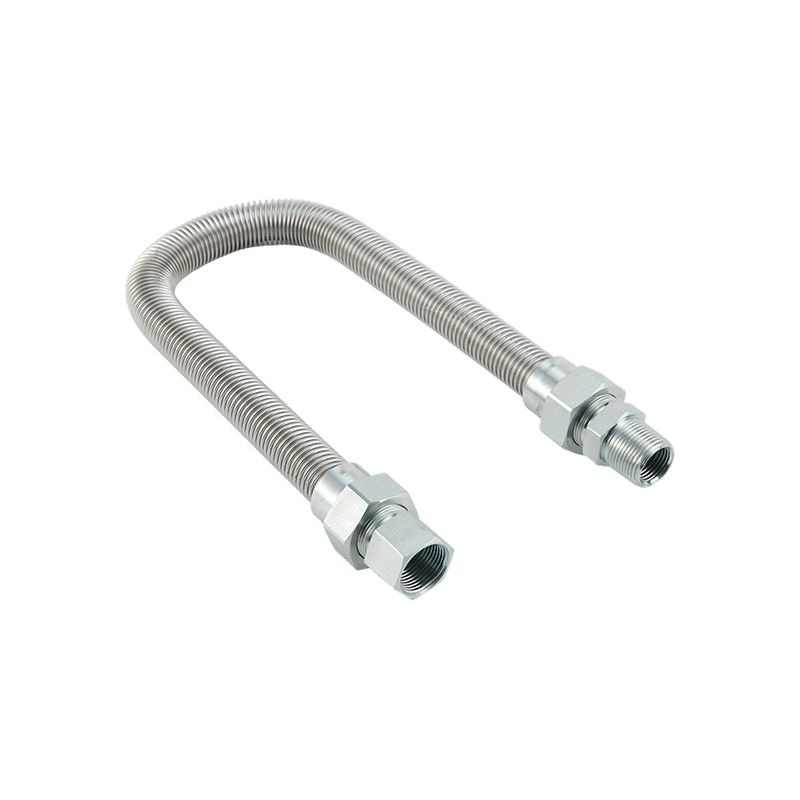
A stainless steel bellows is a thin-walled, corrugated metal component built from a series of convolutions that expand, contract, or bend like an accordion. As the piping or ducting system moves due to thermal expansion, vibration, installation offset, or mechanical shock, the bellows flexes to absorb that movement while keeping the flow path sealed. This is why the component is often described generically as a flexible metal bellows: it converts rigid pipe into a controlled, repeatable point of movement.
Two manufacturing approaches dominate the market. Welded bellows (including edge-welded bellows) are built by joining thin diaphragm discs at their inner and outer edges, which produces a large stroke per convolution and a compact axial length. Formed bellows are made by hydroforming or rolling a single or multi-ply tube into a corrugated shape, which tends to favor pressure containment over raw flexibility. Both approaches are widely used across gas supply lines, plumbing and heating systems, HVAC ducting, and vacuum equipment, and each has a distinct performance profile that is explored in detail below.
Welded Bellows vs Formed Bellows: Key Structural Differences
Choosing between welded bellows and formed bellows usually comes down to how much stroke is needed versus how much pressure the connection must contain. The chart below presents a relative flexibility index across four common configurations, based on typical convolution behavior described in general bellows engineering references, to illustrate how construction method affects available movement.
As the chart shows, edge-welded bellows generally offer the highest flexibility index among the four constructions because their thin diaphragm plates deform more readily per convolution. Multi-ply welded bellows sit in the middle, offering a balance of stroke and durability by distributing stress across several thin layers instead of one. Formed bellows show the lowest index in this comparison, which is consistent with their design priority: thicker walls and rolled convolutions that favor pressure capacity and cycle durability over maximum stroke. This trade-off is the central reason procurement teams sourcing from a welded metal bellows manufacturer should specify expected stroke and pressure together, not separately.
| Feature | Welded / Edge-Welded Bellows | Formed Bellows |
|---|---|---|
| Manufacturing Method | Edge-welded diaphragm discs | Hydroformed or rolled tube |
| Typical Wall Thickness | Thin (0.1-0.3 mm per ply) | Thicker (0.3-1.0 mm) |
| Ply Configuration | Single or multi-ply stacked discs | Single or multi-ply tube wall |
| Movement per Convolution | Comparatively high | Comparatively moderate |
| Common Applications | Vacuum systems, compact seals, precision instruments | Pipeline expansion joints, HVAC ducting, exhaust systems |
Core Selection Criteria for Stainless Steel Bellows
Beyond construction method, a handful of technical parameters determine whether a bellows will perform reliably in a given system. Reviewing each of the following criteria with a custom stainless steel bellows manufacturer before finalizing a drawing generally reduces the risk of premature failure or an oversized, unnecessarily heavy assembly.
- Material grade - 304 or 316 stainless steel, selected based on the corrosion profile of the media and ambient environment.
- Wall thickness and ply count - thinner, multi-ply constructions favor flexibility; thicker, fewer-ply constructions favor pressure capacity.
- Working pressure - the maximum internal or external pressure the bellows must contain across its service life.
- Operating temperature range - both continuous and peak temperature affect material choice and expected fatigue life.
- Movement type and stroke - axial compression/extension, lateral offset, angular rotation, or a combination of these.
- Media compatibility - gas, water, steam, or vacuum service each place different demands on sealing and surface finish.
These six criteria are typically captured on a technical drawing or specification sheet shared with an OEM metal bellows supplier, which allows the manufacturing team to recommend a suitable diameter, ply configuration, and end-fitting design before tooling or production begins.
304 vs 316 Stainless Steel Bellows: Which Grade Fits Your Application
304 and 316 stainless steel share a similar base composition of chromium and nickel, but 316 adds roughly 2-3 percent molybdenum, which meaningfully improves resistance to chlorides and pitting corrosion. This single compositional difference is the main reason the two grades are recommended for different service environments, even though they look and machine almost identically.
The radar chart above compares 304 and 316 across five practical performance dimensions on a relative 0-10 index. 316 stainless steel scores notably higher on chloride resistance, which explains why it is the common recommendation for coastal installations, marine equipment, and chemical processing lines. 304 stainless steel remains highly competitive on weldability and general mechanical strength, and it continues to be a widely specified, cost-conscious option for indoor industrial gas, plumbing, and heating applications where chloride exposure is limited. Neither grade is universally superior; the correct choice depends on matching the corrosion index to the actual service environment rather than defaulting to one grade for every project.
Comparing Movement Capacity: Edge-Welded vs Formed Bellows
Movement capacity is rarely a single number. Systems typically combine axial compression or extension with some lateral offset and angular rotation, so it helps to compare bellows types across all three movement modes rather than a single stroke figure.
Across all three movement directions, edge-welded bellows show a consistently higher relative index than formed bellows in this comparison, which reflects their thinner, more pliable diaphragm construction. The gap is largest in the axial direction, which is the movement mode edge-welded bellows are most often selected for in compact vacuum bellows and instrumentation applications. Formed bellows still provide workable lateral and angular movement for many piping layouts, and their more robust wall section is frequently the better trade-off when the system also needs to contain higher line pressure. This is why an industrial bellows factory will usually ask for both the expected stroke per axis and the system pressure before recommending a specific product family.
Understanding Fatigue Life and Pressure Rating
Fatigue life describes how many expansion-and-contraction cycles a bellows can typically undergo before a crack initiates at the convolution root. It is one of the most searched technical questions among buyers because undersizing stroke relative to the rated movement is a leading cause of early field failure.
This illustrative curve reflects a well-established engineering principle behind expansion joint fatigue design: relative cycle life falls sharply as the displacement ratio approaches the rated stroke, in line with the general fatigue behavior referenced in expansion joint industry standards such as EJMA. At a low displacement ratio, a bellows can typically sustain a comparatively high number of cycles, but pushing the stroke close to 100 percent of the rated value reduces available cycle life considerably. In practical terms, specifying a bellows with some margin above the calculated maximum stroke - rather than sizing it exactly to the expected movement - is a common way engineers extend service life without changing material or wall thickness. Buyers evaluating quotes from a metal bellows manufacturer should confirm whether the quoted stroke figure is a rated maximum or a recommended working value, since the difference materially affects long-term reliability.
Matching Bellows Type to Application: Gas, Plumbing, Heating, and Vacuum Systems
Different end-use systems place very different demands on a bellows, from sealed gas tightness to repeated high-cycle vibration absorption. The table below summarizes typical recommendations by application, which can serve as a starting point before a detailed engineering review with a supplier.
| Application | Typical Bellows Type | Primary Requirement |
|---|---|---|
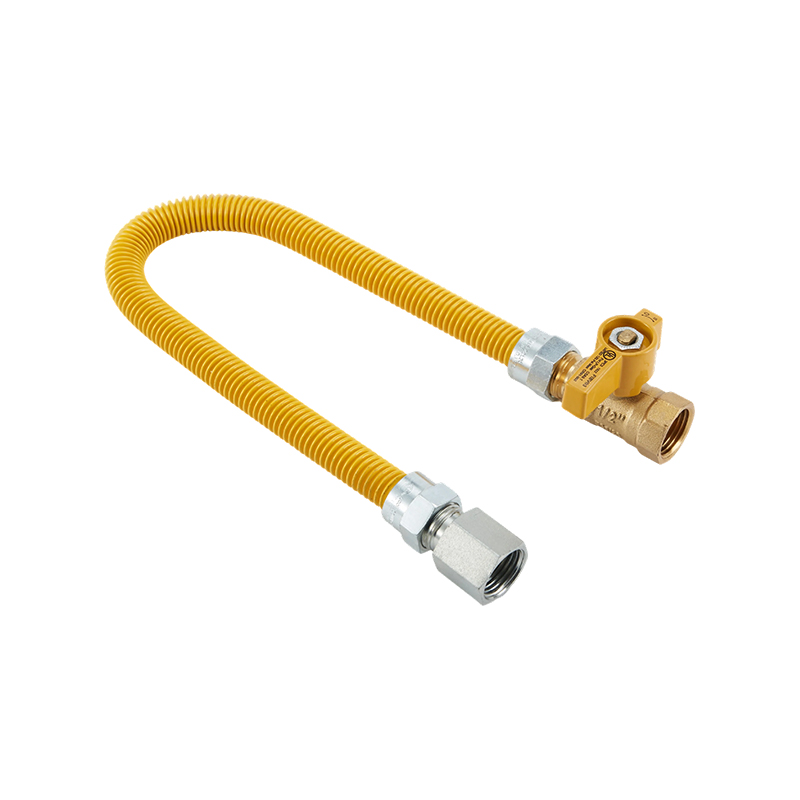
| Gas supply flexible connectors | Edge-welded or corrugated welded bellows | Gas-tight sealing, vibration absorption |
| Residential and commercial plumbing | Formed or multi-ply welded bellows | Thermal movement, ease of installation |
| Heating and HVAC ducting | Formed bellows expansion joints | Thermal expansion, moderate pressure |
| Vacuum and semiconductor equipment | Edge-welded vacuum bellows | Leak tightness, precise stroke control |
For high-vacuum and cleanroom equipment, sourcing teams typically look for a dedicated vacuum bellows manufacturer or vacuum bellows supplier with demonstrated experience in leak-tight welding and bakeable stainless steel surface finishes, since a small weld defect can compromise chamber integrity in ways that would not matter in a general plumbing line. For pipeline and duct expansion, an expansion joint supplier familiar with formed bellows and pressure code compliance is usually the more relevant point of contact. Matching the request to the right specialization within the broader category of industrial stainless steel bellows tends to shorten the sourcing cycle considerably.
Common Causes of Bellows Failure and How to Prevent Them
Most bellows failures trace back to a small number of root causes, and most of them are preventable at the specification or installation stage rather than requiring a change in material.
- Cyclic fatigue from over-stroke - operating the bellows near or beyond its rated displacement accelerates crack initiation at the convolution root.
- Corrosion from media incompatibility - selecting 304 stainless steel for a chloride-rich or highly acidic environment can shorten service life compared with 316 or another suitable alloy.
- Installation misalignment - angular or lateral offset introduced during fitting adds unplanned stress beyond the designed movement.
- Vibration-induced resonance - operating near a system's natural frequency can cause rapid, localized fatigue even at low nominal stroke.
- Squirm from excessive internal pressure - pressure loading beyond the rated limit can cause column instability in longer bellows assemblies.
Addressing these factors typically starts with an accurate application questionnaire covering pressure, temperature, media, and expected movement, followed by a design review with the manufacturer before tooling is committed. This upfront step is one of the most reliable ways to reduce field failures for custom bellows manufacturer projects with non-standard dimensions.
Working with a Professional OEM/ODM Stainless Steel Bellows Manufacturer
Because bellows performance depends on the interaction of material, wall thickness, ply count, and forming precision, working with an established stainless steel bellows supplier that controls the full process - from raw material screening through structural design, manufacturing, and performance testing - generally produces more consistent, application-matched results than sourcing components as a generic commodity item.
Haoyin (Ningbo) Bellows Technology Co., Ltd. is a manufacturer specializing in the research, design, manufacturing, and sale of stainless steel bellows for gas, plumbing, heating, and related flexible connection applications. Operating from an 18,000-square-meter standardized workshop across a 35-mu site, the company holds ISO9001, ISO14001, and ISO45001 management system certifications and is recognized as a National High-tech Enterprise and Green Factory. As an OEM bellows manufacturer and ODM stainless steel bellows factory, the team supports custom stainless steel bellows projects from initial structural design through after-sales technical support, which is particularly useful for buyers who need a welded metal bellows manufacturer capable of adapting standard product families to non-standard diameters, end fittings, or certification requirements.
For procurement and engineering teams evaluating an industrial bellows factory, it is generally worth confirming three things before placing a custom order: documented quality certifications, in-house testing capability for pressure and cycle performance, and a track record of supporting both OEM metal bellows supplier relationships and smaller custom or prototype runs.
Frequently Asked Questions
|
Q1: Why are bellows made of stainless steel? Stainless steel combines corrosion resistance, mechanical strength, and good weldability, allowing thin convolutions to flex repeatedly while resisting oxidation from most industrial media. |
Q2: How do stainless steel bellows work? A series of convolutions expand and contract like an accordion, letting the component absorb axial, lateral, or angular movement while keeping the flow path sealed. |
|
Q3: 304 vs 316 stainless steel bellows? 304 generally suits general-purpose, low-chloride environments, while 316 contains added molybdenum for better resistance to chlorides and marine-type conditions. |
Q4: Stainless steel vs Inconel bellows? Stainless steel covers most industrial, plumbing, and vacuum applications, while Inconel and similar nickel alloys are typically reserved for more extreme temperature or corrosion conditions. |
|
Q5: What is the fatigue life of metal bellows? Fatigue life is the number of expansion-contraction cycles before cracking typically begins, and it is strongly influenced by stroke length, wall thickness, and ply count. |
Q6: How flexible are stainless steel bellows? Flexibility depends on wall thickness, ply count, and convolution shape; edge-welded bellows generally offer more stroke per convolution than formed bellows. |
|
Q7: What causes bellows failure? Common causes include cyclic over-stroke fatigue, media-related corrosion, installation misalignment, and vibration-induced resonance. |
Q8: How do you calculate bellows pressure? Allowable pressure depends on wall thickness, mean diameter, material properties, and ply configuration, generally following recognized expansion joint engineering standards. |