




 English
  Español
  русский


A metal expansion joint that fails after two heating seasons is rarely a manufacturing defect. It is usually a sizing decision. When a hot-water riser grows 40 mm between two anchors, something has to absorb that growth every time the system heats and cools. If the joint is asked to take that movement in the wrong direction, or if the pipe is left free to swing sideways, the bellows will fatigue long before the pipe does.
The short answer: a metal expansion joint is a pressure-retaining fatigue component, not a flexible coupling. Its life is set by how much movement each convolution absorbs and by whether the surrounding piping — anchors, guides, supports — lets it move the way it was designed to. Get those two things right and a stainless steel expansion joint will typically outlast the pipe it is fitted to. Get them wrong and no material upgrade will rescue it.
What follows covers the movement types, the configurations built to handle them, the materials and temperatures involved, and the specification inputs you should collect before a quotation means anything.
What a Metal Expansion Joint Actually Is
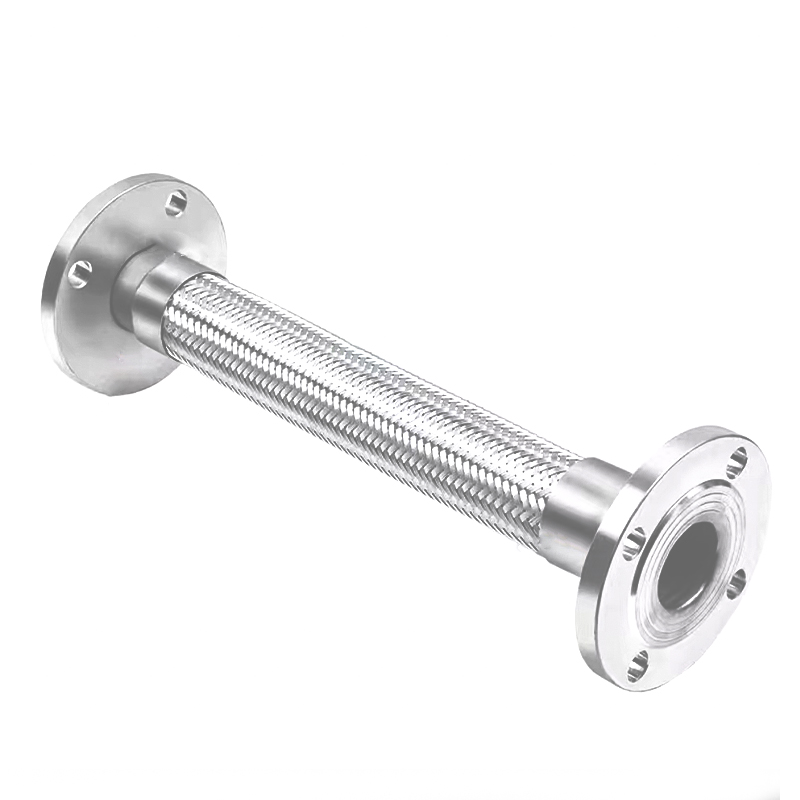
A metal expansion joint — also called a compensator or a bellows expansion joint — is a short length of thin-walled corrugated stainless steel tube welded between two end fittings: flanges, weld ends or threaded connections. The corrugations do the work. Each convolution flexes a fraction of a millimetre, and a bellows with twenty convolutions turns those fractions into the movement the line needs to absorb.
Because the bellows is thin it can move. Because it is thin it must be protected. Two consequences explain most specification arguments.
- Pressure thrust. Internal pressure acting on the effective area of the bellows produces an axial force — pressure multiplied by effective area. On a DN200 line at 10 bar this lands in the order of 35 kN, roughly 3.5 tonnes, depending on convolution geometry. That force is real, and it must be carried by main anchors, not by the bellows itself.
- Directional stiffness. A bellows is soft axially and comparatively stiff laterally and in torsion. Asking it to absorb a large lateral offset is the single most common design mistake.
It is not a misalignment corrector. Flanges must line up before the joint is bolted in; bolt force must never be used to close a gap in the pipe.
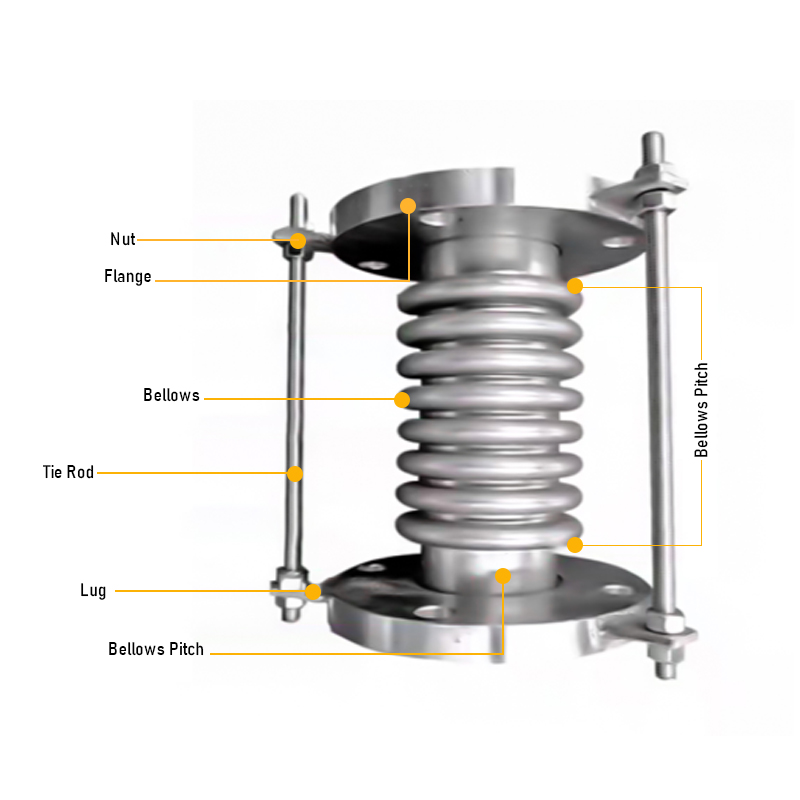
Isometric view: the working parts of a flanged axial expansion joint
1 Pipe end / weld connection 2 Fixing flange or weld end 3 Bellows convolutions (movement element) 4 Tie rod or limit rod
The corrugations absorb movement; the tie rods or limit rods carry thrust or restrict travel. Tie rods with a designed gap are limit rods and still allow normal movement.
Movement Types Decide the Joint Configuration
Every piping layout resolves into three basic movements, and the joint you buy is chosen from them.
Axial
Movement along the pipe centreline, from thermal growth of a straight run. The single-bellows axial expansion joint is the standard answer, provided the pipe is guided so the movement stays axial.
Lateral
Movement perpendicular to the centreline, common where a long leg moves sideways. A universal expansion joint — two bellows joined by a centre pipe — handles this far better than one long bellows.
Angular
Rotation about a point, used in pairs on L- and Z-shaped layouts. Hinged and gimbal configurations take angular movement and, with pins or gimbals, generate no pressure thrust on the anchors.
Real systems usually combine all three. That is why the specification should state the movement in millimetres with its direction, not just a single number.
Relative movement capacity by joint configuration
Axial movement Lateral and angular movement
Relative index from 0 to 100, reflecting which movements each configuration is designed to absorb under EJMA design practice. It is illustrative only; real capacity comes from a calculation for your line.
 Flexible Metal Compensator Corrugated Expansion JointProduct Name: Flexible Metal Compensator Corrugated Expansion Joint Product Material: 304 Stainless Steel / Carbon Steel Pressure Range: 0.6MPa ~ 1.6MPa Nominal Diamet...View Product →
Materials, Temperature and Cycle Life
Austenitic stainless steel is the default bellows material. Grade 304 covers most water, steam and gas duties; 316L is chosen where chlorides or mildly corrosive media are present; higher-nickel alloys such as Inconel 625 become the practical choice above roughly 540 °C, where creep rather than pressure sets the wall thickness. Multi-ply bellows — two or three thin layers instead of one — raise the pressure capability without making the joint stiffer.
Cycle life is the number that decides how long the joint lasts, and it is not a fixed figure. A bellows fatigue curve, in the form published by expansion joint manufacturers and referenced in EJMA design practice, shows cycle life falling sharply as the movement per convolution rises. Doubling the movement asked of each convolution can cut the achievable cycle count by an order of magnitude.
That is why a line cycling once a day and a line cycling hourly need different hardware, even at identical pressure and temperature. A daily cycle gives you decades of headroom. Hourly cycling over a twenty-year life is tens of thousands of cycles, and the design must be calculated for it rather than assumed.
Schematic bellows fatigue behaviour
The curve shape, not the plotted values, is the point: cycle life drops steeply as movement per convolution increases. Always use the manufacturer's calculated fatigue curve for your duty.
Why Metal Expansion Joints Fail in Service
Most field failures come from a short list of causes, and nearly all of them can be designed out. We have written a longer breakdown of why metal bellows fail in industrial pipelines; the summary below is what a good specification prevents.
- Fatigue cracking at the crest or root of a convolution — the classic result of asking for more movement per convolution than the joint was calculated for.
- Chloride stress-corrosion cracking, usually under wet thermal insulation on 304 bellows. Low-chloride insulation and a well-drained installation matter more here than steel grade alone.
- Squirm, an instability where pressure and deflection combine to buckle the bellows sideways.
- Flow-induced vibration at high velocity or in two-phase service, which produces high-cycle fatigue that no thermal calculation predicts.
- Missing or neglected anchors and guides, so the joint ends up absorbing the whole thermal growth of the run instead of a controlled share of it.
- Erosion from abrasive or particulate media where an internal liner should have been specified.
- Installation damage — torsion, twisted flanges, or a joint used as a come-along to pull pipe ends together.
The Specification Checklist
A bellows joint cannot be engineered from a line size alone. The table below lists the inputs that actually change the design.
| Information | Why it changes the design | Where it comes from |
|---|---|---|
| Nominal size and pipe schedule | Fixes the bore and the end connection | Line list or P&ID |
| Design pressure and temperature, including the coincident case | Sets wall thickness, ply count and pressure thrust | Process data sheet |
| Media, concentration and flow velocity | Drives material grade, liner and erosion risk | Process data sheet |
| Movement in millimetres: axial, lateral, angular, with direction | Determines joint type and convolution geometry | Pipe stress analysis |
| Design cycle count over the service life | Sets the fatigue target the bellows must meet | Plant operating profile |
| Installation length and connection standard | Must match the gap left in the pipe | Isometric drawings |
| Anchors, guides and restraints | Determines how much movement ever reaches the joint | Pipe stress analysis |
| Insulation, trace heating or liner requirement | Affects corrosion risk and flow behaviour | Plant specification |
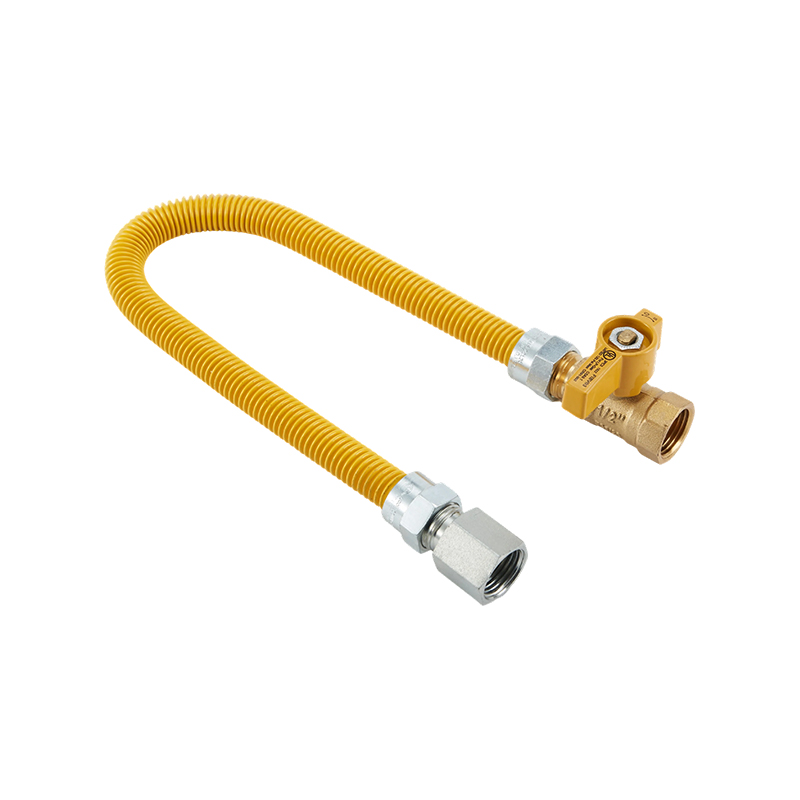 Metal Hose and Compensator SuppliersFlexible Metal Compensator Corrugated Expansion Joint Product Name: Flexible Metal Compensator Corrugated Expansion JointProduct Material: 304 Stainless Steel / Carbon...View Product →
Installation and Maintenance Rules Worth Following
- Never use the expansion joint to pull two pipe ends together. If the flanges do not meet without force, the pipe fit is wrong.
- Fit the joint at the ambient setting stated on the drawing — pre-compressed, pre-stretched or neutral — and remove shipping bars only after bolting up.
- Keep limit rods at their designed gap. Fully tightened tie rods turn a movement joint into a rigid spool.
- Support the pipe weight with pipe supports. The bellows must never carry it.
- Match the flow arrow on internally lined joints to the actual flow direction.
- Use low-chloride insulation and keep the bellows dry. A wetted, insulated 304 bellows is an early failure waiting to happen.
- Inspect at every shutdown. A polished, shiny band on a convolution, or a white or grey deposit, is an early warning worth acting on.
Frequently Asked Questions About Metal Expansion Joints
Haoyin (Ningbo) Bellows Technology builds stainless steel bellows and compensators for gas, water and heating lines. These are the questions buyers and installers ask most often.
Q1. What is a metal expansion joint used for?
It absorbs thermal expansion, vibration and relative movement in a pipeline while keeping the fluid contained. Typical duties include steam and hot-water lines, district heating, exhaust ducting, turbine connections and pump suction and discharge piping.
Q2. What is the difference between a metal expansion joint and a rubber expansion joint?
Metal bellows handle much higher temperatures and pressures and do not age the way elastomers do. Rubber joints are cheaper and lighter for low-temperature water and HVAC duty, but they have a limited temperature range and can perish.
Q3. How much axial movement can a metal expansion joint absorb?
It depends on the number of convolutions, the diameter and the required cycle life. More convolutions mean more movement, but also a lower pressure capability per convolution before squirm becomes a risk.
Q4. How long does a metal expansion joint last?
Life is counted in cycles, not years. A joint correctly sized for 10,000 cycles may serve for decades; the same joint overloaded laterally can crack within months. Always state the expected cycle count when enquiring.
Q5. What is pressure thrust and who carries it?
It is internal pressure multiplied by the effective area of the bellows, delivered to the piping as an axial force. Main anchors must resist it — unless a pressure-balanced or hinged design is used to remove it from the anchors.
Q6. Which standard applies to metal expansion joints?
EJMA standards are the international design reference, applied through piping codes such as ASME B31.3 or B31.1. In Europe, EN 14917 covers metal expansion joints for pressure applications.